
Plants
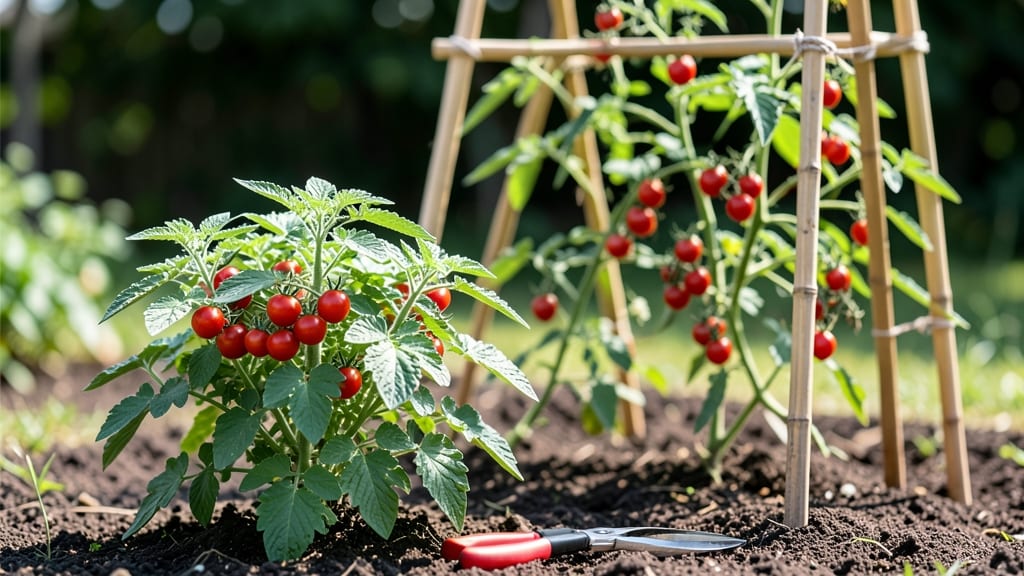
Cherry tomato plants are either determinate or indeterminate, depending on their variety. Determinate types grow as compact bushes with limited height and produce fruit in clusters, while indeterminate types grow as vines that continue producing fruit throughout the season. Your choice depends on your garden space and how you prefer to harvest.
Understanding these growth habits helps you plan your garden layout and harvest strategy. Determinate varieties stop growing once they reach maturity, making them ideal for container gardening or small spaces. 🌱 They produce fruit all at once, which is great for canning or preserving.
Indeterminate types, on the other hand, keep growing and producing fruit until frost, perfect for continuous harvests if you have vertical space to work with.
Many gardeners start with determinate varieties like 'Sweet 100' or 'Tiny Tim' for their neat growth and early production, while indeterminate types like 'Sungold' or 'Sweet Million' are popular for their long harvest seasons.
The key difference lies in their growth patterns—determinate plants focus energy on a single flush of fruit, while indeterminate ones spread that energy across multiple growth cycles.
💡 In This Article
- Determinate vs Indeterminate Cherry Tomato Growth Patterns
- How to Select Cherry Tomato Varieties for Your Garden
Determinate vs indeterminate cherry tomato growth patterns
The core difference between determinate and indeterminate cherry tomatoes lies in their terminal bud—the growth point at the top of the plant. Determinate varieties have a strong terminal bud that signals the plant to stop growing vertically once it reaches maturity, typically between 3-5 feet tall.
This genetic cue redirects energy from stem elongation to fruit production, resulting in a single, concentrated harvest. 🌱 The plant's bushy structure forms a compact shape with multiple branches, each bearing clusters of fruit.
This growth pattern is controlled by a specific hormone balance that prioritizes reproductive growth over vegetative growth.
Indeterminate cherry tomatoes, however, lack this growth-limiting terminal bud. Instead, they continue producing new shoots and leaves indefinitely until frost or disease stops them. These vines can grow 6-10 feet tall or more with proper support, producing fruit continuously along the stem.
The biological mechanism involves an open growth habit where the plant keeps generating new suckers (side shoots) and flowers, creating a prolonged harvest season.
This continuous growth requires more garden space but rewards gardeners with fruit production that can last 3-4 months in ideal conditions, compared to determinate varieties' 2-3 week harvest window.
Another key difference is in their flowering cycles. Determinate plants produce flowers in clusters at the ends of branches, leading to synchronized fruit development. This makes them ideal for gardeners who want to preserve or can a large harvest all at once.
Indeterminate varieties, however, produce flowers along the stem as it grows, resulting in staggered fruit ripening. This continuous flowering is controlled by the plant's ability to maintain a balance between vegetative growth (stem/leaf production) and reproductive growth (flower/fruit development), a process regulated by plant hormones like auxins and gibberellins.
Consider the fruit production timing when choosing between types. Determinate varieties like 'Tiny Tim' or 'Balcony Red' focus all their energy on producing fruit once they reach maturity, resulting in a heavy crop that ripens within 2-3 weeks.
This makes them perfect for small spaces or container gardening, where vertical growth isn't an option. Indeterminate types like 'Sungold' or 'Sweet Million' spread their energy across multiple growth cycles, producing fruit continuously until frost.
This results in a lighter daily yield but a much longer harvest season, ideal for fresh eating throughout summer and early fall.
The choice between these growth patterns also affects pruning and support needs. Determinate plants require minimal support—often just a sturdy stake or cage—and less frequent pruning since their growth is naturally limited.
Indeterminate varieties, however, need strong trellises, cages, or stakes to support their heavy vines, which can weigh 10-20 pounds when fully laden with fruit.
Pruning is also more critical for indeterminate types, as removing suckers (the small shoots that form in the leaf axils) helps direct energy to fruit production rather than excessive leaf growth, which can reduce air circulation and increase disease risk.
Understanding these growth patterns helps you visualize how each type will perform in your garden. Determinate plants create a neat, bushy shape perfect for small gardens or urban containers, while indeterminate types thrive in larger spaces with vertical support.
The choice ultimately comes down to whether you prefer a concentrated harvest for preserving or a prolonged fresh harvest for eating throughout the season. 🌿