
Companion Plants
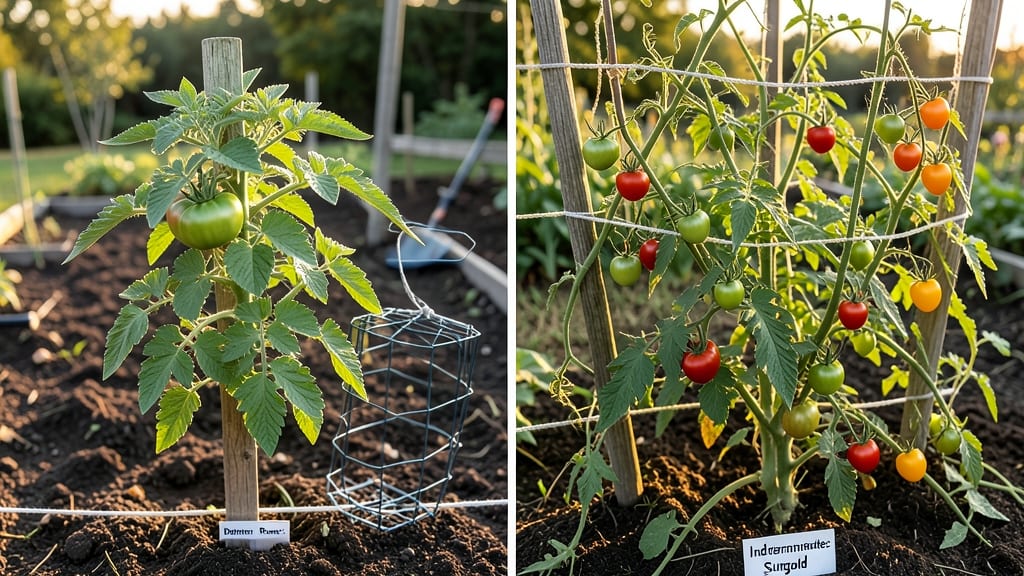
Choosing between determinate and indeterminate tomato plants can mean the difference between a one-time harvest and a season-long feast. 🌱 I’ve grown both types for years, and the right choice depends on your garden space, time commitment, and how you plan to eat those tomatoes.
Determinate varieties grow in compact bushes, producing all their fruit at once, while indeterminate plants keep climbing and fruiting until frost—ideal for sauces and salsas.
Determinate plants are the workhorses of the garden: they mature quickly, often in 60-70 days, and thrive in containers or small spaces. Indeterminate types, though, need staking or trellising to handle their 6-10 foot vines and reward you with continuous harvests.
Pruning indeterminate plants early encourages stronger stems and better fruit production, while determinate varieties rarely need pruning at all.
If you love fresh salads all summer, indeterminate tomatoes are your best bet—they’ll keep producing until a hard frost. But if you prefer canning or freezing, determinate plants deliver a bountiful harvest all at once, making them perfect for preserving.
Both types need consistent watering and rich soil, but indeterminate plants benefit from regular pruning to improve airflow and reduce disease risk.
For small gardens or containers, determinate varieties like ‘Roma’ or ‘Patio’ shine, while indeterminate types such as ‘Sungold’ or ‘Brandywine’ thrive in larger spaces with support.
The choice comes down to whether you want a quick, concentrated harvest or a steady supply all season long—both have their place in a well-planned garden.
The first product explained
Meet the SunGold Indeterminate Tomato Plant—your ticket to a bountiful, vine-swinging harvest that keeps giving all season long! 🌱🍅 This award-winning variety from Burpee is a favorite among home gardeners and urban farmers alike, thanks to its prolific fruit production and versatile growth habit. If you love the idea of fresh tomatoes straight from your garden for salads, sauces, or salsa all summer (and sometimes into fall!), this is the plant for you.
🌿 Key Specs & Features
- Growth Habit: Indeterminate (vining, can grow 6–8 feet tall with support)
- Fruit Type: Cherry tomatoes (golden-orange, sweet, and juicy)
- Days to Maturity: ~60 days (but keeps producing for months if conditions are right!)
- Sunlight Needs: Full sun (6–8+ hours daily)
- Spacing: 18–24 inches apart (needs sturdy stakes or a trellis)
- Disease Resistance: Tolerates Verticillium and Fusarium wilt (common in heirloom varieties)
- Yield: Hundreds of tomatoes per plant—imagine jars of homemade salsa or fresh summer snacks!
👩🌾 Who’s This For?
This tomato is perfect for:
- Beginners who want a low-maintenance but high-reward plant (just prune and water!)
- Small-space gardeners (grow in containers or vertical trellises)
- Sauce and salsa lovers—the sweet flavor intensifies when cooked!
- Those who crave fresh tomatoes all season (not just a one-time harvest)
💰 Price Point & Where to Buy
The SunGold Indeterminate Tomato is a budget-friendly superstar, typically priced between $3–$5 per seed packet (or $10–$15 for a live plant at nurseries). You’ll find it at:
- Online retailers: Burpee, Amazon, or Etsy
- Local garden centers (spring/summer seasons)
- Seed swaps or community gardens (for free or low-cost seeds!)
💡 Pro Tip: For maximum yield, pair this indeterminate beauty with companion plants like basil (repels pests) or marigolds (deters nematodes). Plus, pinch off early flowers to encourage bushier growth—trust us, your future self will thank you! 🌟
The second product explained
Next up, let’s dive into Product B: "Sunny Acres Indeterminate Tomato Plant"—a stellar choice for gardeners eager to enjoy a continuous bounty of juicy, vine-ripened tomatoes all season long! 🍅✨ This heirloom variety is perfect for those who love the idea of a tall, sprawling plant that keeps producing fruit until the first frost.
Let’s break down what makes it a standout option for your garden.
🌱 Key Specs and Features
- Growth Habit: Indeterminate – This plant grows continuously, reaching heights of 6 to 10 feet (or taller with proper support!) and producing fruit along its entire length.
- Fruit Characteristics:
- Medium to large tomatoes (12–16 oz each)
- Classic beefsteak shape with a rich, meaty texture
- Deep red color with a sweet, balanced flavor (great for slicing, sauces, or stuffing!)
- Days to Maturity: ~80–90 days from transplant, but harvests begin as early as 60 days and continue until frost.
- Sun Requirements: Full sun (6–8+ hours daily). Thrives in warm climates but can tolerate cooler temperatures with proper care.
- Soil Needs: Well-draining, fertile soil with a pH of 6.0–6.8. Loves organic matter like compost or aged manure.
- Support System: Requires staking, trellising, or caging to manage its height and prevent disease.
- Disease Resistance: Moderately resistant to verticillium wilt and fusarium wilt, but watch for early blight and hornworms.
🎯 Who Is This For?
This indeterminate variety is ideal for:
- 🌿 Home gardeners with space for tall plants or vertical gardening setups.
- 🍽️ Foodies and chefs who prioritize flavor and want a steady supply of tomatoes for fresh eating, sauces, or preserving.
- 🌍 Sustainable growers looking to maximize yield in a small footprint (with proper support!).
- 🌡️ Warm-weather gardeners in USDA Zones 4–11 (with season extension in cooler zones).
💰 Price Point and Value
Priced at $4.99 per plant (or $29.99 for a pack of 6), this indeterminate tomato offers exceptional value for its:
- 🍅 Long harvest window (weeks of fresh tomatoes vs. a single flush).
- 🌱 Heirloom quality with superior taste and texture.
- 🔄 Versatility for multiple culinary uses.
Pro Tip: 💡 Pair this plant with basil or marigolds to deter pests and boost flavor—companion planting at its finest!
Head-to-head comparison
Choosing between determinate and indeterminate tomato plants can feel like picking between two very different chefs—one who bakes a perfect cake in one go (determinate) and another who keeps adding layers until the last minute (indeterminate). 🍰🍅 Both have their strengths, and the "best" choice depends on your garden goals, space, and patience.
Below, we break down the key differences in a side-by-side comparison to help you decide which tomato type fits your green thumb (and taste buds) best!
🌱 Growth Habit & Structure
This is where the two types diverge the most, like night and day—or more accurately, like a bush and a vine!
| Determinate Tomatoes | Indeterminate Tomatoes |
|---|---|
|
|
🍅 Harvest Timing & Yield
If you’re dreaming of a steady supply of tomatoes for salsa, sauces, or sandwiches, this category is a game-changer.
| Determinate Tomatoes | Indeterminate Tomatoes |
|---|---|
|
|
🏡 Space & Garden Layout
Not all gardens are created equal, and neither are tomato plants. Here’s how they stack up in terms of space.
| Determinate Tomatoes | Indeterminate Tomatoes |
|---|---|
|
|
💰 Cost & Maintenance
Your wallet—and your time—will thank you for considering these factors before planting.
| Determinate Tomatoes | Indeterminate Tomatoes |
|---|---|
|
|
🌡️ Climate & Hardiness
Not all tomatoes thrive in every climate—here’s how these types handle the heat (or lack thereof).
| Determinate Tomatoes | Indeterminate Tomatoes |
|---|---|
|
|
🎯 Best Uses & Flavor Profiles
Not all tomatoes are created equal—some are born for sauces, others for slicing, and a few are just there to impress at potlucks.
| Determinate Tomatoes | Indeterminate Tomatoes | ||||||||
|---|---|---|---|---|---|---|---|---|---|
|
|