
Plants
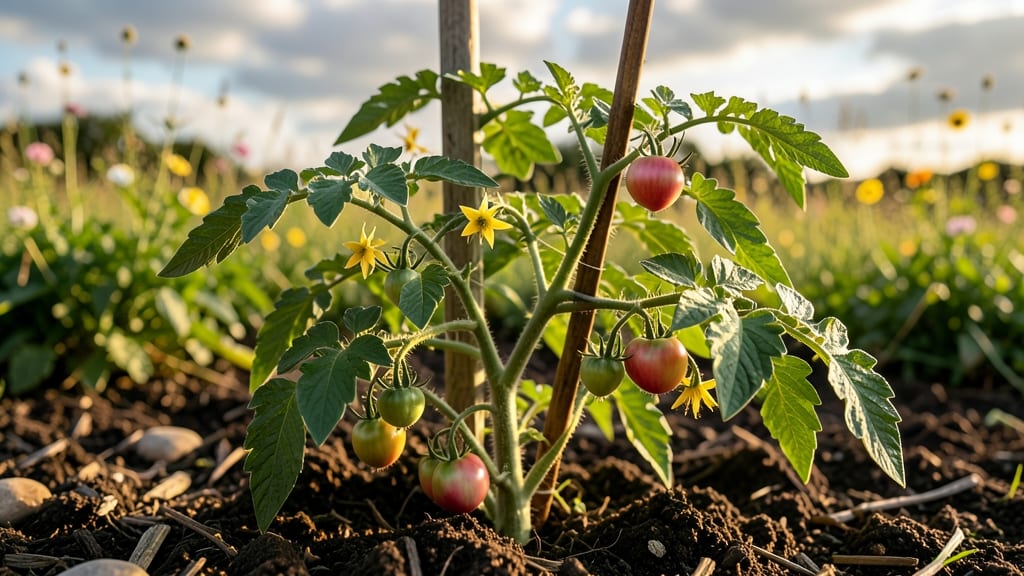
Tomato plants are self-pollinating because their flowers contain both male and female reproductive parts, but they often need help—especially in enclosed spaces or when flowers are isolated. Wind or gentle shaking can boost fruit production by releasing pollen more effectively.
Tomato flowers are perfect for self-pollination because their anatomy includes both stamens (male pollen producers) and pistils (female pollen receptors). 🌸 However, nature sometimes needs a nudge—especially in greenhouses where airflow is limited.
I've noticed that indeterminate varieties (like cherry tomatoes) benefit more from gentle shaking because their flowers bloom continuously, while determinate types (like Roma) often pollinate well on their own. The key is timing: shake plants in the morning when flowers are fresh and pollen is most receptive.
If you're growing tomatoes indoors or in areas with little wind, try using a small paintbrush to transfer pollen between flowers. This mimics nature's process and can significantly increase your harvest. Watch for signs like blossom drop or tiny fruit—these often indicate poor pollination.
For greenhouse growers, I recommend installing a small fan on low settings to create gentle airflow without damaging delicate blossoms.
💡 In This Article
- How Tomato Flowers Self-Pollinate Naturally
- When and How to Help Tomato Pollination
How tomato flowers self-pollinate naturally
Tomato flowers are perfect flowers, meaning they contain both male and female reproductive structures within the same blossom. The stamens (male parts) produce pollen, while the pistil (female part) holds the ovary that will develop into fruit.
When the flower opens, the stamens release pollen that naturally settles onto the pistil's sticky stigma—a process called autogamy. This happens most efficiently when flowers are exposed to gentle vibrations from wind or even passing insects.
The pollen release mechanism is fascinating: tomato stamens have tiny pores that open when exposed to humidity changes or physical movement.
In nature, a breeze causes the flower to sway, triggering pollen release. 🌬️ Indeterminate varieties (like 'Sungold' cherry tomatoes) produce flowers continuously throughout the season, making them more dependent on these natural vibrations. Determinate varieties (like 'Roma') often pollinate well on their own because their flowering period is more concentrated.
The key difference lies in flower density—indeterminate plants have more isolated blossoms that need extra help.
Here's what happens when pollination succeeds: the pollen fertilizes the ovules in the ovary, which then swells into a tomato. The plant's natural mechanism works best in open-air conditions where airflow carries pollen between flowers.
However, in enclosed spaces like greenhouses, pollen can become trapped near individual flowers, reducing fertilization rates. This is why you might see some flowers drop off without setting fruit—it's the plant's way of conserving energy when pollination fails.
Temperature also plays a crucial role. Tomatoes pollinate most effectively between 70-85°F—below 55°F or above 95°F, pollen production slows dramatically. The flower's anther (pollen-producing part) becomes less effective in extreme heat, which is why greenhouse growers often struggle during summer heatwaves.
Even with perfect conditions, some flowers may still need assistance, especially if they're positioned higher on the plant where wind can't reach them.
Consider the flower's lifecycle: each blossom typically lives for 3-5 days, with peak pollen viability occurring on the second day. This tight window explains why timing matters—shaking plants too early or too late misses the optimal pollen release period.
The plant's natural design is efficient, but it's not foolproof, which is why gardeners often need to step in when nature falls short.
What most gardeners don't realize is that tomato flowers have a built-in self-cleaning mechanism. When pollen isn't transferred properly, the flower may simply drop off, preventing the plant from wasting energy on unfertilized fruit.
This evolutionary adaptation helps explain why some flowers appear healthy but never produce tomatoes—it's the plant's way of prioritizing resources for successful pollinations. 🌱