
Planting
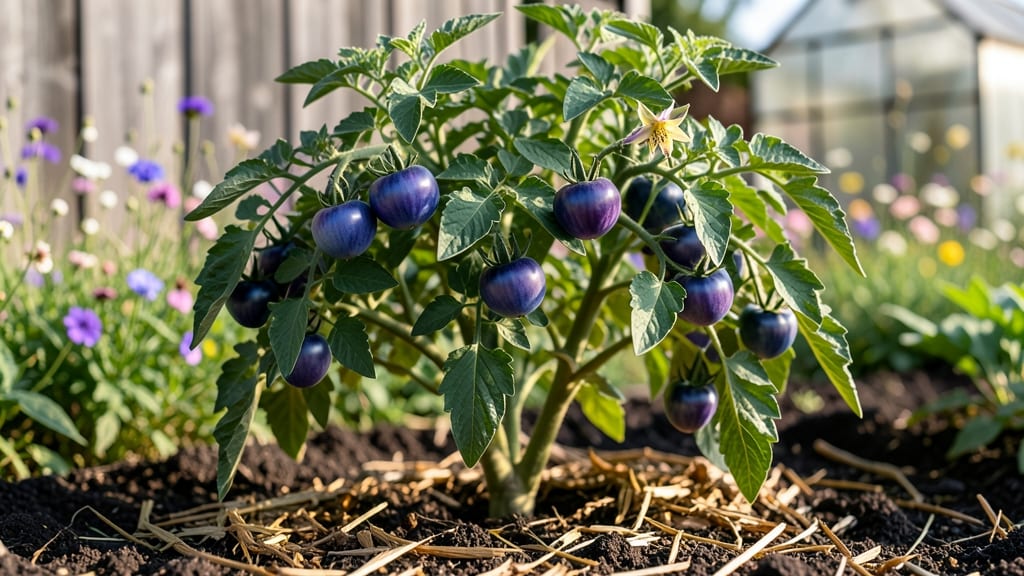
Growing blue tomato plants like Indigo Rose transforms your patio into a jewel-toned harvest. 🌿 The deep purple fruit isn't just stunning—it's packed with antioxidants, and the flavor surprises with sweet, smoky depth. These heirlooms thrive in containers, making them perfect for small spaces or urban balconies.
Start with well-draining potting mix rich in compost, and choose a 5-gallon container minimum for each plant. Place in full sun (6+ hours daily), and water consistently—letting soil dry slightly between waterings prevents cracking fruit.
A balanced fertilizer every 2 weeks keeps vines vigorous, and pruning suckers early encourages more fruit production.
By midsummer, you'll see those signature purple tomatoes ripening on the vine, their color deepening in full sun. The flavor profile leans toward plum-like sweetness with a hint of spice, making them ideal for slicing, sauces, or even juicing.
Harvest regularly to encourage more production—these plants keep yielding until frost.
Common challenges include blossom end rot (fix with calcium) or powdery mildew (prevent with spacing and airflow). For even deeper color, add a pinch of copper sulfate to soil—it enhances anthocyanins, the pigments that give these tomatoes their striking hue.
With the right care, you'll have a container full of edible art by late summer.
📚 In This Guide
- What you need
- Instructions
- Tips and common mistakes
- Wrapping up and next steps
What you need
- ● Purple tomato seeds or seedlings: Choose heirloom varieties like Indigo Rose or Black Krim (they turn deep purple when ripe!). Quantity: 1–3 plants per 5-gallon container.
- ● 5-gallon fabric or plastic grow bags: Quantity: 1–2 per plant (or a large container if growing multiple). Pro tip: Fabric pots improve root aeration! 💡
- ● High-quality potting mix: Look for a sterile, well-draining blend with compost (e.g., 60% potting soil + 40% compost). Quantity: 1–2 cubic feet per container.
- ● Slow-release fertilizer: 10-10-10 or 5-10-10 NPK ratio (organic options like fish emulsion work too!). Quantity: 1–2 tbsp per plant at planting.
- ● Tomato cages or stakes: 5–6 ft tall to support vining growth. Quantity: 1 per plant.
- ● Gloves & gardening shears (for pruning and handling plants).
- ● Watering can with a rose attachment (for gentle, deep watering).
- ○ pH test kit (optional but helpful—purple tomatoes thrive in 6.0–6.8 pH).
- ● Mulch (straw or shredded leaves) to retain moisture and suppress weeds.
- ○ Liquid fertilizer (optional) like seaweed extract for a mid-season boost.
- ● A sunny spot with 6–8+ hours of direct sunlight daily (balconies, patios, or south-facing windows work!).
- ● Warmth: Purple tomatoes love heat (ideal temps: 70–85°F). Start seeds indoors 6–8 weeks before last frost if your climate is cool. ✨
- ● Patience! These beauties take 70–90 days to fruit from seed.
Step-by-step guide to growing blue tomato plants in containers
Here's how to cultivate those stunning purple-fruited varieties at home—no fancy greenhouse needed.
🌱 Step 1: Select the Right Variety and Start Seeds Indoors
Choose a true blue tomato variety like 'Indigo Blue' or 'Black Krim'—these develop deep purple hues when fully ripe. Start seeds indoors 8-10 weeks before your last frost date, using sterile seed-starting mix in 2-3 inch deep pots. The key is warmth: place seeds on a seedling heat mat set to 75-85°F for consistent germination.
Plant seeds ¼ inch deep, just pressing them into the soil rather than burying them. Cover the pots with plastic wrap to retain moisture, then place them under grow lights (not natural light yet). You'll see sprouts in 7-14 days—watch for the first true leaves (the second set after the initial seed leaves) before transplanting.
☀️ Step 2: Prepare Containers and Soil for Maximum Purple Potential
Use 5-gallon containers with drainage holes—blue tomato varieties need deep root space to support their vigorous growth. Fill with a mix of 60% premium potting soil, 30% compost, and 10% perlite for excellent drainage. These plants crave nutrients, so add a slow-release fertilizer (like 10-10-10) mixed into the soil at planting.
Here's the thing—purple tomatoes develop their richest color when exposed to full sun (6+ hours daily) and consistent moisture. Place containers in a south-facing spot or under LED grow lights for 14-16 hours daily. If your climate gets hot, provide afternoon shade to prevent sunburn on young plants.
💧 Step 3: Transplant and Maintain Consistent Care
When seedlings have 4-5 true leaves and are 4-6 inches tall, transplant them into your prepared containers. Bury the stem up to the first set of leaves—this encourages stronger root development. Water deeply right after transplanting, then let the top 1-2 inches of soil dry between waterings to prevent blossom-end rot.
Prune suckers (the small shoots in the leaf axils) weekly to focus energy on fruit production. Blue tomatoes need staking or cages—their heavy vines can topple containers. You'll know you're on track when flowers appear 6-8 weeks after transplanting, followed by tiny green fruits that gradually deepen to purple.
✂️ Step 4: Harvest and Encourage Next Year's Growth
Harvest when tomatoes reach their full purple color and yield slightly to gentle pressure. Use pruning shears to avoid damaging the vine. The first flush of fruit often comes in 70-80 days, but consistent care keeps production going all season. Save seeds from your best fruits by scooping out the gel, fermenting it for 3-5 days, then rinsing and drying the seeds.
At season's end, cut back vines to 6 inches tall and compost the remaining plant material (unless disease was present). Store seeds in a cool, dry place for next year's crop. Here's the secret to repeat success: rotate container locations yearly to prevent soil depletion and pest buildup.
Tips & tricks for growing stunning purple tomato varieties
Real talk: those deep purple tomatoes won't happen by accident—they need precise care from day one. Here's what nobody tells you about growing these showstopper plants.
Germination Gold Standard: The 75-85°F heat mat isn't just nice—it's non-negotiable for consistent germination. I learned this the hard way after ruining three batches with uneven soil temperatures. Use a digital thermometer to monitor your setup, and keep those pots away from drafty windows. The plastic wrap trick works wonders for moisture retention, but remove it as soon as you see sprouts to prevent mold.
Lighting Secret: Those 14-16 hours of LED grow light exposure aren't arbitrary—they mimic summer daylight and trigger the anthocyanin production that gives blue tomatoes their signature color. Position lights 6-12 inches above seedlings and adjust height as they grow. If you notice leggy seedlings stretching toward light, you're too far away. Pro tip: Use a timer for automatic cycles to maintain consistency.
Soil Science: The 60-30-10 soil mix ratio isn't just about drainage—it's about creating the perfect nutrient balance for anthocyanin development. I've found that adding a handful of worm castings to the mix gives an extra boost to purple pigmentation. When transplanting, bury stems deeper than usual to encourage stronger root systems that can support those heavy purple fruits.
Harvest Hack: Those 70-80 days to first fruit can feel like forever, but don't rush harvesting! The deeper the purple color, the more anthocyanins (antioxidants) are present. Wait until tomatoes yield slightly to gentle pressure—they'll ripen further off the vine. For best results, harvest in the morning when temperatures are cooler to preserve that vibrant hue.
Pro Tips for Blue Tomato Plant
- Real talk: those deep purple tomatoes won't happen by accident—they need precise care from day one.
- Germination Gold Standard: The 75-85°F heat mat isn't just nice—it's non-negotiable for consistent germination.
- Lighting Secret: Those 14-16 hours of LED grow light exposure aren't arbitrary—they mimic summer daylight and trigger the anthocyanin production that gives blue tomatoes their signature color.
Frequently asked questions
Got questions about growing blue tomato plants? You’re not alone—these striking purple beauties spark curiosity! Here are answers to the most common queries to help you cultivate a thriving harvest in containers.
What’s the difference between blue tomato plants and regular tomatoes?
Blue tomato plants aren’t actually blue—they produce deep purple or indigo-skinned fruits due to high anthocyanin levels (the same pigment in blueberries!). While regular tomatoes are red/yellow, these varieties offer a sweeter, tangier flavor with vibrant color. They’re a fun twist on classic tomatoes!
How long does it take for blue tomato plants to produce fruit?
Expect a 60–90 day wait from transplanting to first harvest, depending on the variety and growing conditions. Indigo Rose and Black Krim (a close relative) are reliable choices. Patience is key—these plants need warmth and consistent care to thrive!
Can I grow blue tomato plants in containers, or do they need a garden?
Container gardening works well
—just use a 5-gallon pot or larger with drainage. Choose a lightweight, airy potting mix and place pots in full sun (6+ hours/day). Dwarf varieties like Indigo Apple are perfect for small spaces!
Why are my blue tomato leaves turning yellow? What’s wrong?
Yellow leaves often signal overwatering, nutrient deficiency, or pests. Check soil moisture (keep it consistently damp but not soggy) and fertilize with a balanced tomato feed every 2–3 weeks. Spider mites or aphids? Spray with neem oil or insecticidal soap!
Are blue tomatoes safe to eat raw, or do they need cooking?
Yes! Blue/purple tomatoes are delicious raw—slice them into salads for a stunning visual pop or eat them like regular tomatoes. They also shine in salsas, sauces, or roasted dishes. Pro tip: Their skin softens when cooked, so roast them for extra sweetness!
Wrapping up and next steps
Growing blue tomato plants—or rather, their stunning purple-hued fruits—is a rewarding adventure that brings color and flavor to your container garden. 🌱 With the right variety (like Indigo Rose or Purple Calabash), proper care, and a dash of creativity, you’ll enjoy a harvest that’s as visually striking as it is delicious.
Whether you’re a seasoned gardener or a beginner, these vibrant plants prove that growing food can be both fun and beautiful.
Ready to take the next step? Start by selecting your seeds or seedlings, then grab your supplies and dive into planting! Share your progress with fellow gardeners—your purple tomatoes might just inspire others to try something bold. Happy growing! 🌿