
How To
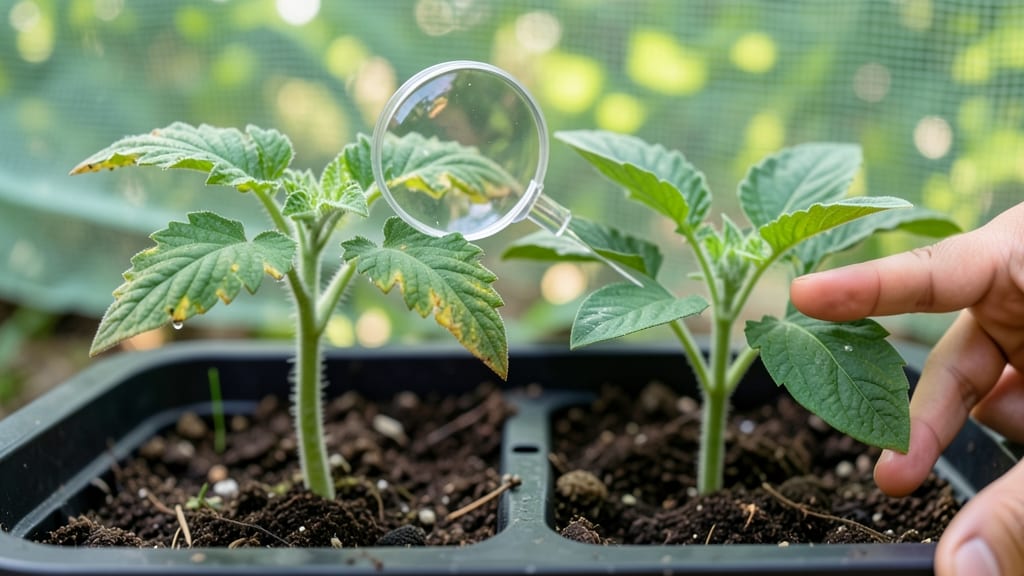
Curled leaves in tomato seedlings usually signal stress from pests, environmental conditions, or transplant shock. Check for aphids, adjust watering, and ensure proper sunlight to restore healthy growth quickly.
When your tomato seedlings develop curled leaves, it's often a cry for help from your plants. 🌱 The most common culprits are tiny pests like aphids or spider mites that suck sap, causing leaves to twist and distort.
Environmental factors like sudden temperature swings or inconsistent watering can also trigger this reaction, as can transplant shock when seedlings adjust to new soil or containers. I've found that acting fast—within 24 hours—makes all the difference in recovery, especially when you combine proper care with the right conditions.
What's interesting is how each cause leaves distinct clues. For instance, aphid damage often comes with sticky residue (honeydew), while underwatering causes crispy edges and yellowing between veins. The good news? Most seedlings bounce back remarkably well once you identify and address the root issue.
Start by gently inspecting the undersides of leaves for pests, then adjust your watering routine to keep soil consistently moist but not soggy—this alone can work wonders.
💡 In This Article
- Common Causes of Curled Tomato Seedling Leaves
- Step-by-Step Fixes for Reviving Tomato Seedlings
Common causes of curled tomato seedling leaves
The most frequent trigger for curled tomato leaves is pest infestations, particularly aphids and spider mites. These tiny sap-suckers inject toxins while feeding, causing leaves to pucker and distort. Aphids often cluster on undersides, leaving behind sticky honeydew that attracts ants.
Spider mites, however, create fine webbing between leaves and thrive in dry conditions. 🔍 Under a magnifying glass, you'll see their tiny bodies moving along leaf veins, which disrupts normal cell function and growth patterns.
Environmental stressors play equally critical roles. Temperature extremes—either below 50°F or above 90°F—can shock seedlings, causing metabolic slowdowns that manifest as leaf curling. Similarly, watering inconsistencies create osmotic stress: underwatering makes cells lose turgor pressure (like a wilting flower), while overwatering suffocates roots, preventing nutrient uptake.
The ideal soil moisture should maintain 40-60% humidity around roots while allowing excess water to drain within 2-3 hours.
Transplant shock occurs when seedlings experience sudden changes in light, temperature, or soil composition after moving. The root systems, still delicate, struggle to adapt, causing leaves to curl as a protective response. This is especially common when moving from indoor starts to outdoor gardens without proper acclimatization.
Nutrient deficiencies—particularly lack of nitrogen or magnesium—can also trigger curling, as these elements are vital for chlorophyll production and cell structure maintenance.
Another lesser-known factor is soil compaction, which restricts root expansion and oxygen flow. When roots can't grow properly, the plant signals distress through leaf curling. You can test soil compaction by gently pressing your finger into the soil: if it feels like packing dirt, it's too dense.
The solution often involves loosening soil with organic matter like compost or perlite to improve aeration and drainage.
What's fascinating is how these causes interact. For example, aphid damage weakens seedlings, making them more susceptible to temperature stress. Similarly, underwatered plants become prime targets for spider mites because their dry leaves provide ideal breeding conditions.
This interconnectedness means addressing one issue often helps resolve others, creating a domino effect of plant recovery. 💚
To diagnose accurately, examine leaves closely: aphid damage shows curled, yellowed leaves with sticky residue, while underwatering causes crispy edges and a dull, grayish hue. Transplant shock often appears as uniform curling across all leaves, while nutrient deficiencies typically show as interveinal chlorosis (yellowing between veins).