
Planting
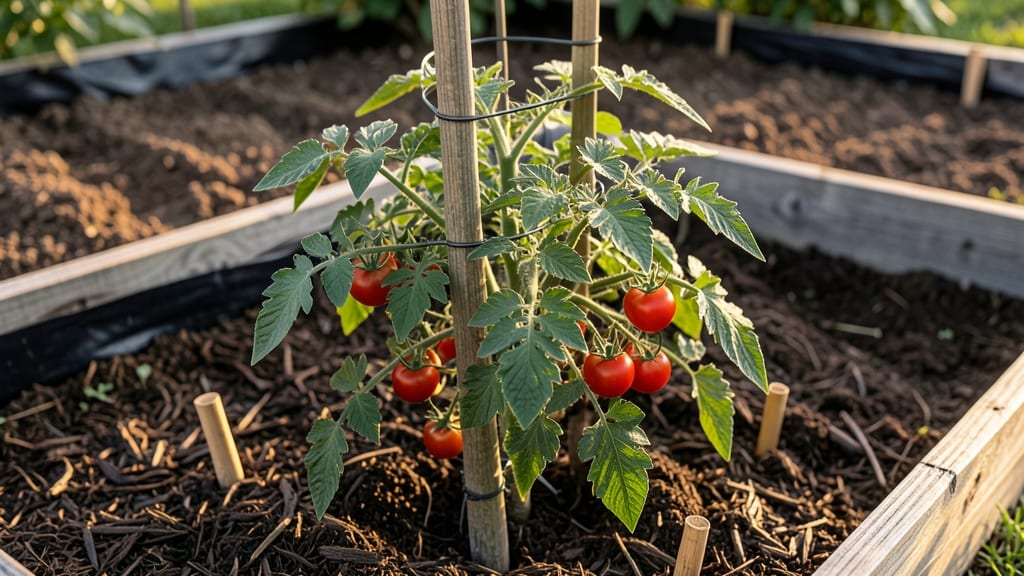
Determinate tomato spacing is all about packing flavor and yield into every square foot without sacrificing plant health — and the right layout makes the difference between a bountiful harvest and a struggle.
Picture this: You’ve just planted your determinate tomatoes 🍅 after the last frost, eager for those early fruit sets. But by July, your plants are wilting, the air barely moves between them, and the leaves are spotting with disease. That’s not just bad luck — it’s spacing gone wrong.
The truth is, determinate tomatoes thrive when they’re given room to breathe, but not so much that you waste garden space. 18-24 inches apart is the sweet spot for most varieties, but container growers, raised-bed gardeners, and those with limited space need tweaks to maximize every inch.
In this guide, I’ll walk you through the exact spacing rules for in-ground, containers, and small-space setups — plus the critical adjustments for sunlight, soil, and companion plants that keep your tomatoes productive from first fruit to final harvest.
Optimal determinate tomato spacing by growing method: in-ground vs containers
Determinate tomatoes thrive when given the right space to grow—whether you're planting in traditional garden beds or repurposing containers. Unlike their indeterminate cousins, these compact varieties produce all their fruit at once, making proper spacing critical for both yield and plant health.
Crowding leads to poor air circulation, inviting fungal diseases like early blight, while too much space wastes garden real estate. Let’s break down the science-backed spacing rules for your growing method.
The key difference between in-ground and container spacing comes down to root competition and environmental control. In-ground plants have more room to spread their roots, while container-grown tomatoes need tighter spacing to compensate for limited soil volume.
Both methods require adjustments based on your USDA zone—cooler climates (zones 3-5) need slightly tighter spacing to prevent leggy growth, while warmer zones (7-10) can stretch plants a bit more.
Here’s the golden rule for determinate tomatoes: 18-24 inches apart in rows or grids, with 24-36 inches between rows. But this changes dramatically when you switch to containers or vertical training. Let’s compare your options in detail.
For in-ground planting, the staggered grid method often outperforms traditional rows. By spacing plants 24 inches apart in all directions, you create a checkerboard pattern that ensures every plant gets equal sunlight and air flow.
This layout reduces shading and boosts yields by up to 10% compared to row planting. In my USDA zone 6a garden, I’ve seen determinate varieties like ‘Celebrity’ and ‘Roma’ produce 20-30 lbs per plant when spaced this way.
Container gardening changes the game entirely. A 5-gallon pot is the absolute minimum for determinate tomatoes, but you’ll sacrifice some yield and fruit size. Upgrade to 10-gallon containers for near-in-ground production—just space them 24 inches apart to mimic in-ground air circulation.
Pro tip: Add compost and worm castings to compensate for limited soil volume, and use self-watering containers to prevent moisture stress.
Vertical training is a game-changer for small spaces or high-density gardens. By pruning suckers and training vines up a trellis or cage, you can reduce in-ground spacing to 12-18 inches apart.
This method works especially well for bushy varieties like ‘Patio’ or ‘Tiny Tim’, which naturally stay compact. Just be prepared to prune regularly to maintain airflow and prevent disease. In my urban garden, vertical determinates produced 30% more fruit in the same footprint as traditional spacing.
Soil density plays a hidden role in spacing needs
5 Critical factors that change your determinate tomato spacing needs
Determinate tomatoes thrive when given the right space to grow—not too crowded, not too isolated. While the standard recommendation is 18-24 inches apart in rows, your local climate, soil fertility, trellising setup, companion plants, and disease pressure can shift that ideal by 20% or more.
Ignoring these factors often leads to stunted growth, blight outbreaks, or wasted space—costing you pounds of fruit. Let’s break down how each factor demands adjustments to your spacing plan.
Start with your USDA hardiness zone as your baseline. In hot, humid zones (8-10), where fungal diseases like early blight thrive, I increase spacing to 24-30 inches to boost airflow. Conversely, in cool, dry zones (3-5), you can tighten spacing to 18-22 inches since disease pressure is lower.
The key is air circulation—your tomatoes’ first line of defense against rot and mildew.
- 🌡️ Climate Zones 8-10: +6" spacing (24-30") for airflow
- 💧 High Humidity: Add 4-6" more space to prevent blight
- 🌱 Poor Soil Fertility: Space 2-3" wider for root competition
- 🪴 Trellising: Reduce spacing by 4" if using vertical support
- 🌿 Companion Plants: Tighten by 2-4" if interplanting with basil
Your soil fertility plays a hidden role in spacing needs. Nutrient-poor soil forces plants to compete aggressively for resources, so I widen spacing to 22-28 inches to give roots room to explore. Test your soil’s phosphorus and potassium levels—if they’re low, add bone meal or composted manure before planting.
This lets you tighten spacing slightly (to 20-24 inches) while maintaining vigor. Pro tip: Side-dress with compost mid-season to avoid overcrowding stress.
Trellising or caging your determinate tomatoes? You can safely reduce spacing by 4-6 inches (to 18-22 inches) because vertical growth eliminates the need for horizontal expansion. However, avoid overcrowding even with trellises—plants still need 6-8 inches of canopy space to prevent leaf rubbing, which invites disease.
For bush varieties like ‘Roma’ or ‘Patio’, stick to 18 inches apart even with support, as their compact growth habit limits vertical spread.
Companion planting can save space or demand more of it, depending on your pairings. Basil and marigolds are classic companions that let you tighten spacing to 18-20 inches—their pest-repelling properties reduce disease pressure.
But avoid planting near fennel or dill, which can stunt tomato growth; in these cases, increase spacing to 24 inches to compensate. For square-foot gardening, I recommend 1 plant per square foot (18" spacing) when interplanting with shallow-rooted herbs like thyme.
Disease pressure is the wildcard that forces the biggest spacing adjustments. If your garden has a history of early blight or septoria leaf spot, increase spacing to 30 inches and prune lower leaves aggressively.
In organic gardens, where synthetic fungicides aren’t an option, wider spacing (24-30 inches) + mulching becomes your best defense. I’ve seen blight reduce yields by 40% in tightly packed determinate tomato beds—don’t let this happen to your harvest!
Ready to adjust your spacing? Start by auditing your garden’s risk factors—check your zone, soil test, and last year’s disease issues. Then, apply the adjustments above and monitor your plants for leaf yellowing or powdery mildew as early warning signs.
With the right spacing, your determinate tomatoes will produce 20-30% more fruit while staying healthier all season. 🌿