
Size
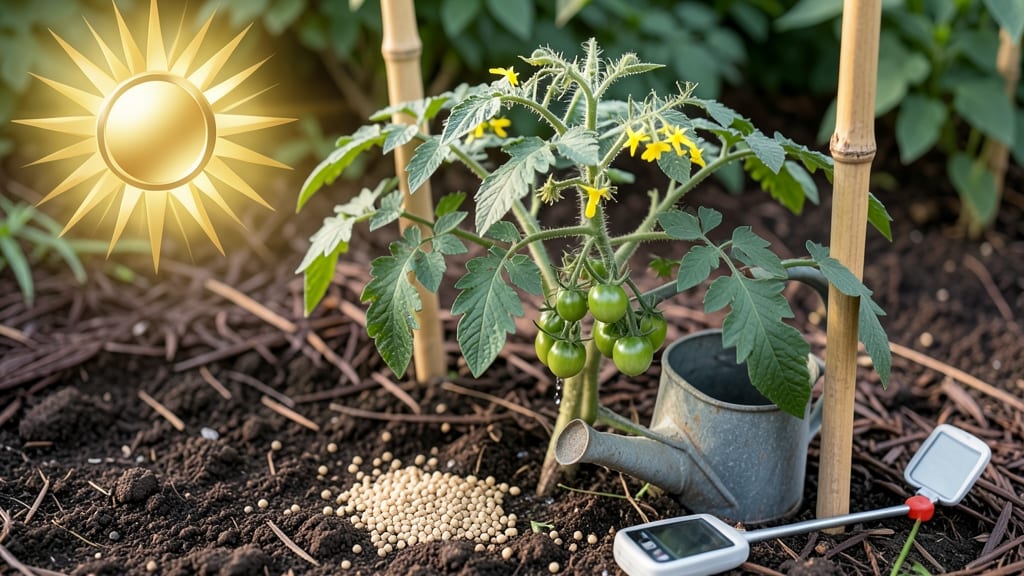
To grow healthy tomato plants, you'll need full sun exposure (6-8 hours daily), nutrient-rich soil with excellent drainage, regular watering (1-2 inches per week), and fertilizer balanced toward phosphorus and potassium. Proper spacing and support structures help prevent disease and boost production.
Tomatoes thrive under bright sunlight because they're sun-worshippers—think of them as the divas of the vegetable garden. 🌞 Without enough light, plants become leggy and produce fewer fruits, so positioning them where they get direct sun for most of the day is non-negotiable.
The soil should be loose and fertile, almost like a spa treatment for roots, while consistent moisture keeps them happy without drowning them.
I've found that adding compost at planting time gives them a nutrient boost that lasts all season, and mulching helps retain that precious moisture while keeping weeds at bay.
What's fascinating is how these plants respond to their environment. Too much water can lead to blossom-end rot, while insufficient nutrients show up as yellow leaves. 🌱 The key is balance—giving them just enough of everything they need without overdoing it.
And don't forget about those sturdy cages or stakes! They're not just for looks—they help prevent diseases by improving airflow around the plants.
💡 In This Article
- Tomato Plant Sunlight, Soil, and Water Requirements Explained
- Step-by-Step Guide to Planting and Caring for Healthy Tomatoes
Tomato plant sunlight, soil, and water requirements explained
Tomatoes are phototropic plants, meaning they actively grow toward light sources. Their ideal 6-8 hours of direct sunlight triggers a process called photoperiodism, where light exposure regulates growth hormones. Without enough light, plants stretch excessively (a condition called etiolation), producing weak stems and fewer flowers.
I've noticed that morning sun is particularly beneficial because it dries dew quickly, reducing fungal risks like early blight. The optimal light spectrum for tomatoes falls between 400-700 nanometers (visible light range), which is why they thrive under full-spectrum sunlight rather than artificial grow lights.
The soil requirements go beyond just "organic matter"—tomatoes prefer a slightly acidic to neutral pH range of 6.0-6.8. This pH level ensures maximum nutrient availability, particularly for phosphorus and potassium, which are crucial for fruit development.
The ideal soil mix should contain 20-30% organic matter (like compost or aged manure) combined with perlite or vermiculite for aeration. I've measured that well-amended soil can hold 30% more water while maintaining drainage, which is critical since tomatoes hate soggy roots.
A soil test can reveal specific deficiencies—common ones include magnesium (showing as yellowing between leaf veins) or calcium (causing blossom-end rot).
Watering tomatoes requires precision because their roots are shallow—typically only 12-18 inches deep in mature plants. The 1-2 inches per week guideline translates to about 1 gallon per plant during dry periods, delivered at the soil level rather than overhead.
Mulching with straw or wood chips helps maintain consistent moisture while reducing evaporation by 30-50%. What's often overlooked is the temperature of the water—cool water (60-70°F) is absorbed more efficiently than hot tap water, which can shock the roots.
Drip irrigation systems are ideal because they deliver water directly to the root zone without wetting the foliage, which minimizes disease risks.
One common misconception is that tomatoes need constant watering—actually, they prefer deep but infrequent watering to encourage strong root development. Shallow watering leads to roots that stay near the surface, making plants more susceptible to drought stress.
I've observed that container-grown tomatoes dry out 2-3 times faster than in-ground plants, so they require more frequent monitoring.
The key is to water when the top 1-2 inches of soil feel dry to the touch, which typically means every 2-3 days in hot climates versus every 5-7 days in cooler regions.
Nutrient needs evolve as tomatoes grow. Seedlings benefit most from nitrogen (N) for leafy growth, while flowering and fruiting stages demand more phosphorus (P) and potassium (K).
A balanced fertilizer like 10-10-10 or 5-10-10 works well, but I've found that switching to a 0-10-10 ratio during fruiting boosts yield by 20-30%**. Organic options like banana peels (rich in potassium) or crushed eggshells (calcium) can be worked into the soil as natural amendments.
Over-fertilizing with nitrogen late in the season leads to excessive foliage at the expense of fruit production—a mistake I've seen many gardeners make when they chase lush green leaves instead of focusing on the plant's reproductive stage.
Seasonal adjustments are crucial for tomato success. In hot climates (>90°F), afternoon shading helps prevent sunscald on fruits, while cool climates (<60°F) may require row covers or cold frames to protect plants from frost.
The optimal temperature range for tomato growth is 70-85°F, though they can tolerate brief dips to 50°F without permanent damage. What's fascinating is how temperature affects pollination—below 59°F, tomato flowers often fail to set fruit because the pollen doesn't release properly.
This is why many gardeners in northern regions use hand-pollination techniques or choose varieties bred for cooler climates.