
Companion Plants
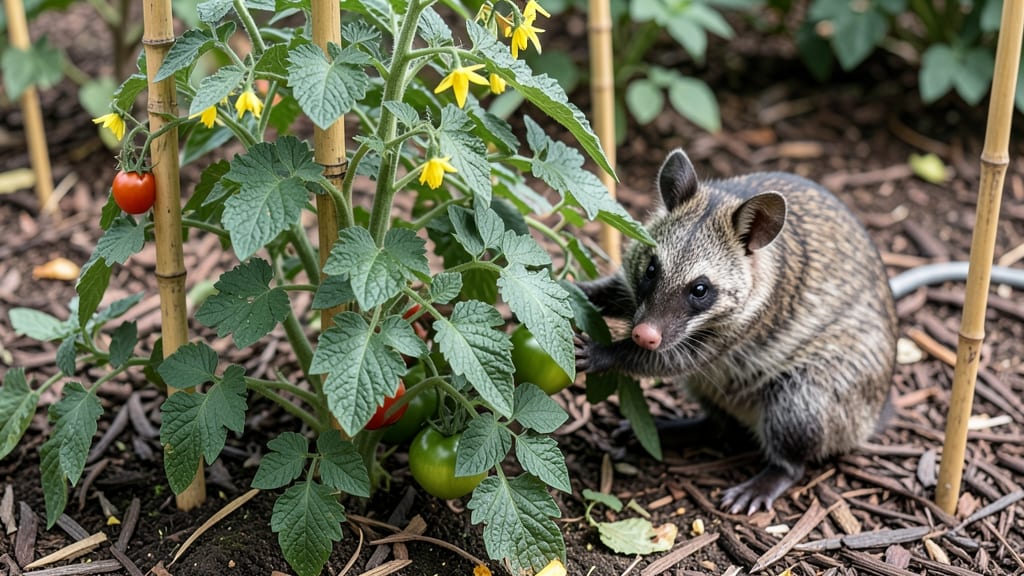
Possums rarely eat tomato plants, as their diet primarily consists of insects, fruits, and fungi. However, they may nibble on fallen tomatoes or young seedlings if other food sources are scarce, though they pose minimal direct damage compared to pests like deer or rabbits.
Possums are opportunistic feeders, but tomato plants aren't a priority for them. 🌱 Their natural diet leans toward protein-rich insects, fallen fruits, and decaying organic matter, so they're more likely to munch on garden debris than your prized tomatoes.
The occasional nibble on ripe fruit or tender sprouts happens only when better options are unavailable, making them far less destructive than larger critters like deer or rabbits.
What sets possums apart is their role as garden allies—they devour slugs, snails, and beetles that would otherwise devastate your tomato plants. Their presence often means fewer pests overall, so their minimal tomato damage is a small trade-off for the bigger pest control benefits they provide.
💡 In This Article
- Possum Diet and Tomato Plant Interactions
- Effective Possum Deterrents for Tomato Gardens
Possum diet and tomato plant interactions
Possums are omnivores with a diet that’s roughly 60% animal matter (insects, worms, and small vertebrates) and 40% plant material, primarily fruits, fungi, and fallen vegetation.
Their natural preference leans toward protein-rich foods like beetles, grubs, and slugs—making them more likely to snack on garden pests than your tomato plants. 🌿 The key reason they avoid tomatoes lies in their digestive system: possums lack the enzymes to efficiently break down the complex compounds in tomato leaves, stems, and unripe fruit, which contain solanine (a natural toxin in nightshade plants).
When possums do interact with tomato plants, it’s usually opportunistic. They’ll nibble on overripe, fallen tomatoes or young seedlings if other food sources are scarce, but this happens far less frequently than with pests like deer or rabbits.
Their foraging behavior is also influenced by environmental factors: in urban areas where trash and pet food are abundant, possums may ignore garden crops entirely. In rural settings, however, they might investigate tomato patches during droughts when insects become less available.
The minimal damage they cause stems from their feeding habits. Unlike deer or rabbits, possums don’t uproot plants or strip foliage—they’re more likely to peck at soft fruit or nibble on tender sprouts.
Their small, pointed teeth are designed for crushing insect exoskeletons, not tearing through tough plant stems. This makes their impact on tomato yields negligible compared to other garden pests. 🐾
What’s fascinating is how possums’ diet benefits gardens indirectly. A single possum can consume up to 4,000 ticks per year and devours slugs and beetles that would otherwise destroy tomato leaves.
Their presence often means fewer chemical pesticides are needed, creating a natural balance. The occasional tomato nibble is a small price for the pest control they provide.
Seasonal variations also play a role. During late summer and early fall, when tomatoes are ripening, possums might investigate garden beds more frequently—but even then, they’re more attracted to fallen fruit than healthy plants.
Their natural wariness of human activity further reduces conflicts, as they’re nocturnal and avoid well-trafficked garden areas.
For gardeners concerned about possum activity, the good news is that their impact on tomato plants is typically less than 5% of total damage. Their true value lies in their role as natural pest controllers, making them a net positive for most gardens.
The key is understanding their behavior rather than assuming they’re a threat to your crop. 🌱