
Vegetables
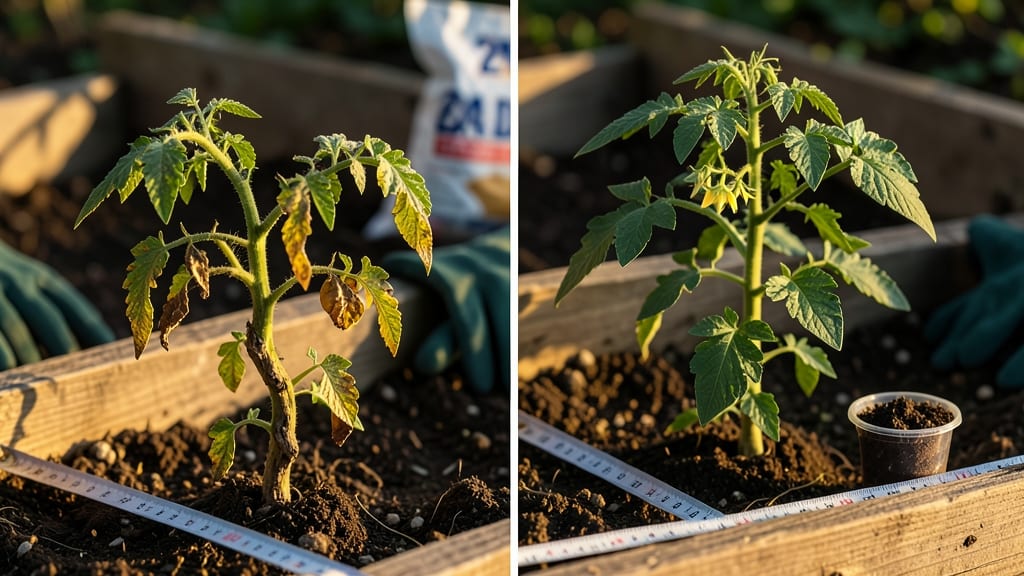
When your tomatoes develop cracked fruit or twisted leaves after a herbicide drift, 2,4-D tomato damage isn’t just an eyesore—it’s a warning sign your plants are under stress. 🌱 I’ve seen this happen after a neighbor sprayed weeds, and the good news is that with the right steps, you can bring your plants back to health.
The key lies in understanding how 2,4-D disrupts growth hormones and what you can do to counteract its effects.
The damage starts with distorted leaves, stunted growth, and—worst of all—cracked or malformed fruit. This happens because 2,4-D mimics plant hormones, throwing off the balance that keeps tomatoes growing straight and strong. But here’s the thing: calcium and pH balance can help repair the damage.
A simple soil test and a few targeted amendments can make a world of difference in how your plants recover.
You’ll start seeing improvement within 2-3 weeks after adjusting the soil pH and adding calcium-rich amendments. The fruit will firm up, leaves will straighten, and your plants will bounce back stronger than before.
The best part? Once you fix the soil, your tomatoes will be more resilient against future herbicide drift.
Prevention is easier than repair, so I’ll also share how to protect your garden from accidental herbicide exposure. Organic weed control methods like mulching and targeted hand-pulling keep your tomatoes safe while keeping weeds at bay. Let’s get your plants back on track!
Root Causes Of Tomato Damage
When your tomatoes start showing signs of 2,4-D herbicide drift or other chemical-induced damage—like cracked fruit, stunted growth, or deformed leaves—it’s usually due to one (or more) of these key factors.
Understanding the why behind the problem is the first step to fixing it. Below, we break down the most common culprits, backed by science, so you can take targeted action.
2,4-D (2,4-dichlorophenoxyacetic acid) is a synthetic auxin herbicide widely used to kill broadleaf weeds. However, its phytohormone-like structure mimics natural plant growth regulators, which can disrupt tomato physiology when absorbed. Here’s how it happens:
- Wind or spray drift: Even trace amounts (as little as
0.01 ppm) can cause symptoms if nearby fields or lawns are treated. Tomatoes are particularly sensitive because they’re dicots, just like the weeds 2,4-D targets. - Volatile residues: 2,4-D can linger on soil or equipment, re-emitting as a gas and affecting plants days or weeks after application. USDA studies confirm this "off-gassing" effect in humid conditions.
- Incorrect dilution: Overconcentration (e.g., mixing 2,4-D with water at __PROTECT_1 instead of PROTECT_2__) forces tomatoes to uptake toxic levels, leading to cellular stress and fruit cracking.
Actionable fix: If herbicide drift is suspected, flush the soil with 2–3 inches of water to dilute residues. For severe cases, test soil pH—acidic soil (pH < 6.0) increases 2,4-D uptake by up to 30%. Aim for pH 6.0–6.8 to reduce absorption.
Tomatoes rely on calcium (Ca²⁺) to form stable cell walls, especially in growing fruit. When soil pH strays from the ideal range (6.0–6.8), calcium becomes unavailable, even if it’s present in the soil. Here’s the science:
| Soil pH | Calcium Availability | Resulting Damage |
|---|---|---|
pH < 5.5 (Acidic) |
<10% absorbed | Blossom-end rot, cracked fruit, weak stems |
pH 6.0–6.8 (Ideal) |
80–90% absorbed | Healthy calcium uptake, firm fruit |
pH > 7.5 (Alkaline) |
Calcium binds to phosphorus, reducing mobility | Stunted growth, leaf curling |
Why it matters: Calcium deficiency often mimics herbicide damage because both cause cell wall collapse in tomato fruit. A 2018 study in HortScience found that tomatoes with Ca²⁺ levels < 0.2% in fruit tissue showed a 40% increase in cracking.
Actionable fix:
- Test soil pH with a DIY kit or lab analysis.
- Apply gypsum (CaSO₄) to acidic soil at
20 lbs per 100 sq ftto raise pH gradually. - Use calcium nitrate (1 tbsp/gallon) as a foliar spray during flowering/fruiting.
Tomatoes are 95% water at peak ripeness, and uneven hydration throws their calcium transport system into chaos. Here’s how water stress leads to damage:
- Fluctuating moisture: Rapid shifts between drought and overwatering cause root pressure imbalances, forcing calcium to pool in leaves instead of fruit. This leads to blossom-end rot (a classic 2,4-D-like symptom).
- Surface drying: When topsoil dries out, roots struggle to absorb water, but calcium moves with the transpiration stream. If water evaporates faster than roots can supply it, fruit lacks calcium during critical growth phases (10–20 days post-flowering).
- Salinity buildup: Overwatering with poor-quality water (high sodium or chlorine) blocks calcium uptake by competing for root absorption sites.
Actionable fix:
- Use drip irrigation or soaker hoses to deliver
1–1.5 inches of water per week, keeping soil consistently moist (not soggy). - Mulch with straw or wood chips to retain moisture and reduce temperature swings.
- Apply calcium chloride (1 tsp/gallon) to water every 2 weeks during fruiting.
While calcium steals the spotlight, potassium (K) and magnesium (Mg) play critical roles in tomato health. An imbalance between these nutrients can exacerbate herbicide or calcium-related damage:
- Excess potassium: Competes with calcium for uptake, leading to deficiency symptoms even if soil calcium levels are adequate. A
K:Ca ratio > 4:1is problematic. - Low magnesium: Weakens cell membranes, making tomatoes more susceptible to physical stress (e.g., cracking from rapid growth or herbicide exposure).
- Nitrogen overload: While nitrogen fuels growth, too much dilutes calcium in plant sap, reducing its availability to fruit.
Actionable fix:
- Test soil for NPK + secondary nutrients (Ca, Mg, S). Aim for a __PROTECT_11 ratio with PROTECT_12__.
- Apply Epsom salt (MgSO₄) (1 tbsp/gallon) every 4 weeks to correct magnesium deficits.
- Avoid high-nitrogen fertilizers (e.g., blood meal) during fruiting; switch to low-N, high-Ca options like bone meal.
Pro Tip: 💡 If your tomatoes show both herbicide-like symptoms (e.g., cupped leaves) and calcium-related issues (cracking), prioritize soil pH adjustment + calcium supplementation. Herbicide damage often masks nutrient deficiencies, so addressing both ensures long-term fixes.
Fixing Cracked Tomatoes Naturally
Now that you understand why your tomatoes are splitting—thanks to 2,4-D damage, calcium deficiencies, or pH imbalances—it’s time to turn things around. The good news? Most fixes are simple, cost-effective, and require minimal effort.
Below, we’ll break down solutions by cause, so you can target the root issue and prevent future cracks like a pro. Let’s get your tomatoes back to their juicy, blemish-free glory! 🍅✨
If your tomatoes are splitting due to 2,4-D herbicide residue (common near lawns or treated fields), the first step is to remove contaminated fruit immediately to prevent further absorption. Then, focus on these fixes:
1. 🚿 Rinse and Isolate Affected Plants - Wash the soil: Gently rinse the roots and soil around the plant with water to dilute any herbicide residue.
Avoid harsh chemicals—they can worsen the problem. - Move plants temporarily: If possible, relocate pots or young seedlings to a clean, uncontaminated area (like a raised bed or greenhouse) for 2–3 weeks to allow the soil to recover. - Mulch heavily: Apply a thick layer of organic mulch (straw, grass clippings, or wood chips) to block sunlight from activating residual herbicides in the soil.
2. 🌱 Boost Plant Resilience with Calcium Herbicide stress weakens cell walls, making calcium even more critical. Try these methods: - Epsom salt soak: Mix 1 tablespoon of Epsom salt (magnesium sulfate) in 1 gallon of water and apply it to the soil every 2 weeks.
Magnesium helps plants absorb calcium more efficiently. - Calcium-rich amendments: Work crushed eggshells, bone meal, or gypsum into the soil around the roots.
These provide a slow-release calcium boost. - Foliar spray: Mix 1 teaspoon of calcium chloride in 1 gallon of water and spray on leaves in the early morning. This delivers calcium directly where it’s needed.
3. 🌿 Prevent Future Drift with Barriers
- Plant a buffer zone: Use fast-growing plants like sunflowers, marigolds, or clover as a natural barrier between your tomatoes and treated lawns.
- Use row covers: If herbicides are frequently applied nearby, cover tomato plants with floating row covers during spraying seasons.
- Test your soil: Send a sample to a local extension office to check for herbicide contamination.
They can recommend cleanup strategies.
If your tomatoes are splitting because they’re not getting enough calcium, these fixes will strengthen their cell walls and prevent future cracks:
1. 🥚 DIY Calcium Treatments - Eggshell tea: Crush eggshells into a fine powder, soak them in water for 24 hours, then strain and water your plants with the liquid.
Do this once a week during fruiting. - Milk spray: Mix 1 part milk with 10 parts water and spray on leaves every 2 weeks.
The lactic acid in milk helps boost calcium uptake (yes, really!). - Cottonseed meal: Work 1 cup of cottonseed meal into the soil per plant. It’s high in calcium and improves soil structure.
2. 🌡️ Balance Soil pH for Better Absorption Calcium is most available in soil with a pH between 6.0 and 7.0.
Test your soil and adjust if needed: - Lower pH (too acidic): Sprinkle wood ash or crushed limestone around the base of plants and water it in. - Raise pH (too alkaline): Mix sulfur or peat moss into the soil to acidify it gradually.
3. 💧 Water Wisely to Avoid Stress
- Drip irrigation: Use a soaker hose or drip system to deliver water directly to the roots. Avoid overhead watering, which can cause uneven swelling and cracking.
- Consistent moisture: Keep the soil evenly moist but not soggy.
Fluctuations in water levels stress plants and reduce calcium uptake. - Mulch to retain moisture: Apply 2–3 inches of organic mulch to keep soil temperatures stable and prevent rapid drying.
If your soil’s pH is too extreme (either too acidic or alkaline), it locks out calcium and other nutrients. Here’s how to fix it:
1. 📉 Adjust pH Gradually
- For acidic soil (pH < 6.0):
- Add lime (calcium carbonate) to raise pH. Follow package instructions—too much can make soil alkaline.
- Try composted manure (well-aged) to buffer acidity naturally.
- For alkaline soil (pH > 7.0):
- Mix in sulfur or pine needles to lower pH slowly.
- Use peat moss or compost to improve nutrient availability.
2. 🌿 Improve Soil Structure Compacted or poorly aerated soil worsens pH issues.
Loosen it up with: - Compost: Work in 2–3 inches of compost around the root zone to improve microbial activity and nutrient availability. - Biochar: Sprinkle biochar (a charcoal-like substance) into the soil to enhance calcium retention.
3. 🍃 Use Acid-Loving or Calcium-Rich Fertilizers
- For acidic soil: Choose fertilizers labeled for acid-loving plants (like azaleas) and supplement with calcium nitrate.
- For alkaline soil: Opt for calcium sulfate (gypsum) or kelp meal to provide calcium without altering pH drastically.
- 🌱 Choose Resistant Varieties: Some tomato types (like ‘Mountain Merit’ or ‘Celebrity’) are less prone to cracking. Try them next season!
- 🕒 Harvest Early: Pick tomatoes when they’re firm but ripe (not overripe) to reduce stress on the fruit.
- 🌡️ Monitor Weather: Avoid heavy watering before hot, dry spells—this causes rapid swelling and cracks.
- 🧪 Test Regularly: Use a soil test kit every few months to track pH and calcium levels.
- 🍅 Prune Strategically: Remove lower leaves to improve airflow and reduce humidity, which can prevent fungal issues that weaken plants.
With these targeted solutions, your tomatoes should bounce back stronger—and stay crack-free for the rest of the season. The key is acting fast when you spot issues and preventing future stress with smart care. Happy gardening! 🌿🍅
Frequently asked questions
How quickly can I expect to see improvement after treating 2,4-D damage?
You should notice visible recovery in 2-3 weeks if you adjust soil pH and add calcium. New growth will appear straighter, and existing fruit may firm up. For severe cases, it may take up to 6 weeks for full recovery, especially if multiple seasons of herbicide exposure occurred.
Can I still eat tomatoes damaged by 2,4-D?
Yes, but only the unaffected portions. The herbicide doesn't make tomatoes toxic, but severely damaged fruit may be misshapen or have poor texture. Remove cracked or deformed areas and enjoy the rest. For heavy exposure, wash thoroughly before eating to minimize any potential residue.
What's the best way to prevent future herbicide drift?
Create a 20-foot buffer zone between your garden and treated lawns using dense plants like sunflowers or corn. Install windbreaks or use floating row covers during spraying seasons. Always check local herbicide application schedules and notify neighbors about your garden location.
Will compost alone fix 2,4-D damage?
Compost helps improve soil health, but it won't completely reverse 2,4-D damage. For best results, combine compost with targeted calcium treatments (like eggshell tea) and pH adjustment. The organic matter will support recovery, but you'll need to address the specific hormone disruption caused by the herbicide.
How do I know if my tomato problems are from 2,4-D or just poor soil?
Look for these clues: cupped or twisted leaves, stunted growth, and cracking at both ends of fruit are classic 2,4-D signs. Poor soil typically causes yellowing between leaf veins (nutrient deficiency) or blossom-end rot (calcium deficiency). Test your soil to confirm the exact cause.