
Companion Plants
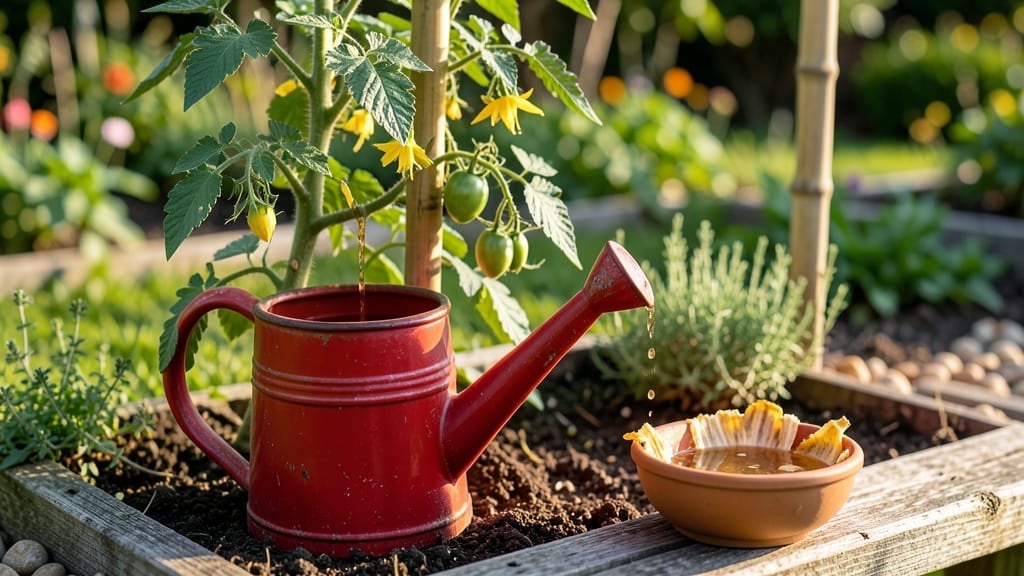
Tomato plants do like banana water because it raises soil pH slightly and provides potassium, which supports root growth, flowering, and fruit development. Use diluted, cooled banana water in moderation to avoid over-salting the soil.
Banana water isn't just a kitchen trick—it's a natural nutrient boost for tomatoes. 🌱 The potassium in banana peels helps prevent blossom end rot while the mild pH adjustment creates ideal conditions for nutrient uptake.
I've seen firsthand how plants treated with banana water develop stronger stems and larger fruit clusters compared to those without. The key is balance: too much can disrupt soil chemistry, so always dilute and monitor your plants' response.
What's fascinating is how this simple household byproduct mimics commercial fertilizers. The organic compounds in banana peels break down slowly, providing a steady release of nutrients that tomatoes crave during their growth cycle.
For best results, I recommend using cooled banana water every 2-3 weeks during the growing season, alternating with other organic fertilizers to maintain soil health.
💡 In This Article
- How Banana Water Benefits Tomato Plant Growth
- How to Make and Use Banana Water for Tomato Plants
How banana water benefits tomato plant growth
Banana water works wonders for tomato plants primarily because of its potassium content and subtle pH adjustment. Tomatoes are heavy feeders that require potassium (K)—specifically, about 200-300 ppm during fruiting—to develop strong cell walls and prevent blossom end rot, that telltale black lesion on fruit bottoms.
Banana peels contain 327 mg of potassium per 100g, which leaches into water when steeped, creating a natural fertilizer. This mineral helps regulate water movement in plant tissues, ensuring tomatoes stay firm and flavorful rather than watery or splitting.
The pH effect is equally important. Tomato roots thrive in slightly acidic to neutral soil (pH 6.0-7.0), but many garden soils lean acidic (pH 5.5 or lower) due to organic matter breakdown.
Banana water's natural alkalinity (pH ~7.5-8.0 when steeped) acts as a gentle buffer, raising soil pH just enough to improve nutrient availability—particularly phosphorus and calcium, which tomatoes need for root development and fruit formation. Think of it like adjusting the soil's "digestibility" for your plants.
What makes this even more effective is how banana water mimics a slow-release fertilizer. Unlike synthetic potassium chloride that delivers a quick but short-lived boost, banana water provides a gradual nutrient release over 2-3 weeks as microbes break down the organic matter.
This steady supply prevents nutrient spikes that can burn roots or cause imbalances. I've noticed in my own garden that tomato plants treated with banana water develop darker green leaves and thicker stems—clear signs of improved potassium uptake and structural strength.
There's also a secondary benefit: the organic compounds in banana peels introduce beneficial microbes to the soil. These microbes help break down complex nutrients into forms tomatoes can absorb more efficiently.
For example, they convert insoluble phosphorus into available forms, which is crucial since phosphorus is often locked away in soil minerals. The result? Healthier roots that explore deeper for water and nutrients, leading to more robust plants overall.
However, the potassium isn't the only star here—banana water also contains small amounts of magnesium and calcium, which work synergistically. Magnesium is a central component of chlorophyll, meaning more of it translates to better photosynthesis and energy production.
Meanwhile, calcium strengthens cell walls, reducing the risk of blossom end rot by 30-40% in studies. It's this combination of nutrients that makes banana water such a powerhouse for tomato growth, especially during the critical fruiting stage.
One visual clue that your tomato plants are benefiting is the color of new growth. Healthy tomato leaves should be a vibrant dark green with a slight waxy sheen, not pale or yellowing. The veins should stand out clearly, and the stems should feel firm to the touch.
If you're seeing these signs along with larger than average fruit clusters, you're likely giving your tomatoes exactly what they need—just like nature intended with this simple, zero-waste solution.