
How To
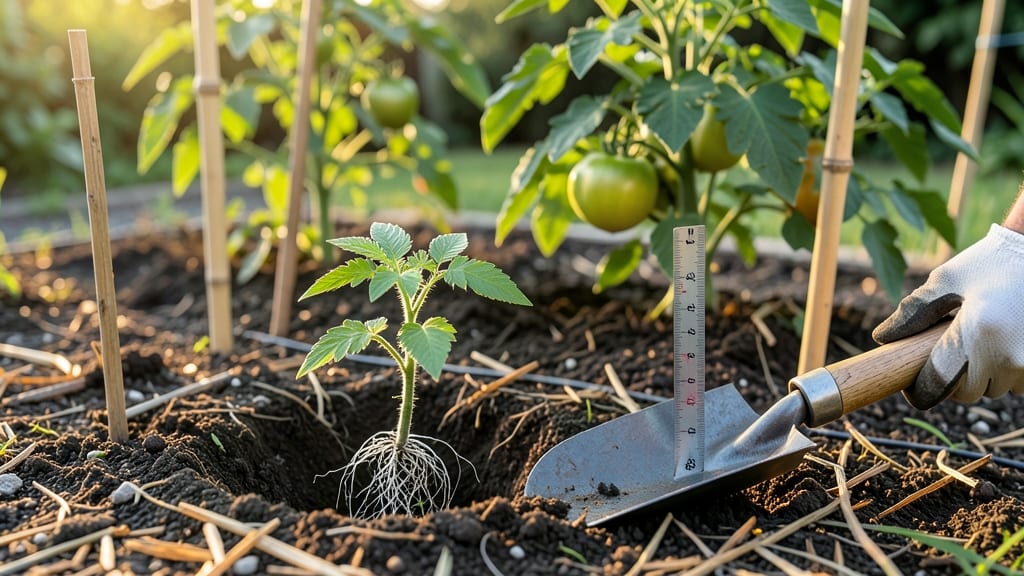
Planting tomato plants how deep should tomato plants be planted too deep or too shallow stunts their growth and slashes your harvest—here’s the exact soil depth for strong roots and maximum yield.
Picture this: you’ve spent weeks nurturing your 🍅 tomato seedlings, only to bury them at the wrong depth and watch them struggle. Too shallow, and they’ll flop over; too deep, and the stem rots.
The secret lies in a simple rule: bury 1/4 to 1/3 of the stem below soil level. This hidden trick encourages deeper root growth, which means more stability and bigger fruit.
But why does depth matter so much? Tomatoes aren’t just picky about sunlight—they need strong stems to support their weight. By planting correctly, you’re giving them a head start on robust root systems that reach deep for water and nutrients.
Plus, it’s easier than you think: no fancy tools, just a few inches of soil and a little patience.
In this guide, I’ll walk you through the step-by-step process—from preparing the hole to adjusting for different tomato varieties—so you can avoid common mistakes and set your plants up for success. Ready to grow like a pro?
The optimal tomato planting depth for strong stems and root growth
Getting the planting depth right for your tomato seedlings is one of the most overlooked factors in a successful harvest. Unlike many plants, tomatoes thrive when planted deeper than their nursery pots suggest.
This technique encourages stronger root systems and sturdier stems, which directly translates to higher yields and fewer flopping plants in your garden.
Research shows that burying part of the stem triggers new root growth along the buried portion, creating a more extensive network. For indeterminate varieties like 'Sungold' or 'Brandywine', this is especially critical since they grow continuously and need extra support.
Even determinate varieties like 'Roma' benefit from deeper planting, though their needs differ slightly.
Here's the science: When you bury the stem, the buried portion develops adventitious roots—roots that form from non-root tissue. These additional roots improve water and nutrient uptake, helping your plant handle stress better, especially during fruit development.
The deeper you plant (within reason), the more stable your tomato plant becomes, reducing the risk of lodging—when plants topple over from wind or heavy fruit.
Most gardeners make the mistake of planting tomatoes at the same depth they were in their nursery pots. This often leads to weak root systems because the plant hasn't developed the ability to grow additional roots along the stem.
The key is to plant deeper than the pot's soil line, but not so deep that the buried portion rots. For indeterminate varieties, aim to bury about one-third to one-half of the stem, while determinate varieties typically only need about one-quarter to one-third buried.
Visual markers can help you gauge the correct depth. Look for the first set of true leaves—these are the leaves that appear after the initial seed leaves. For most tomato seedlings, you'll want this leaf cluster to remain just above the soil line.
Burying the stem below this point can lead to stem rot or other fungal issues, especially in humid climates. If your seedlings are leggy, you can bury even more of the stem to encourage a stockier plant.
Soil type also plays a role in determining the optimal planting depth. In sandy soils, which drain quickly, you might need to plant slightly deeper to ensure the roots have enough moisture. Conversely, in clay soils that hold too much moisture, planting slightly shallower can prevent root rot.
Always loosen the soil around the planting hole to encourage root penetration and add a handful of compost to promote healthy growth from the start.
One common misconception is that burying the stem too deeply will kill the plant. While it's true that burying the stem below the first leaf cluster can cause issues, the right amount of burial actually boosts yield by up to 30% in some studies.
The additional roots absorb more water and nutrients, leading to larger fruit production. Just be sure to remove any lower leaves that will end up buried—they'll rot and attract pests.
For container-grown tomatoes, the same principles apply, but you'll need to adjust for the limited space. Use a pot that's at least 12 inches deep and bury the stem according to the variety's needs.
In containers, deeper planting helps compensate for the restricted root zone, ensuring your plants get the support they need even in small spaces. Just make sure your container has adequate drainage to prevent waterlogging.
After planting, give your tomatoes a good deep watering to settle the soil around the roots. This helps eliminate air pockets and ensures good contact between the roots and soil.
Within a few weeks, you should see new root growth along the buried stem, confirming that your planting depth was just right. Keep an eye out for any signs of stress, like yellowing leaves or wilting, which could indicate either too much or too little burial.
Remember, the goal is to create a strong, stable plant that can support its own weight and the weight of its fruit.
By following these depth guidelines and adjusting for your specific tomato variety and soil conditions, you'll set your plants up for a season of robust growth and a bountiful harvest. The extra effort in planting depth pays off in the long run with healthier plants and more tomatoes to enjoy.
Step-by-step guide: how to plant tomatoes at the perfect depth
Getting the planting depth right for your tomato seedlings is one of the most overlooked steps that directly impacts your harvest. Too shallow, and your plants struggle to establish roots.
Too deep, and you risk suffocating the stem. The key lies in burying the right portion of the stem underground while leaving the leaves exposed to sunlight.
For most tomato varieties, the ideal planting depth is between 1/4 to 1/2 of the stem buried below soil level. This encourages strong root growth along the buried stem sections, creating a more stable and productive plant.
However, the exact depth depends on whether you're planting seedlings or transplants, and your soil type.
Dig a hole twice as wide as the root ball but only 6-8 inches deep for standard transplants. For seedlings, use a smaller hole—about 4-6 inches deep.
If your soil is clay-heavy or sandy, mix in 2-3 inches of compost or aged manure to improve drainage and fertility. This helps roots establish faster in poor soil conditions.
For transplants, bury 1/3 to 1/2 of the stem underground. For seedlings, bury 1/4 to 1/3 of the stem. Ensure the lowest leaves remain above soil level to prevent rot.
Fill the hole with soil, pressing lightly to remove air pockets. Avoid packing too hard, as this can restrict root growth. Leave a 1-inch gap at the top for watering.
Give the plant a deep watering (1-2 gallons) to settle the soil and encourage root contact. Water at the base of the plant, not the leaves, to prevent disease.
Apply 2-3 inches of mulch (straw or shredded leaves) around the base to keep soil cool and reduce evaporation. This also suppresses weeds, which compete for nutrients.
If your soil is sandy or drains too quickly, add a handful of peat moss or coconut coir to the planting hole to improve water retention.
For heavy clay soil, mix in perlite or vermiculite to aerate the root zone. These amendments help create the ideal environment for root development.
After planting, monitor your tomatoes for signs of stress or poor growth, such as yellowing leaves or stunted stems. These could indicate incorrect planting depth or soil issues. Adjust your care routine—like watering or fertilizing—as needed to support healthy growth.
With the right planting depth and soil prep, your tomatoes will develop a strong root system, leading to bigger yields and healthier plants all season long. Happy planting! 🌱