
Fertilization
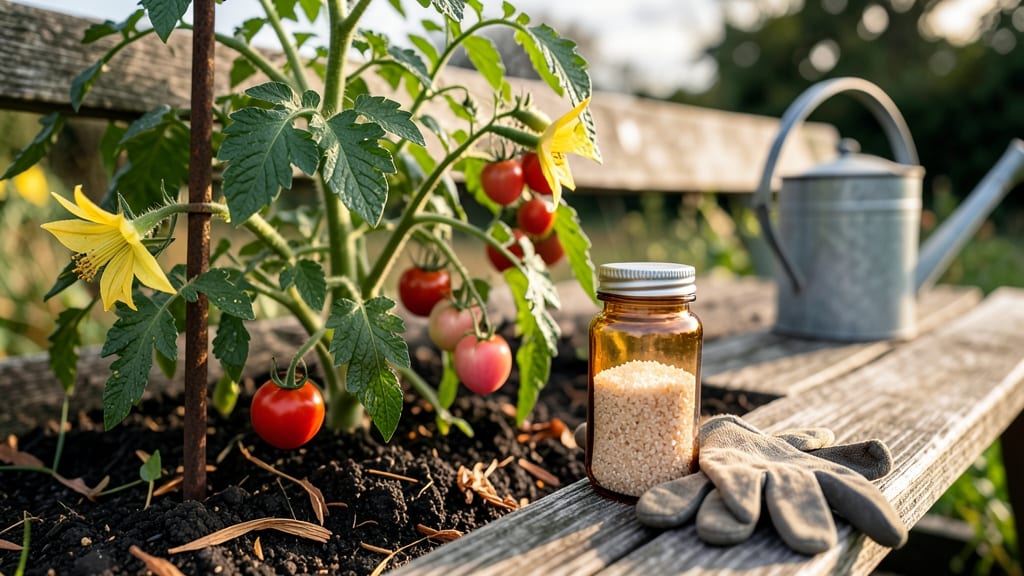
To use Epsom salts for tomato plants, start with 1 tablespoon per gallon of water for seedlings and increase to 2 tablespoons per gallon as they mature—this simple ratio unlocks the magnesium and sulfur your 🍅 need for strong stems and sweet fruit.
Struggling with weak tomato plants or poor fruit development? Epsom salts could be the game-changer you need—but using the wrong amount can harm instead of help. Too little won’t fix deficiencies, while too much risks burning roots or stunting growth, leaving you with more problems than solutions.
Most gardeners overlook the fact that Epsom salts work best when applied at the right stage of growth. Seedlings need a gentle dose to build resilience, while flowering plants require more to support fruit development.
Below, I’ll break down the exact amounts for every phase, from transplanting to harvest, so you can boost your tomatoes without guesswork.
You’ll also discover how to spot magnesium deficiency early—yellowing leaves between veins are a dead giveaway—and learn when to switch to organic alternatives if Epsom salts aren’t cutting it. By the end, you’ll have a foolproof plan to keep your tomato plants thriving from seed to sauce.
Epsom salt dosage chart for tomato plants by growth stage
Tomato plants thrive when they receive the right nutrients at the right time, and Epsom salt (magnesium sulfate) plays a crucial role in providing magnesium and sulfur. But applying too much—or too little—can throw off your plants' nutrient balance.
The key is understanding how much Epsom salt to use during each growth stage, from seedlings to fruiting. Let’s break it down so you can optimize your tomato plants’ health without risking over-application.
Magnesium deficiencies often show up as yellowing between leaf veins (a classic sign called interveinal chlorosis), while excessive magnesium can cause leaf burn or stunted growth. By following this dosage chart, you’ll ensure your tomato plants get the magnesium boost they need—when they need it most.
Whether you’re using soil applications or foliar sprays, timing and method matter just as much as the amount.
Why stage-specific dosing? Seedlings need far less magnesium than flowering plants, and overfeeding early can delay maturity. Meanwhile, fruiting plants require more magnesium to support fruit development and prevent blossom-end rot. This chart simplifies the process, so you can apply Epsom salt with confidence at every stage of your tomato plants’ lifecycle.
For container-grown tomatoes, halve the soil application amounts since pots hold less soil. Always dissolve Epsom salt in water before applying to the soil or foliage—never sprinkle it dry. The foliar spray method is ideal for quick magnesium uptake, especially during flowering, while soil applications provide long-term benefits.
Mix foliar sprays in a 1-gallon sprayer with water and apply in the early morning to avoid leaf burn from afternoon sun.
If your tomato plants show signs of magnesium deficiency—like yellowing leaves with green veins—you can increase the dosage slightly for 2-3 weeks, then return to the recommended amounts.
However, never exceed 1 tbsp per gallon for foliar sprays or 2 tbsp per sq ft for soil applications, as excess magnesium can displace calcium and worsen blossom-end rot. Balance is key!
Pro tip: Pair Epsom salt applications with calcium-rich fertilizers (like crushed eggshells or lime) to maintain nutrient balance. This combo supports both magnesium and calcium needs, reducing the risk of deficiencies.
For example, mix 1 tbsp Epsom salt with 2 tbsp crushed eggshells into the soil during the flowering stage for optimal results.
Always monitor your plants’ response after applying Epsom salt. Healthy tomato plants will show deep green leaves, strong stems, and abundant fruit set. If you notice leaf curling or stunted growth after application, flush the soil with water to prevent magnesium buildup.
Consistency is key—stick to the recommended dosages, and your tomato plants will reward you with a bountiful harvest.
Remember, Epsom salt isn’t a miracle cure, but when used correctly, it’s a powerful supplement for tomato plants. Combine it with proper watering, sunlight, and soil health practices, and you’ll set your tomatoes up for success from seedling to harvest. Happy gardening!
Signs of Epsom salt overuse and how to fix it
Epsom salts are a gardener's secret weapon for boosting tomato plant health, but too much can backfire. When applied excessively, the magnesium sulfate in Epsom salts can disrupt soil chemistry, leading to nutrient imbalances that stunt growth or even kill your plants.
Recognizing these warning signs early is key to saving your harvest before it's too late.
One of the first visual clues of overuse is yellowing leaves, particularly between the veins—a classic sign of magnesium toxicity. Unlike nutrient deficiencies, which often start at the leaf edges, Epsom salt overapplication causes yellowing that spreads inward.
Your tomato plants may also develop brown leaf tips or crispy edges, mimicking drought stress even when soil is moist.
⚠️ WARNING ⚠️ Epsom Salt Overuse Can Harm Your Tomatoes If you notice these symptoms, act fast: 🔹 Yellow leaves between veins (not just edges) 🔹 Stunted growth despite proper watering 🔹 Brown leaf tips or curling foliage 🔹 Poor fruit development (small, misshapen tomatoes) 🔹 Soil crusting or white residue on surface Fix it: Flush soil with 6 inches of water to leach excess salts, then amend with compost to restore balance.
Reduce future applications to 1 tablespoon per gallon of water (max 1x/month).
Another red flag is stunted growth despite adequate sunlight and water. Epsom salt overuse can create a salt buildup in the soil, making it harder for roots to absorb water and nutrients.
Your tomato plants might also drop unopened flowers or produce blossom-end rot, a condition often linked to calcium deficiency—but magnesium excess can worsen it by interfering with nutrient uptake.
To prevent overuse, always follow the 1 tablespoon per gallon rule for foliar sprays and limit soil applications to once every 4-6 weeks. Test your soil's magnesium levels annually using a home soil test kit—this helps you avoid guesswork.
If your tomatoes show signs of deficiency (like yellowing lower leaves), a light application of Epsom salts can help, but never exceed 2 tablespoons per plant per season.
For severe cases, consider switching to organic magnesium sources like kelp meal or Epsom salt alternatives such as langbeinite. These provide magnesium without the risk of sulfate buildup. Always water thoroughly after applying Epsom salts to help distribute nutrients evenly and prevent salt concentration around roots.
Remember, prevention is easier than correction. Start with small, measured doses and monitor your plants closely. Healthy tomato plants should have deep green leaves, strong stems, and abundant fruit—if you see anything else, it's time to reassess your Epsom salt routine.
Your tomatoes will thank you with a bountiful harvest!