
Light Requirements
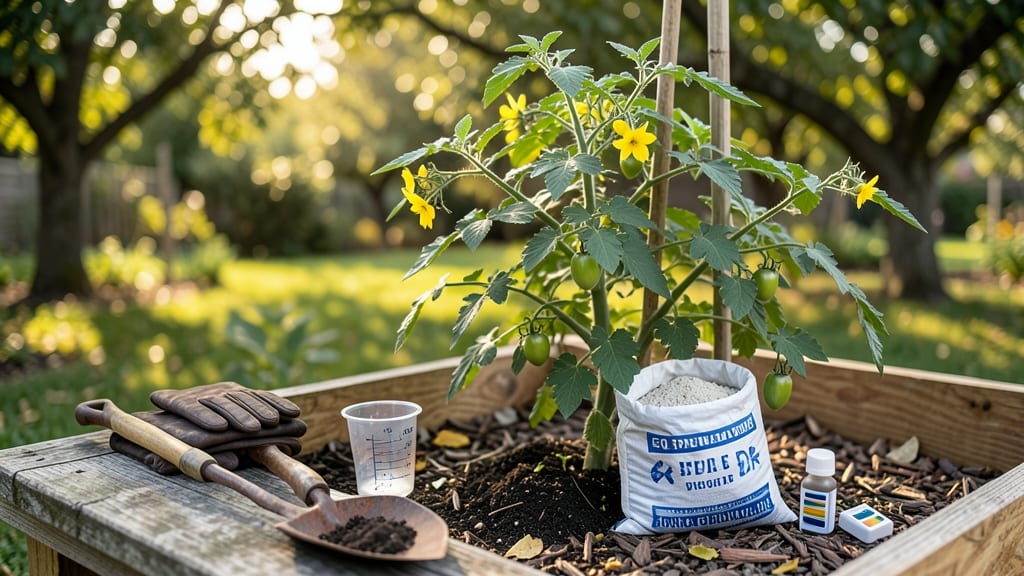
To grow thriving tomato plants 🍅, you’ll need the right amount of lime—typically 1 to 2 pounds per 100 square feet—but the exact dose depends on your soil’s pH and how acidic it is.
Struggling with stunted tomato growth or yellowing leaves? Your soil’s pH might be the culprit—and lime could be the simple fix you need. But how much lime for tomato plants? Get the science-backed answer to balance your soil without overdoing it.
Most gardeners don’t realize that tomatoes thrive in slightly acidic to neutral soil (pH 6.0–6.8). If your soil test shows a pH below 6.0, lime can raise it gradually, but too much can lock out essential nutrients like iron and manganese.
Below, I’ll walk you through how to test your soil, calculate the right lime dose, and apply it safely—so your tomatoes grow strong and productive all season.
How much lime to add based on soil pH levels
Tomatoes thrive in slightly acidic to neutral soil with a pH range of 6.0–6.8. If your soil test reveals a lower pH, lime can raise it safely—but how much? The answer depends on your soil’s current pH, organic matter content, and the type of lime you use.
Let’s break it down so you can calculate lime rates like a pro.
First, grab your soil test results. Most labs provide a buffer pH reading, which is more accurate for lime calculations. If your pH is below 6.0, you’ll need to add lime.
The key is precision: too little won’t fix the issue, and too much can lock out essential nutrients like iron and manganese. For tomatoes, dolomitic lime (which adds magnesium) is often preferred, but agricultural lime (calcium carbonate) works too.
Here’s the critical step: match your soil’s current pH to the lime application rate below. The table accounts for both dolomitic lime and agricultural lime, with adjustments for sandy vs. clay soils.
For example, if your pH is 5.5 in a clay soil, you’ll need roughly 5 lbs of dolomitic lime per 100 sq ft to reach the ideal range.
🌱
Pro tip: Spread lime evenly over the soil surface and lightly rake it in. Avoid direct contact with plant roots, as lime can burn them. For container-grown tomatoes, mix lime into the top 2–3 inches of soil before planting.
If your soil is high in organic matter (like compost), lime will neutralize faster—reduce rates by 25% to avoid overshooting.
For existing tomato plants showing signs of chlorosis (yellowing leaves), apply lime in early spring before new growth begins. It takes 2–3 months for lime to fully adjust soil pH, so don’t expect instant results. After applying lime, water deeply to help it dissolve and integrate into the soil profile.
What if your soil is already at or above pH 6.8? Lime won’t help—you’ll need to address the issue differently. In alkaline soils, focus on adding organic matter (like peat moss or compost) to lower pH naturally. For severe alkalinity (pH 7.5+), consider adding elemental sulfur instead.
🌿
Remember, precision is key. Over-liming can create a nutrient imbalance, leading to problems like blossom-end rot in tomatoes—ironically caused by too much calcium
Signs your tomato plants need lime (and when to avoid it)
Yellowing leaves between the veins? That’s a classic sign of chlorosis, often caused by acidic soil that locks out essential nutrients like iron and manganese.
Tomato plants thrive in slightly acidic to neutral soil (pH 6.0–6.8), so if your leaves look pale or yellow while the veins stay green, your soil might need lime. But before reaching for that bag, let’s diagnose the problem properly.
Another red flag is blossom-end rot, where fruit develops dark, sunken spots. While this is often blamed on calcium deficiency, soil pH imbalances can worsen the issue by reducing nutrient uptake.
If your tomatoes are showing these symptoms, a soil test is your first step—it’ll tell you whether lime is the solution or if another amendment is needed.
⚠️ pros cons box ⚠️
How Much Lime for Tomato Plants?
- ✅ Raises pH 5.5–6.0 to ideal 6.0–6.8
- ✅ Prevents chlorosis and blossom-end rot
- ✅ Improves nutrient availability (Ca, Mg, P)
- ❌ Over-liming causes pH >7.0 (locks out Fe, Mn, Zn)
- ❌ Toxic buildup if over-applied (especially dolomitic lime)
- ❌ Slow-acting (takes 2–3 months to adjust pH)
- • pH 5.5–6.0: 5–10 lbs per 100 sq ft (dolomitic lime)
- • pH 6.1–6.5: 2–5 lbs per 100 sq ft (agricultural lime)
- • pH >6.8: Avoid lime—use sulfur instead
If your soil test reveals a pH below 6.0, lime is likely the answer—but timing matters. Apply lime 2–3 months before planting to let it fully integrate into the soil. For established plants, spread it lightly around the base and water it in. Just remember: too much lime can be worse than too little, causing nutrient deficiencies like iron chlorosis in new growth.
Watch for over-liming signs: crispy leaf edges, stunted growth, or a sudden drop in fruit production. If you see these, your soil may have become too alkaline (pH >7.0).
In that case, switch to sulfur or peat moss to lower pH instead. Always re-test your soil 6 months after amending to ensure you’ve hit the sweet spot for tomato growth.
For organic gardeners, consider crushed eggshells or wood ash as natural lime alternatives—they’re gentler and won’t throw off your soil’s balance as quickly. Just use them sparingly, as they’re less predictable than commercial lime.
The key is patience: soil pH changes gradually, so monitor your plants’ progress and adjust as needed.
🌱 Remember, lime isn’t a quick fix—it’s a long-term soil investment. Pair it with compost and balanced fertilizer for the best results, and your tomato plants will reward you with vibrant leaves and bountiful harvests all season long.