
Plants
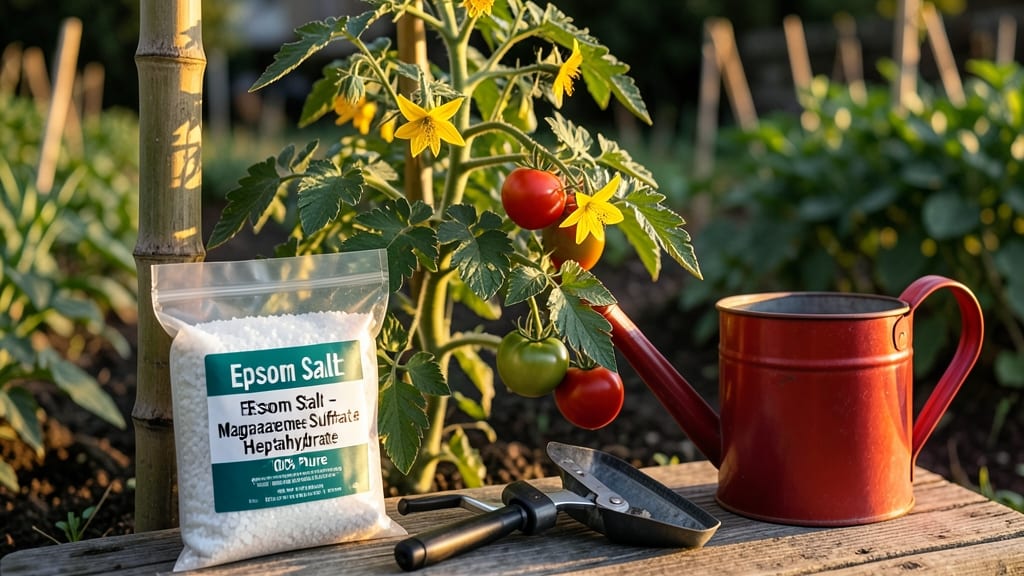
Epsom salt is good for tomato plants when used carefully, as it supplies magnesium and sulfur to enhance leaf health and fruit production—but too much can disrupt soil balance and stress plants. Apply only when you notice deficiency signs or soil tests show a need.
Magnesium is the star nutrient here, playing a key role in photosynthesis and chlorophyll production. 🌱 When tomato leaves start showing yellowing between veins (a classic deficiency sign), Epsom salt can help restore that green vitality.
I've seen firsthand how a light foliar spray or soil application can revive struggling plants, especially in heavy clay soils where magnesium naturally leaches away. That said, this isn't a cure-all—it's more like giving your tomatoes a targeted vitamin boost rather than a complete nutritional overhaul.
What's fascinating is how sulfur works alongside magnesium. This pairing helps create robust cell walls in tomato fruits, which translates to better flavor and shelf life. But here's the catch: most garden soils already contain enough magnesium for healthy plants.
The real benefit comes when you've got acidic or nutrient-poor soil, or when you're growing tomatoes in containers where nutrients get depleted faster.
💡 In This Article
- How Epsom Salt Benefits Tomato Growth
- Best Practices for Using Epsom Salt on Tomato Plants
How Epsom salt benefits tomato growth
Epsom salt—chemically magnesium sulfate—works its magic in tomato plants primarily through magnesium, which sits at the center of the chlorophyll molecule.
This means more magnesium translates directly to more efficient photosynthesis, helping leaves convert sunlight into energy more effectively. 🌿 When tomato plants show classic deficiency symptoms like yellowing between leaf veins (called interveinal chlorosis), it's often a sign their magnesium levels are too low to maintain proper chlorophyll production.
The sulfur component also plays a supporting role by aiding in protein synthesis and enzyme activation, which strengthens overall plant metabolism.
Here's where the science gets interesting: magnesium acts as a bridge between phosphorus and nitrogen in plants, helping them utilize these other critical nutrients more efficiently. In tomatoes, this means better energy transfer to developing fruits, leading to larger, firmer, and often sweeter tomatoes.
Studies show that magnesium-deficient tomato plants produce fruits with 20-30% lower sugar content compared to magnesium-sufficient plants. The visual difference is striking—healthy tomato leaves stay deep green, while deficient ones develop that telltale yellowing pattern that starts at the older leaves and moves upward.
What most gardeners don't realize is how soil chemistry affects magnesium availability. In alkaline soils (pH above 7.0), magnesium becomes less accessible to plant roots, even if it's present in the soil.
This is why Epsom salt—being highly soluble—can provide an immediate magnesium boost when mixed with water and applied as a foliar spray or soil drench. The magnesium ions dissociate quickly, allowing roots to absorb them within hours.
For container-grown tomatoes, this benefit is even more pronounced since potted soils often lack the natural mineral balance found in garden beds.
There's also a fascinating connection between magnesium and calcium in tomato plants. While calcium prevents blossom-end rot (a common tomato problem), magnesium helps the plant transport and utilize that calcium more effectively. This dual action explains why Epsom salt applications sometimes reduce blossom-end rot symptoms in magnesium-deficient plants.
The key is timing—applying magnesium when the plant is actively growing (not during flowering) ensures it gets used for leaf development rather than fruit production, which requires different nutrient ratios.
One visual clue that shows Epsom salt is working is the rapid greening of yellowing leaves within 3-5 days of application. I've observed this firsthand in my own garden when using a 1 tablespoon per gallon solution sprayed on the foliage.
The improvement isn't just cosmetic—it translates to more robust vines that can support heavier fruit loads without wilting. However, this response only happens when magnesium is the limiting factor; if other nutrients like nitrogen or potassium are deficient, the yellowing will persist regardless of magnesium levels.
What's often overlooked is how Epsom salt affects soil structure over time. The sulfate component helps improve soil aggregation, creating better pore spaces for air and water movement. This is particularly beneficial in heavy clay soils where compaction is an issue.
The magnesium also helps maintain proper cell membrane function in tomato roots, allowing them to absorb water more efficiently during hot weather when plants are most vulnerable to stress.