
Plants
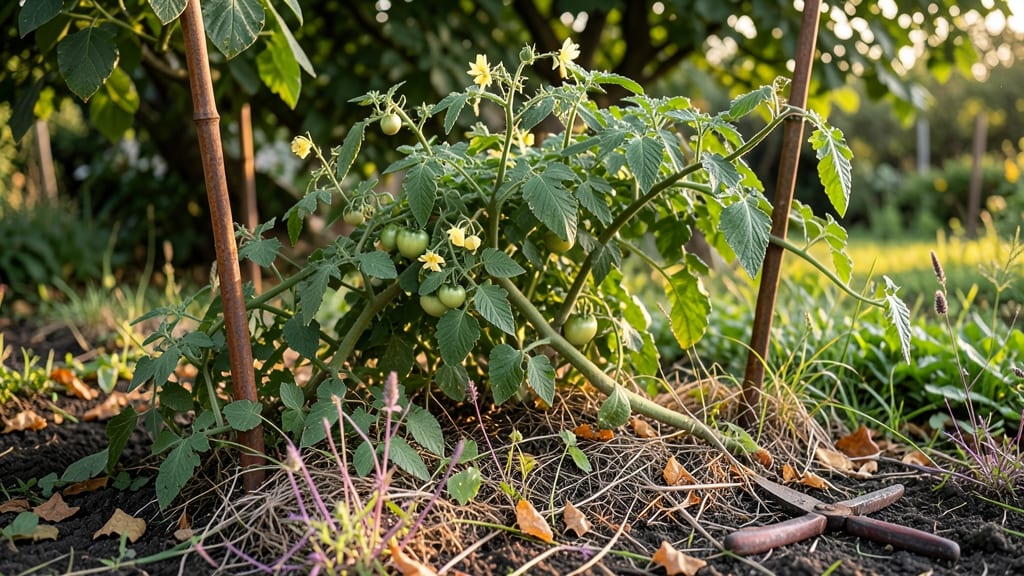
Overgrown tomato plants can turn your garden into a jungle of tangled vines instead of a productive harvest. 🌿 I’ve spent years watching my tomatoes sprawl uncontrollably—until I learned the simple pruning tricks that transformed them into bushy, fruit-loaded powerhouses.
The problem usually starts with too much sun, water, or fertilizer, which encourages wild growth instead of fruit production. But the real fix isn’t just cutting back—it’s training those vines to focus energy where it matters: on heavier, sweeter tomatoes instead of endless foliage.
A few strategic cuts and a sturdy trellis can make all the difference. By the time you’re done, your plants will be neater, stronger, and loaded with fruit from top to bottom. The best part? You’ll spend less time wrestling with unruly vines and more time picking ripe tomatoes.
Let’s get those plants under control—permanently.
First, grab sharp pruners and a 5-gallon bucket for clippings. Start by removing any suckers (those little shoots between the main stem and branches)—they drain energy from your fruit. Then, trim back any leggy stems to encourage bushier growth, always cutting just above a leaf joint.
For indeterminate varieties, prune the top leaves once fruit starts setting to redirect energy downward. This isn’t just about tidying up—it’s about maximizing your harvest. A well-pruned plant produces 20-30% more tomatoes than an unmanaged one, and the fruit tends to be larger and riper.
Plus, your plants will stay healthier, with better airflow that reduces disease risk.
To keep this from happening again, space your plants properly (18-24 inches apart for determinate, 24-36 for indeterminate) and use a strong trellis or cage from day one. Choose varieties suited to your climate—some naturally stay compact, while others need aggressive pruning.
And when it comes to harvesting, pick regularly—ripe tomatoes signal the plant to produce more, while overripe ones slow everything down. The payoff? A garden that’s easier to manage, produces more consistently, and gives you better-tasting tomatoes all season.
No more wrestling with vines—just a tidy, productive plant that keeps giving.
Root Causes of Unruly Growth
Overgrown tomato plants aren’t just a sign of a thriving garden—they’re often a response to environmental and cultural cues your plants are interpreting as an invitation to go wild.
Understanding why this happens is the first step to reclaiming control and coaxing those lush vines into producing the juicy, abundant harvests you’re dreaming of. Let’s dig into the science behind the chaos.
Tomatoes are sun-worshippers, but too much of a good thing can backfire. When plants receive more light than they can efficiently use for photosynthesis, they shift into "growth mode" to maximize their canopy.
This leads to: - Rapid vine elongation (think skyward sprints instead of fruit production). - Weak stems that flop under their own weight or in wind. - Delayed flowering/fruiting as energy prioritizes leaves over reproductive structures.
Why it happens:
- Photosynthesis saturation point: Tomatoes hit their sweet spot at 6–8 hours of direct sunlight daily. Beyond that, excess light triggers ethylene production, a plant hormone that promotes vertical growth over fruit set.
- Heat stress: In hot climates (above 85°F/29°C), tomatoes may prioritize leaf expansion to cool themselves via transpiration—sacrificing fruit in the process.
- Shade-clinging habits: If your plants were previously shaded (e.g., by a temporary structure) and then suddenly exposed to full sun, they’ll stretch aggressively to reclaim light.
Actionable insight: 💡 Monitor sunlight hours with a plant light meter or observe shadows at solar noon. If your tomatoes are basking in more than 10 hours of direct sun, provide afternoon shade (e.g., shade cloth) to balance growth.
Water is the lifeblood of tomato plants, but too much—or too little—disrupts their natural growth rhythms. Here’s how hydration gone wrong fuels overgrowth:
| Issue | Effect on Growth | Science Behind It |
|---|---|---|
| Overwatering | Soft, spindly stems; excessive leafy growth; root rot risk. | Saturated soil reduces oxygen availability, forcing roots to spread horizontally instead of anchoring deeply. This triggers auxin (a growth hormone) overproduction, leading to weak, leggy vines. |
| Drought Followed by Sudden Water | Explosive new growth (often with few flowers). | Drought stress concentrates ethylene, while sudden water flushes out gibberellins (growth-promoting hormones), causing a "growth spurt" at the expense of fruit. |
| Inconsistent Watering | Stunted or erratic growth; poor fruit set. | Tomatoes thrive on consistent moisture (1–1.5 inches per week). Fluctuations confuse their hormonal balance, leading to abscission (dropping flowers/fruit) or uncontrolled elongation. |
Pro tip: 🌡️ Stick your finger 2 inches into the soil—if it’s dry, water deeply until it drains from the bottom. Drip irrigation (set to 1–2 hours, 2–3x/week) beats overhead watering, which can promote fungal issues and uneven moisture.
Tomatoes are heavy feeders, but improper fertilization can send them into overdrive. The most common culprits: - Excess nitrogen (N): The "leafy monster" fertilizer.
Nitrogen fuels vegetative growth (leaves/stems) at the expense of flowers/fruit. - Symptoms: Dark green, lush foliage with tiny or no tomatoes. - Why it happens: Nitrogen-heavy fertilizers (like blood meal or grass clippings) or over-fertilizing with 10-10-10 early in the season. - Low phosphorus (P) or potassium (K): These nutrients are critical for flowering and fruit development.
Without them, plants may grow tall but produce poorly. - Symptoms: Purple stems (P deficiency) or weak, brittle growth (K deficiency). - Organic matter overload: Too much compost or manure can burn roots or create anaerobic soil, triggering hormonal imbalances.
Actionable fix: ✨ Switch to a balanced fertilizer (like 5-10-10) after flowering begins, and side-dress with bone meal (3-4-0) or kelp meal (0-0-2) to boost P and K. Avoid high-N fertilizers (e.g., lawn fertilizer) after the first 4–6 weeks.
Tomatoes are warm-season plants, but extreme or fluctuating temperatures can derail their growth patterns:
- Cool nights (below 55°F/13°C): Delays flowering and fruit set, causing plants to focus on leafy growth instead.
- Heat waves (above 90°F/32°C): Stops pollination (bees avoid heat) and causes blossom drop, leading to rapid, unfocused vine growth.
- Sudden temperature swings: Confuses hormonal signals, leading to abnormal elongation or stunted growth.
Why it matters: Tomatoes are day-neutral but temperature-sensitive. Ideal day/night temps are 70–85°F (21–29°C). Outside this range, ethylene and abscisic acid (stress hormones) take over, promoting vegetative growth over reproduction.
Solution: 🔥 Use row covers for early-season protection against cold snaps, and provide afternoon shade in scorching climates. Mulch heavily (straw or black plastic) to stabilize soil temps.
Not all tomatoes are created equal—and some are genetically wired to grow like weeds. Here’s the breakdown: - Indeterminate varieties (e.g., Cherry, Roma, Brandywine): These are perpetual growers, producing new leaves and flowers until frost.
Without pruning, they’ll climb, sprawl, and tangle into unmanageable vines. - Determinate varieties (e.g., Bush Early Girl, Celebrity): These grow to a fixed size and set fruit all at once. Even these can overgrow if overcrowded or over-fertilized.
Key takeaway: 🎯 Indeterminate tomatoes need pruning and training—they won’t stop growing on their own. Determinate types are low-maintenance but still benefit from thinning and staking to prevent disease and improve airflow.
Unseen invaders can stress your plants, triggering a survival response that looks like "going rogue":
- Aphids, whiteflies, or spider mites: These sap-suckers inject toxins that disrupt plant hormones, causing stunted growth or excessive elongation.
- Fungal diseases (early blight, powdery mildew): Block sunlight and clog stomata, forcing plants to grow larger leaves to compensate.
- Root-knot nematodes: Damage roots, reducing water/nutrient uptake, which triggers compensatory growth above ground.
How to spot it: 🐛 Check undersides of leaves for pests or yellowing between veins (viral symptoms). Wilting despite wet soil? Root issues may be at play.
Fix: 🔪 Isolate affected plants, apply neem oil (for pests) or copper fungicide (for disease), and rotate crops next season to break the cycle.
Revive Your Rampant Tomatoes
Overgrown tomato plants can feel like a wild jungle—vines sprawling everywhere, leaves blocking sunlight, and fruit struggling to ripen. But don’t stress! With the right techniques, you can tame the chaos, boost productivity, and even encourage bigger, healthier harvests.
Below, we’ll tackle the most common causes of unruly tomato growth and provide practical, step-by-step fixes—plus prevention tips to keep your plants in check all season long.
Cause: Too many stems, leaves, or plants competing for space. Fix: Strategic pruning opens up the canopy, reduces disease risk, and directs energy to fruit production.
- 🔪 Trim Suckers (Weekly Check) - Suckers are the small shoots that grow between the main stem and branches.
Pinch them off with your fingers or snips when they’re the size of a pencil eraser (bigger suckers drain energy). - Pro Tip: 💡 Use clean pruners dipped in rubbing alcohol to avoid spreading disease.
- 🍃 Remove Bottom Leaves
- Strip leaves from the lower 12–18 inches of the stem (especially if touching soil). This prevents soil-borne diseases (like blight) and improves airflow.
- Warning: ⚠️ Never remove more than ⅓ of the foliage at once—shock can stress the plant.
- 🌿 Thin Out Overlapping Branches
- If vines tangle, selectively prune weaker stems to leave 3–4 strong branches per plant. Use the "open vase" method for determinate tomatoes (let them bush out naturally) or stake indeterminate types for vertical growth.
- 🌍 Adjust Plant Spacing
- Determinate (bush) tomatoes: Space 2–3 feet apart.
- Indeterminate (vining) tomatoes: Space 3–4 feet apart or train vertically on a trellis.
Cause: Plants sprawling instead of reaching sunlight. Fix: Use supports to lift vines and maximize light exposure.
- 🪵 Install Supports Early
- Cages: Choose 6–7 foot tall cages for indeterminate varieties (like ‘Sungold’ or ‘Beefsteak’).
- Trellises: String twine or nylon mesh between posts for a DIY vertical garden.
- Stakes: Drive bamboo or metal stakes 4–5 feet deep and tie stems with soft plant ties (avoid wire—it cuts into vines).
- 👨🍳 Weave Vines Gently
- As vines grow, loop them around the support in a spiral or zigzag pattern. This prevents breakage and encourages upward growth.
- Pro Tip: 🌡️ Water plants before pruning or training—hydrated vines bend easier!
- 🍅 Redirect Energy to Fruit
- Once vines hit the top of the support, prune the tip to stop vertical growth and focus on ripening existing fruit.
Cause: Fungal diseases (blight, powdery mildew) or pests (hornworms, aphids) thriving in dense foliage. Fix: Prune strategically to improve airflow and monitor for infestations.
- 🚨 Remove Infested Leaves Immediately
- Yellowing or spotted leaves? Snip them off below the damage (don’t leave stubs). Dispose of debris in the trash (not compost).
- Quick Fix: 🔥 Spray plants with neem oil (1 tsp per quart of water) to deter pests.
- 🌬️ Thin for Air Circulation
- Aim for a golf-ball-sized gap between leaves. Use sharp pruners to avoid tearing tissue.
- Pro Tip: ✨ Morning pruning is best—leaves dry faster, reducing fungal spores.
- 🛡️ Prevent Future Outbreaks
- Water at the base (avoid wetting leaves).
- Mulch with straw to keep soil moist and deter pests.
- Rotate crops next season—don’t plant tomatoes in the same spot yearly.
Cause: Too much nitrogen = lush leaves, few tomatoes. Fix: Adjust feeding and prune to rebalance the plant.
- 📊 Switch to Low-Nitrogen Fertilizer
- Use a 5-10-10 or 3-4-6 formula (phosphorus and potassium promote fruiting).
- Signs of Over-Fertilizing: Dark green leaves, weak stems, or no flowers/fruit.
- 🍅 Prune Excess Leaves
- Remove every other leaf along the vine to force flowering. Focus on keeping leaves above the fruit zone.
- 💧 Monitor Watering
- Overwatering dilutes nutrients. Water deeply 1–2 times per week (check soil moisture 2 inches down).
Keep your tomatoes tamed and productive with these proactive steps:
- 🌱 Start with the Right Variety: Choose determinate for bushier growth or indeterminate for vining (if you love trellises).
- 📅 Plant at the Perfect Time: Avoid late spring plantings—cool soil slows growth, leading to leggy plants.
- 🌱 Use Dwarf or Compact Varieties: Try ‘Tiny Tim’ or ‘Patio Princess’ for small spaces.
- 🔄 Succession Plant: Stagger plantings every 2–3 weeks to avoid overcrowding.
- 🌿 Mulch Heavily: Straw or grass clippings suppress weeds and retain moisture.
Final Thought: 🎯 A well-pruned tomato plant isn’t just manageable—it’s a fruit-producing powerhouse. Spend 10–15 minutes weekly trimming, training, and inspecting, and you’ll reward yourself with bigger, riper tomatoes all season long. Happy gardening! 🍅✨
Frequently asked questions
How often should I prune overgrown tomato plants?
Check your plants weekly for suckers and leggy growth. For indeterminate varieties, trim suckers when they're pencil-sized (about 1 inch long). Focus on removing 10-20% of foliage at a time to avoid shocking the plant. Morning sessions work best—leaves dry faster, reducing disease risk.
Can I prune tomatoes too much?
Yes! Never remove more than ⅓ of the plant's leaves at once. Over-pruning reduces the plant's ability to photosynthesize and support fruit. For indeterminate types, aim to keep 3-4 main stems and maintain an open canopy. If you see yellowing leaves or stunted growth, you've likely pruned too aggressively.
What's the best support system for sprawling tomato plants?
For indeterminate varieties, use 6-foot tall cages or trellises with twine. For determinate types, 5-foot stakes work well. Install supports early—before vines get too heavy. Weave stems gently in a spiral pattern to prevent breakage. Hydrate plants before training for easier handling.
Will pruning overgrown tomatoes still produce fruit?
Proper pruning actually boosts fruit production by redirecting energy from excessive foliage to developing tomatoes. You'll often see 20-30% more fruit on well-pruned plants. The key is maintaining balance—keep enough leaves for photosynthesis while removing non-productive growth.
How do I know if my tomato plant is determinate or indeterminate?
Check the plant's growth pattern: Determinate varieties grow to a fixed size (usually 3-5 feet tall) and produce fruit all at once. Indeterminate types keep growing until frost, producing fruit continuously. Look for the variety name on seed packets—common determinate types include 'Celebrity' and 'Bush Early Girl'.