
Watering
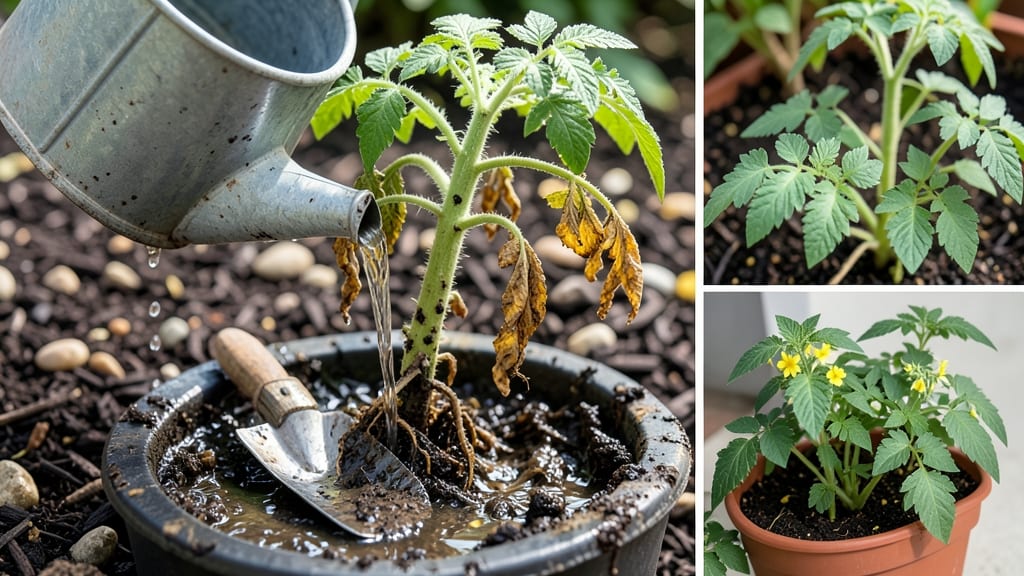
Your tomato seedlings look like drowned victims, not future vine giants. 🌱 Overwatering turns crisp green leaves into sad, yellow mush overnight—and I’ve seen it happen more times than I’d like to admit. The good news? You can still save them with the right moves.
First, check the soil: it should feel like a damp sponge, not a swamp. If it’s soggy, your seedlings are suffocating. Root rot sets in fast, cutting off nutrients and oxygen.
Yellowing leaves and wilting stems are your first red flags—don’t ignore them. The fix starts with holding off on water until the top inch of soil dries out.
Next, improve drainage by adding perlite or sand to the mix (if repotting) or making sure pots have drainage holes. Airflow is key—space seedlings wider and avoid crowding.
Within a week, you’ll see new growth as roots recover, and those limp stems will perk up like they’ve had a caffeine shot.
Prevent future disasters by watering only when the top inch is dry and using well-draining soil. A moisture meter helps, but even a finger test works. Once you’ve got the rhythm, your seedlings will thrive instead of throwing a pity party in their pots.
Root Causes Of Drowning Seedlings
When your tomato seedlings start wilting despite your best efforts, the issue often boils down to water management. Overwatering—whether intentional or accidental—can suffocate roots, disrupt nutrient uptake, and create conditions ripe for disease.
Understanding the why behind this problem is the first step to fixing it. Let’s break down the key culprits:
Tomato seedlings thrive in well-draining soil, but heavy, compacted, or clay-based mixes can turn watering into a death sentence. Here’s how it happens:
- Waterlogging: When soil lacks sand, perlite, or organic matter (like compost), excess water pools around roots, cutting off oxygen. Roots need 10-15% air space to breathe—without it, they suffocate within 24 hours.
- Root rot: Fungal pathogens like Pythium or Phytophthora flourish in soggy conditions. These microbes attack root cells, clogging xylem vessels and blocking water/nutrient transport—even if the soil looks moist.
- Nutrient lockout: Overwatered soil leaches vital nutrients (nitrogen, phosphorus, potassium) beyond root zones. Seedlings starve even as their cells drown.
💡 Pro Tip: Test your mix by scooping a handful. If it forms a tight ball when squeezed, it’s too dense. Amend with 20% perlite or coco coir to improve aeration.
New growers often assume "more water = happier plants," but tomato seedlings have delicate root systems that can’t handle frequent soaking. Here’s the science:
- Surface evaporation: Small seedling pots (like 2-3 inch cells) dry out top-down. Dumping water daily keeps the top layer wet but leaves roots in a permanent swamp.
- Temperature shock: Cold water (below 60°F/15°C) stresses seedlings, slowing root growth. If you’re watering on a chilly morning, roots can’t absorb efficiently, leading to functional drought even when soil is wet.
- Container constraints: Roots in tiny pots hit the sides quickly. Once they circle the container, they can’t expand, trapping moisture and accelerating rot.
🎯 Fix: Water only when the top 1 inch of soil is dry (stick your finger in!). Use a spray bottle or drip irrigation for gentle hydration.
Even with perfect watering habits, external conditions can amplify overwatering damage. Watch for these red flags:
| Factor | How It Contributes | Solution |
|---|---|---|
| 🌧️ High Humidity | Slows evaporation, keeping soil wet longer. Fungal spores thrive in 80%+ humidity. | Use a fan to circulate air; space seedlings 6+ inches apart. |
| ☀️ Direct Sun + Heat | Intense light increases transpiration (water loss from leaves), but roots can’t keep up if soil is waterlogged. | Provide partial shade (50% shade cloth) until seedlings harden off. |
| 🏡 Indoor Growing | Low light = slower photosynthesis = weaker roots that can’t handle moisture stress. | Supplement with grow lights 12+ hours/day and reduce watering by 30%. |
✨ Key Insight: If your seedlings wilt after watering, it’s often a root oxygen deprivation issue—not thirst. Yellowing leaves with crisp edges? That’s classic overwatering.
Now that you know the why, the next steps focus on reviving your seedlings—stay tuned for our 3-step rescue plan!
How to Revive and Prevent Overwatered Seedlings
Overwatering tomato seedlings can feel like a gardening nightmare—🌱 drooping leaves, yellowing stems, and that soggy soil dread. But don’t toss those plants just yet! With the right steps, you can nurse them back to health and keep future seedlings thriving.
Below, we’ll tackle the root causes (yes, pun intended) of overwatering and match them with practical fixes, plus prevention tips to avoid a repeat performance.
Cause: Waterlogged soil suffocates roots, cutting off oxygen and leading to rot. Fix:
- Stop watering immediately—let the soil dry out naturally. 🚰➡️🌞
- Repot if needed: If the roots are mushy or the soil smells foul, transfer the seedling to a fresh pot with well-draining soil (mix in perlite or vermiculite for aeration).
- Elevate the pot (place it on a saucer with pebbles) to prevent future pooling.
Prevention Tip: 💡 Use your finger to check soil moisture—top inch should be dry before watering again.
Cause: Clay or dense soil holds water like a sponge, starving roots. Fix:
- Amend the soil by mixing in compost, coconut coir, or sand to improve drainage.
- Create air pockets by gently loosening the soil around roots (use a chopstick or pencil).
- Choose containers with drainage holes—no exceptions! 🚫💦
Pro Tip: 🌡️ Test your soil’s drainage—fill a cup with soil and water, then time how long it takes to drain. Ideal: 10–30 minutes.
Cause: Humid, stagnant air (from overwatering + poor airflow) encourages fungal diseases like damping-off. Fix:
- Increase airflow by:
- Moving seedlings to a bright, breezy spot (a fan on low helps!).
- Space them out (3–4 inches apart) to reduce crowding.
- Wipe leaves with a damp cloth to remove excess moisture.
- Avoid watering overhead—use a watering can with a narrow spout or drip irrigation to target the soil.
Prevention Tip: ✨ Mulch lightly with straw or shredded leaves to retain just enough moisture without smothering roots.
Cause: Inconsistent watering (too much, too often) throws off root development. Fix:
- Stick to a routine: Water deeply but infrequently—aim for 1–2 times per week (adjust for climate).
- Water in the morning so excess moisture evaporates by night.
- Use the “knuckle test”: Press your knuckle into the soil—if it springs back, it’s dry enough.
Quick Fix Table:
| Soil Type | Watering Frequency | Best Time |
|---|---|---|
| Sandy (dries fast) | Every 2–3 days | Morning (9–11 AM) |
| Loamy (balanced) | Every 4–5 days | Early morning |
| Clay (holds water) | Every 5–7 days | Late morning |
If your seedlings are beyond saving (black stems, no signs of recovery), don’t despair—save the healthy parts! 1. Cut healthy stems just below the soil line.
- Root in water or fresh soil until new growth appears.
- Start fresh with new seedlings if needed—sometimes a reset is the best solution.
Final Prevention Checklist: ✅ Pot size: Use small pots (2–3 inches) to encourage faster root growth. ✅ Soil mix: 50% potting soil + 50% perlite/compost for optimal drainage. ✅ Monitor weather: Adjust watering for rainy days or high humidity. ✅ Observe daily: Droopy leaves? Check soil moisture before watering again!
With these fixes, your tomato seedlings will bounce back stronger—and you’ll be the gardener who outsmarts overwatering every time. 🍅💪
Frequently asked questions
How do I know if my tomato seedlings are overwatered vs. underwatered?
Check the soil first—if it's soggy or smells foul, you're overwatering. Overwatered seedlings show yellowing leaves with crisp edges, wilting stems that don't perk up after watering, and blackened roots. Underwatered plants have dry, crispy soil and leaves that wilt but recover quickly when watered. The key difference: overwatered plants stay limp even after hydration.
Can I save tomato seedlings with black stems from overwatering?
If only the bottom of the stem is black, you might still save it! Cut off the damaged portion and replant in fresh, dry soil. For severe cases (black all the way up), try rooting healthy stems in water—sometimes new roots form. If nothing survives, start fresh with new seedlings to avoid losing your whole crop.
Why do my tomato seedlings wilt after I water them?
This is a classic overwatering sign! When roots suffocate from too much moisture, they can't absorb water efficiently. The plant takes in water but can't use it, causing wilting. Wait until the top inch of soil is completely dry before watering again, and ensure your pots have drainage holes to prevent this cycle.
What's the best soil mix to prevent overwatering tomato seedlings?
Use a lightweight mix of 50% potting soil and 50% perlite or vermiculite for optimal drainage. This combination prevents compaction while retaining enough moisture. Avoid garden soil or heavy clay mixes—they hold water like a sponge and suffocate roots. For extra insurance, add a handful of compost for nutrients.
How often should I water tomato seedlings in different climates?
In hot, dry climates, water every 2-3 days in the morning. In humid areas, reduce to every 5-7 days—excess moisture lingers longer. Always check soil moisture first: if the top inch is dry, it's time. Use a moisture meter for precision, especially when transitioning between seasons.