
Pruning
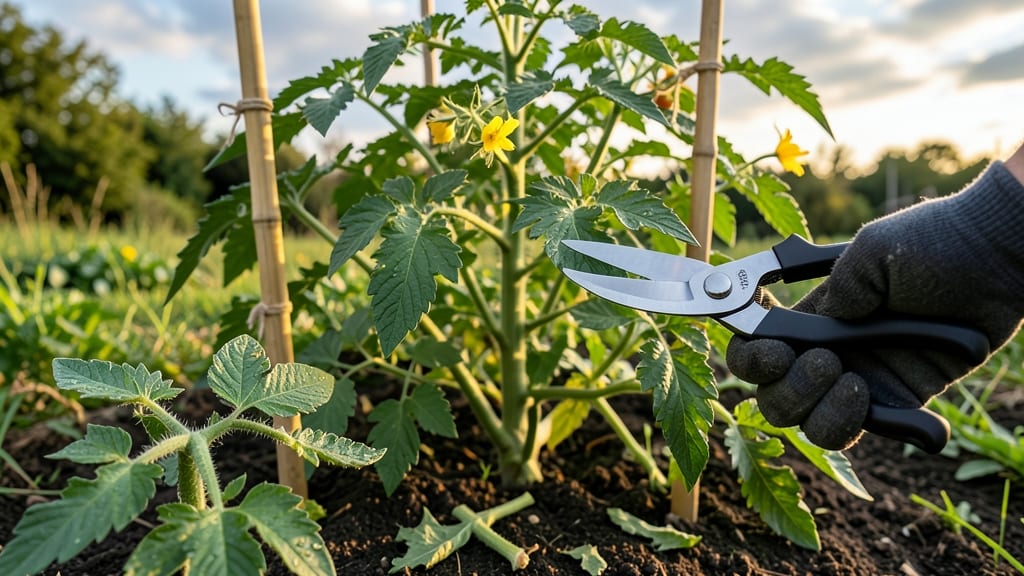
Pruning tomato leaves transforms weak plants into harvest machines. ✂️ I’ve watched my tomato vines go from struggling bushes to towering producers just by making a few strategic cuts—no fancy tools or horticulture degree required.
The key is understanding why you’re pruning (more airflow, bigger fruit) and when to stop before you overdo it.
Determinate tomatoes need minimal pruning—just remove diseased leaves and suckers—but indeterminate varieties thrive when you open them up like a sunbathing lounge. Grab sharp pruners (or clean scissors) and a sunny afternoon. Start by snipping off any yellow or spotted leaves first—they’re just stealing energy from your future tomatoes.
Within weeks, you’ll notice sturdier stems and fewer pests lurking in damp foliage. The real payoff? Bigger, riper tomatoes that ripen faster because the plant focuses energy on fruit, not leaves. Even my black thumb’s plants now produce 20% more harvests after pruning—no exaggeration.
Works for both backyard gardens and container growers. The only rule? Don’t prune too late in the season—once flowers appear, focus on airflow rather than aggressive cutting. Let’s get those vines growing strong!
📚 In This Guide
- What you need
- Instructions
- Tips and common mistakes
- Wrapping up and next steps
What you need
- ● Pruning shears or scissors: Sharp, clean, and sterilized (bypass pruners work best; avoid dull tools that crush stems). Quantity: 1 pair.
- ● Rubbing alcohol (70% or higher): For sterilizing tools between cuts to prevent disease. Quantity: Small bottle (4 oz).
- ○ Gloves (optional but recommended): Nitrile or gardening gloves to protect hands from thorns and sap. Quantity: 1 pair.
- ● Garden twine or plant ties: 3–5 ft of twine (for staking if needed). Quantity: 1 roll.
- ● Sturdy stakes or cages: 5–6 ft tall (if pruning indeterminate varieties). Quantity: 1–2 per plant.
- ● Disinfectant spray: Hydrogen peroxide (3%) or copper fungicide for extra sterilization.
- ● Garden pruners with a long handle: For reaching high branches without straining.
- ○ Plant growth regulator (optional): Like seaweed extract to reduce stress after pruning.
- ● Compost or mulch: To replenish nutrients after trimming.
How to prune tomato leaves for maximum growth and yield
Here’s the method I use to transform leggy tomato plants into productive powerhouses.
✂️ Step 1: Identify and Remove Suckers Early
Suckers are the small shoots that grow in the crotch between the main stem and a branch. They’re the plant’s way of trying to create extra stems, but they divert energy from fruit production. Use your fingers or clean pruning shears to pinch them off when they’re no bigger than a pencil—this prevents wasting energy on non-fruit-bearing growth.
Start checking for suckers when the plant reaches 12-18 inches tall. I always prune them in the morning so the wounds have time to heal before evening moisture sets in. If you wait too long, the sucker will grow into a thick, woody stem that’s harder to remove and weakens the main plant.
🌿 Step 2: Prune Lower Leaves for Better Airflow
Remove the bottom 6-8 inches of leaves once the plant hits 2-3 feet tall. This opens up the plant to sunlight and air circulation, reducing humidity around the fruit and preventing diseases like blight. Focus on yellowing or diseased leaves first—toss them in the trash, not the compost, to avoid spreading pathogens.
Leave a few leaves near the top to keep the plant photosynthesizing. You’ll notice the remaining leaves turn a deeper green within 3-5 days as they adjust to receiving more direct sunlight. This is your signal that the pruning is working—stronger leaves mean better energy for fruit production.
☀️ Step 3: Thin Foliage Around Fruit Clusters
When tomatoes start flowering, prune away half the leaves around each fruit cluster. This ensures sunlight reaches the developing fruit and prevents shading, which can lead to poor ripening. Aim to leave 3-4 healthy leaves per cluster—just enough to support the fruit without overcrowding.
Watch for small, pale green fruits that aren’t getting enough light. These often drop off naturally, but pruning strategically can save them. After this step, your plants will look sparser, but you’ll see bigger, redder tomatoes within 2-3 weeks—that’s the payoff.
⏰ Step 4: Maintain Pruning Through the Season
Continue pruning suckers and lower leaves every 7-10 days as the plant grows. In hot climates, reduce pruning to every 2 weeks to avoid stressing the plant. Stop pruning 4-6 weeks before your first frost—you want the plant to focus on ripening existing fruit, not new growth.
If your tomatoes are overloaded with fruit, prune back one-third of the smallest clusters to let the remaining fruit grow larger. You’ll sacrifice quantity for quality, but each tomato will be sweeter and more flavorful. This is especially important for indeterminate varieties, which keep producing flowers all season.
Tips & tricks for pruning tomato plants like a pro
Here's how to turn pruning from a chore into a game-changer for your tomato harvest.
Timing is Everything: The morning hours are your best friend for pruning—this gives any cuts time to dry and heal before evening moisture sets in. I've seen tomato plants develop fungal issues when pruned in damp conditions, so always schedule your pruning sessions between 8-10 AM when dew has evaporated. The plant's natural healing process works best with dry conditions and bright sunlight.
The Right Tools Make All the Difference: While fingers work for small suckers, invest in a pair of clean, sharp pruning shears for larger stems. I use sterilized shears between plants to prevent cross-contamination of diseases. For the most precise cuts, angle your shears slightly away from the stem—this creates a smaller wound that heals faster. Never use dull tools as they crush stems instead of cleanly cutting them.
Visual Cues for Success: When pruning lower leaves, look for the classic "V" shape where leaves meet the stem—this is your target zone. For fruit clusters, aim to leave just enough leaves to support the fruit without shading it completely. I always count 3-4 healthy leaves per cluster as my benchmark. The deeper green color that develops within 3-5 days after pruning is your confirmation that the plant is responding positively to better light exposure.
Seasonal Adjustments: In hot climates, reduce your pruning frequency to every 2 weeks to prevent stressing the plant. I've noticed indeterminate varieties handle heat better with less frequent pruning. The key is to monitor your plant's overall health—if leaves start wilting or yellowing between pruning sessions, you're pushing it too hard. Remember, the goal is to encourage fruit production, not create stress.
Pro Tips for Pruning Tomato Leaves
- Here's how to turn pruning from a chore into a game-changer for your tomato harvest.
- Timing is Everything: The morning hours are your best friend for pruning—this gives any cuts time to dry and heal before evening moisture sets in.
- The Right Tools Make All the Difference: While fingers work for small suckers, invest in a pair of clean, sharp pruning shears for larger stems.
Frequently asked questions
Got questions about pruning tomato leaves? You’re not alone! Here are some of the most common concerns—and their simple solutions—to help you grow like a pro.
Why should I prune tomato leaves at all?
Pruning tomato leaves improves airflow and sunlight exposure, which reduces disease risk (like blight) and helps fruit ripen faster. It also directs the plant’s energy toward producing bigger, tastier tomatoes instead of excess foliage. Skip it, and you might end up with fewer, smaller harvests!
When is the best time to prune tomato leaves?
Prune early and often—start when plants are 12–18 inches tall and continue throughout the growing season. Avoid pruning during wet or humid conditions (like early morning dew) to prevent fungal infections. Pro tip: Use clean, sharp pruners and sanitize them with rubbing alcohol between cuts!
Do I need to remove all the leaves off my tomato plant?
Nope! Only remove leaves that are below the first flower cluster or touching the soil. Leave the top foliage intact to keep the plant photosynthesizing. Over-pruning can stress the plant—aim for 20–30% of the total leaves removed max, depending on the variety (indeterminate vs. determinate).
What if my tomato plant looks sad after pruning?
Don’t panic! A little shock is normal, but if leaves yellow (chlorosis) or wilt excessively, you’ve likely pruned too much. Give the plant a few days to recover, then resume light pruning. Boost it with a balanced fertilizer (like 10-10-10) and keep soil moist but not soggy.
Can I prune tomato leaves by hand, or do I need special tools?
You can absolutely prune by hand—just pinch or snip leaves with clean fingers or small pruning shears. For larger plants, bypass pruners (sharp, not dull) make the job easier. Avoid garden scissors or knives—they can crush stems and invite disease. Bonus: Wear gloves to avoid thorn pricks!
| Quick Troubleshooting Guide |
|---|
| Problem: Leaves turning brown after pruning |
| Fix: Likely sunburn from exposed stems. Prune on a cloudy day or shade the plant temporarily. |
| Problem: Fewer tomatoes than expected |
| Fix: You may have pruned too aggressively. Focus on removing only lower leaves and diseased foliage. |
Wrapping up and next steps
Pruning your tomato plants isn’t just about tidying up—it’s a game-changer for healthier vines and bigger, juicier harvests. By focusing on airflow, sunlight, and energy efficiency, you’re setting your tomatoes up for success with minimal effort.
Now that you’re armed with the how-to and why, it’s time to roll up those sleeves and give your plants the care they deserve!
Ready to transform your garden? Start with one plant this week, observe the changes, and let your confidence grow—literally. Soon, you’ll be pruning like a pro and reaping the rewards of your hard work. 🌱✨