
Watering
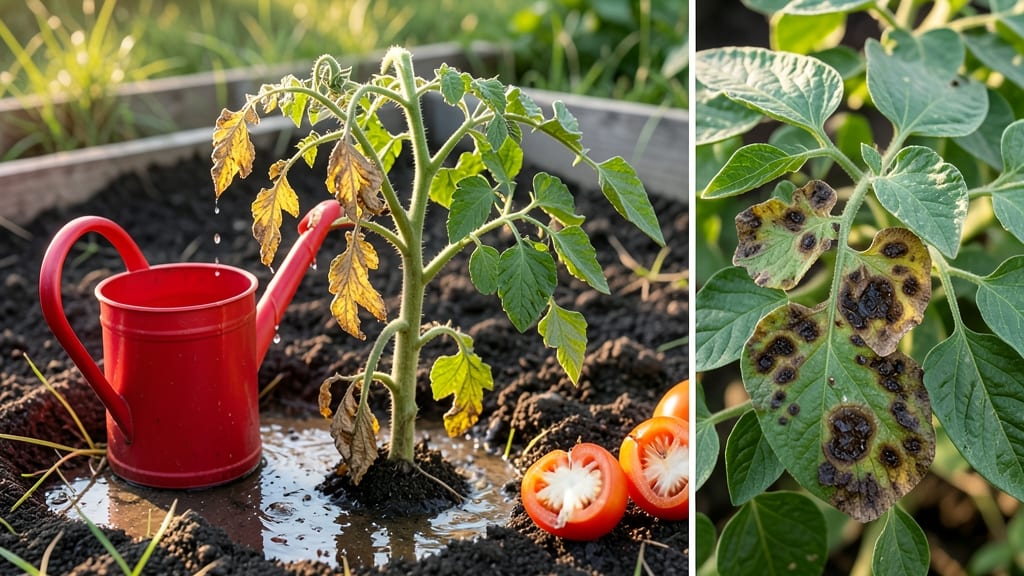
The signs of overwatering tomato plants turn your lush vines into sad, yellowing messes—especially when roots drown and leaves wilt despite your best efforts. 🌱 I’ve watched my own plants go from thriving to tragic in just a few days, and the telltale signs are easier to spot than you’d think: droopy stems, mushy black roots, and leaves that curl or yellow at the edges.
The real culprit? Too much water too often, especially in pots or heavy soil that doesn’t drain well. Tomatoes need consistent moisture, but their roots hate sitting in soggy conditions—think of it like a sponge that’s been squeezed dry and then drowned.
Even worse, overwatering invites fungal diseases like blight, which can wipe out your entire plant if left unchecked. Here’s the good news: fixing it is simpler than you’d expect. Start by adjusting your watering schedule—stick your finger in the soil first.
If the top 2 inches feel damp, wait another day. For potted plants, ensure drainage holes aren’t clogged, and consider switching to a lighter soil mix. Prune any yellowed or mushy leaves to redirect the plant’s energy back to healthy growth.
Prevention is even easier: water deeply but infrequently, and always in the morning so foliage dries quickly. A mulch layer helps too, keeping moisture steady without waterlogging the roots. Trust me, once you spot these signs early, your tomatoes bounce back faster than you’d imagine.
Root Causes of Overwatering Tomatoes
Overwatering tomato plants isn’t just a gardening mistake—it’s a scientific imbalance that disrupts their very survival mechanisms. When you water too much, you’re essentially suffocating the roots and triggering a cascade of physiological stress. Let’s break down the key reasons this happens, rooted in plant biology and environmental science.
Tomato roots need oxygen to respire—just like humans need air. When soil stays too wet, tiny air pockets (called macropores) fill with water, cutting off oxygen flow.
This leads to: - Anaerobic conditions (low/no oxygen), where roots switch to inefficient fermentation for energy. - Root rot from fungal pathogens like Pythium or Phytophthora, which thrive in waterlogged soil. - Weakened cell walls, making roots mushy and prone to collapse.
Why it’s deadly: Roots can’t absorb nutrients or water efficiently, causing the entire plant to gasping for air—literally.
Water is the solvent that carries essential minerals (like nitrogen, potassium, and calcium) to roots.
But when you overwater: - Excessive rainfall or irrigation washes away nutrients faster than roots can absorb them. - Salt buildup occurs as dissolved minerals concentrate in the soil, creating a hypertonic environment that pulls moisture out of root cells (osmotic stress). - pH shifts happen, making nutrients like iron or manganese unavailable to the plant.
The domino effect: Without proper nutrients, leaves turn yellow (chlorosis), growth stalls, and fruits develop blossom-end rot or fail to ripen.
Waterlogged soil is a buffet for pathogens.
Overwatering creates the perfect conditions for: - Root-rotting fungi (Fusarium, Rhizoctonia) that clog root tissues with mycelium. - Bacterial soft rot (Erwinia), which turns stems and fruits into a slimy mess. - Damping-off in seedlings, where stems rot at the soil line and topple over.
How it spreads: Moisture on leaves also encourages foliar diseases like early blight (Alternaria), which thrives in humid, overwatered environments.
Tomato roots prefer warmth (ideal: 60–75°F). Overwatering cools the soil too quickly, causing:
- Cold shock in roots, slowing metabolic processes.
- Reduced enzyme activity, which hinders nutrient uptake and growth hormones.
- Chilling injury in sensitive varieties, leading to blackened or water-soaked roots.
Pro tip: 💡 If your soil stays soggy for more than 24–48 hours, roots can’t recover—even if you stop watering.
Excess water physically weakens root structures:
- Cell turgor loss: Roots become flaccid (limp) from too much water pressure, unable to anchor the plant.
- Root tip death: The delicate root hairs (where most absorption happens) die off, reducing the plant’s ability to uptake water and nutrients.
- Cracked soil: Repeated wetting/drying cycles cause soil to compact, smothering roots in a dense, airless layer.
Result? Your tomato plant looks top-heavy, wilts easily, and struggles to support fruit—even if the soil is visibly wet.
Here’s the worst part: Overwatering creates a feedback loop:
- Too much water → anaerobic roots → weak growth.
- Weak roots → poor nutrient uptake → leaf yellowing.
- Yellow leaves → less photosynthesis → less energy for recovery.
- Stressed plant → more susceptible to disease → faster decline.
Break the cycle by adjusting your watering before signs appear. Healthy soil should feel like a slightly damp sponge—not a swamp.
Fixing Overwatered Tomatoes Fast
If your tomato plants are showing signs of too much love (yes, water can be overkill!), don’t panic—there’s still time to turn things around. The key is to act quickly, adjust your watering habits, and give your plants the right conditions to recover.
Below, we’ll break down the fixes based on the specific problems you’re seeing, along with prevention tips to keep your tomatoes thriving. Let’s get those plants back on track! 🌱💦
If your tomato leaves are turning yellow, drooping, or developing brown edges, it’s a clear sign of overwatering. Here’s how to fix it:
🔥 Step 1: Stop Watering Immediately
- Skip the next 2–3 waterings to let the soil dry out. This prevents root rot from spreading.
- If the soil feels soggy or smells musty, hold off even longer.
🍳 Step 2: Check and Improve Soil Drainage
- Test the soil: Dig a small hole (6 inches deep) near the plant.
If water pools or drains slowly (more than 2–3 hours), your soil is too compacted. - Amend the soil: - Mix in compost or well-rotted manure (1–2 inches) to improve aeration. - Add perlite, vermiculite, or coarse sand (1 part to 3 parts soil) to create air pockets. - For container-grown tomatoes, ensure pots have drainage holes and use a lightweight potting mix designed for vegetables.
👨🍳 Step 3: Prune Damaged Foliage
- Snip off yellow or mushy leaves with clean scissors to redirect the plant’s energy to healthy growth.
- Avoid pruning more than 20–30% of the foliage at once to prevent stress.
⏰ Step 4: Water Smarter, Not Harder
- Water deeply but infrequently: Aim for 1–1.5 inches of water per week, delivered in one long session (early morning is best).
- Use the finger test: Stick your finger 1–2 inches into the soil.
Water only when it’s dry to the touch. - Mulch to retain moisture: Apply 2–3 inches of organic mulch (straw or shredded leaves) around the base (but not touching the stem) to keep roots cool and reduce evaporation.
If your tomato roots look dark, mushy, or smell foul, root rot is likely setting in. Act fast to prevent the plant from dying.
🔥 Step 1: Remove the Plant Gently
- Dig carefully to avoid damaging roots further. Shake off excess soil to inspect the roots.
- Trim affected roots: Use sterilized scissors to cut off any black, mushy, or soft roots. Healthy roots are firm and white.
🍳 Step 2: Disinfect and Repot (If Needed)
- Soak the roots in a fungicide solution (like hydrogen peroxide 3% diluted to 1:9 with water or a copper-based fungicide) for 10–15 minutes to kill fungus.
- Repot in fresh, sterile soil if the original soil is heavily contaminated.
Use a clean container with drainage holes. - Skip fertilizing for 2 weeks—stressed plants need time to recover before nutrients.
👨🍳 Step 3: Adjust Watering and Environment
- Water only when the top 1–2 inches of soil are dry.
Use a watering can with a narrow spout to direct water to the roots, not the leaves. - Move to a sunnier spot (tomatoes need 6–8 hours of sunlight daily).
Poor drainage often worsens in shady areas. - Improve airflow: Space plants 18–24 inches apart to reduce humidity around foliage.
If your tomatoes develop dark, sunken spots (blossom end rot), overwatering can worsen calcium uptake. Here’s how to fix it:
💡 Step 1: Apply Calcium Quickly
- Spray leaves with a calcium solution (1 tbsp calcium chloride or crushed eggshells per gallon of water) every 7–10 days.
- Side-dress with compost (rich in calcium) around the base of the plant.
🎯 Step 2: Water Consistently
- Avoid fluctuations: Keep soil moisture even—never let it dry out completely, then get soaked.
- Use drip irrigation or soaker hoses to deliver water slowly and directly to the roots.
✨ Step 3: Prevent Future Outbreaks
- Mulch heavily to maintain steady moisture.
- Avoid heavy fertilizers (like high-nitrogen ones) that can stress plants.
- Harvest tomatoes promptly—the longer they stay on the vine, the more prone they are to rot.
Once your tomatoes are back on track, keep these pro tips in mind to avoid overwatering in the future:
- 💡 Know Your Soil: Test your soil’s drainage before planting.
Sandy soil drains fast; clay holds too much water. - 🌡️ Choose the Right Containers: If growing in pots, opt for fabric grow bags or terra cotta (they dry out faster than plastic). - 🎯 Water at the Base: Always water at the soil level, not overhead.
This prevents fungal diseases and evaporation. - 🥗 Monitor Weather: Adjust watering based on rain—skip watering if it’s rained 1 inch or more in the past week. - 🍅 Upgrade Your Tomato Variety: Some varieties (like cherry tomatoes) are more drought-tolerant than others.
With these fixes, your tomato plants should bounce back in 1–2 weeks, depending on the severity. Keep an eye on them, adjust as needed, and soon you’ll be enjoying juicy, homegrown tomatoes** instead of sad, soggy leaves! 🍅😎
Frequently asked questions
How can I tell if my tomato plant is overwatered vs. underwatered?
Overwatered plants show yellowing leaves, mushy stems, and drooping foliage even when soil is wet. Underwatered plants have crispy brown edges on leaves and dry, pulling soil. The key difference? Overwatered plants smell musty or rotten, while underwatered ones feel dry and brittle. Check the soil—if it’s soggy but leaves are yellow, it’s overwatering.
Can overwatered tomato plants recover?
Yes, but act fast! Stop watering immediately and let the soil dry out for 2–3 days. Prune yellow/mushy leaves and improve drainage by adding perlite or compost. Most plants recover in 1–2 weeks if root rot hasn’t set in. For severe cases, repot in fresh soil and avoid fertilizing until new growth appears.
Why do my tomato leaves turn yellow when I water them?
Yellow leaves signal root stress from too much water. Overwatering suffocates roots, blocking oxygen and nutrients. Check for dark, mushy roots—if present, trim affected areas and repot. Water only when the top 1–2 inches of soil are dry. Mulching helps regulate moisture and prevents rapid drying after watering.
Is it better to underwater than overwater tomato plants?
Not quite! While underwatering causes wilting, overwatering leads to root rot and disease. The goal is consistent moisture: water deeply 1–1.5 inches per week (more in extreme heat). Use the finger test—water only when soil feels dry 1–2 inches down. Drip irrigation or soaker hoses deliver water directly to roots without oversaturating.
How do I fix blossom end rot caused by overwatering?
Blossom end rot appears as dark, sunken spots on tomatoes due to calcium deficiency from inconsistent watering. Apply a calcium spray (1 tbsp calcium chloride per gallon of water) every 7–10 days. Keep soil evenly moist—never let it dry out completely, then get soaked. Mulch heavily to maintain steady moisture and reduce stress.