
Planting
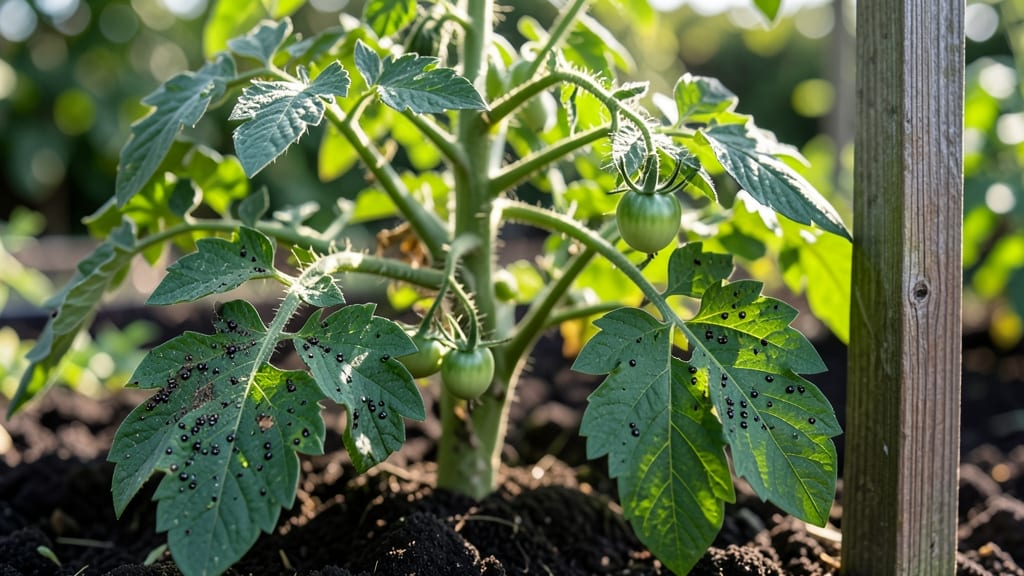
Those small black dots on your tomato plant leaves aren’t just cosmetic—they’re a red flag for fungal disease. 🌱 I’ve battled this exact issue in my garden, and the good news is you can stop it before it spreads.
The key is acting fast with the right mix of organic sprays, airflow tricks, and a few simple cultural fixes.
Most of the time, those dots mean early signs of early blight or alternaria, but they can also signal pest damage or even environmental stress. The first step is confirming what you’re dealing with—yellowing leaves, black spots on stems, or just stubborn dots?
Each clue points to a different solution, and I’ll walk you through the telltale signs.
Once you know the cause, the fix is straightforward: baking soda sprays, neem oil treatments, and pruning for better airflow. Within 7-10 days, you’ll see the dots stop spreading, and new growth will push out clean and healthy. The best part? These methods prevent future outbreaks too.
If the problem keeps coming back, it’s time to dig deeper—soil health, watering habits, or even your garden’s humidity might be the real culprits. But don’t worry: with the right approach, your tomatoes will bounce back stronger than ever.
Root Causes Behind Leaf Spots
When you spot tiny black dots on your tomato leaves, it’s rarely a coincidence—these blemishes are usually a sign of underlying stress or microbial activity. Understanding the why behind these marks is the first step to fixing the problem.
Below, we break down the most common culprits, their science, and how they attack your plants.
Fungi are the most frequent offenders when it comes to black speckling on tomato leaves. These microscopic organisms thrive in warm, humid conditions and can spread rapidly if left unchecked.
- Alternaria Leaf Spot: This fungus produces conidia (asexual spores) that appear as tiny black dots, often surrounded by yellow halos. It thrives in wet foliage and can weaken plants by blocking sunlight absorption.
- Early Blight (Alternaria solani): While it typically causes larger brown spots, early stages may show as small black specks. The fungus overwinters in soil and infects through wounds or old leaf debris.
- Black Mold (Aspergillus or Botrytis): In extreme humidity, these fungi create fine black powdery or velvety spots, especially on lower leaves.
Why it happens: Fungal spores land on leaves, germinate in moisture, and penetrate the leaf surface through natural openings (like stomata) or injuries. Poor airflow, overhead watering, and dense plantings create the perfect breeding ground.
Not all black dots are fungal—some stem from environmental abuse. Tomato plants are sensitive to extremes, and stress can manifest as discoloration or speckling.
- Heat Stress: Intense sunlight or high temperatures can cause sun scorch, leading to tiny blackened areas, especially on leaves exposed to direct heat (like those near greenhouse plastic or pavement).
- Water Stress: Overwatering or poor drainage can lead to root rot, which starves leaves of nutrients, causing black speckling as a symptom of decline. Underwatering, meanwhile, can cause leaf burn from salt buildup in soil.
- Chemical Burn: Overuse of fertilizers (especially high-salt or nitrogen-heavy ones) or harsh pesticides can create blackened or crusted spots on leaves.
Why it happens: Stress disrupts the plant’s cellular processes, leading to oxidative damage or nutrient deficiencies. For example, heat stress triggers the production of reactive oxygen species (ROS), which damage cell membranes and create necrotic (dead) spots.
Sometimes, the dots aren’t from pathogens or stress—they’re evidence of tiny pests or mechanical harm.
- Mites (Spider or Broad): These pests feed on leaf sap, leaving behind stippling (tiny white or black dots) and webbing. Their saliva can also trigger blackening as the leaf reacts to damage.
- Thrips: These slender insects pierce leaves, creating scarring that appears as dark specks, often clustered along leaf veins.
- Hail or Wind Damage: Physical trauma from storms can create small blackened dots where cells are crushed.
Why it happens: Pests inject toxins or physically damage cells, triggering the plant’s defense response. For mites, their feeding disrupts chloroplasts (the leaf’s energy producers), leading to localized cell death.
Pro Tip: 💡 Examine the undersides of leaves and check for patterns—fungal spots often appear in concentric rings, while pest damage is usually scattered or along veins. Use a magnifying glass if needed!
Fixing Tiny Leaf Spots Naturally
Now that you’ve identified the cause of those pesky small black dots on your tomato leaves—whether it’s fungal spores, insect damage, or environmental stress—it’s time to take action! The good news? Most solutions are simple, affordable, and effective when applied consistently.
Below, we’ll map out practical fixes for each common culprit, plus prevention tips to keep your tomato plants thriving. Let’s get your greens back to their healthy best! 🌱✨
If the black dots are caused by fungal infections like early blight or alternaria spot, act fast to prevent spread. Here’s how:
🔥 Boost Airflow & Prune Wisely
Fungi love damp, crowded conditions. Open up your plants by:
- Removing lower leaves touching the soil (they trap moisture and spores).
- Thinning out overcrowded stems to improve airflow (aim for 12–18 inches between plants).
- Watering at the base (never overhead) to keep leaves dry.
Use a soaker hose or drip irrigation for best results.
🍳 Homemade Baking Soda Spray (Safe & Effective)
A classic DIY remedy that disrupts fungal growth without harsh chemicals: 1. Mix 1 teaspoon baking soda + 1 quart water + a few drops of dish soap (helps it stick).
- Spray leaves thoroughly (both top and bottom) in the early morning or evening (avoid direct sunlight).
- Reapply every 7–10 days or after rain. Pro tip: Add a sprinkle of cinnamon (natural antifungal) to the mix for extra power! 🌡️
🌿 Copper Fungicide (For Severe Cases)
If baking soda isn’t cutting it, copper-based sprays (like copper sulfate or copper fungicide) are a non-toxic, OMRI-listed solution:
- Follow label instructions exactly (overuse can harm plants).
- Apply at the first sign of spots and repeat every 10–14 days.
- Best for: Organic gardens where fungi are rampant.
🚫 Prevention Tips for Fungal Spots
- Rotate crops: Don’t plant tomatoes in the same spot yearly (fungi linger in soil).
- Solarize soil: Cover beds with clear plastic for 4–6 weeks in summer to kill fungal spores.
- Use mulch: Straw or grass clippings 3–4 inches deep to reduce soil splashing onto leaves.
If those dots are from aphids, spider mites, or thrips, tackle them with these targeted fixes:
👨🍳 Blast Off Pests with Water
- Aphids & mites hate water! Use a strong spray from the hose to knock them off leaves (do this in the early morning).
- For stubborn mites, repeat every 2–3 days until they’re gone.
🍳 Neem Oil Spray (Safe & Strong)
Neem oil smothers insects and disrupts their life cycle: 1. Mix 1 teaspoon neem oil + 1 teaspoon mild soap + 1 quart water.
- Shake well and spray all plant surfaces (including undersides of leaves).
- Reapply every 5–7 days until pests disappear. - Pro tip: Store-bought neem oil sprays (like Bonide) work too—just follow directions! 🎯
🐛 Introduce Beneficial Bugs
- Ladybugs devour aphids, while predatory mites eat spider mites. Buy them online or attract them with dill or marigold plants nearby.
- Release them at dusk when they’re most active.
🚫 Prevention Tips for Insects
- Inspect new plants before bringing them home (quarantine for a week if possible).
- Avoid broad-spectrum pesticides (they kill beneficial bugs too).
- Sticky traps near plants can catch flying pests like whiteflies.
If the dots are from heat stress, nutrient burn, or poor drainage, fix the growing conditions:
💡 Shade & Hydration Fixes
- Provide afternoon shade (use shade cloth or move pots) if temps exceed 90°F (32°C).
- Water deeply but less often—tomatoes hate soggy roots but drought stress causes spots too.
Aim for 1–1.5 inches of water per week. - Mulch heavily (2–3 inches) to retain moisture and regulate soil temp.
📊 Soil & Fertilizer Adjustments
- Flush the soil with water if you suspect fertilizer burn (too much salt = blackened leaves).
- Switch to a balanced organic fertilizer (like 5-5-5) and reduce frequency (every 3–4 weeks).
- Test your soil pH—tomatoes prefer 6.0–6.8.
Amend with lime (to raise pH) or sulfur (to lower it) if needed.
🌱 Prevention Tips for Stress
- Hardening off seedlings gradually before transplanting (avoids shock).
- Use raised beds if your soil drains poorly (tomatoes hate “wet feet”).
- Monitor weather forecasts and protect plants during extreme heat or cold snaps.
- Rotate sprays (e.g., neem oil one week, baking soda the next) to prevent pest/fungal resistance.
- Harvest promptly—ripe tomatoes are less prone to stress and disease.
- Keep a plant journal to track what works (and what doesn’t) in your garden! 📝
With these fixes, your tomato plants should bounce back in no time—and those black dots will be a distant memory. Happy growing! 🍅🌿
Frequently asked questions
Are those tiny black dots always a sign of disease?
Not necessarily! While fungal infections like early blight are common, black dots can also come from pest damage (like spider mites) or environmental stress (heat scorch or fertilizer burn). Check the undersides of leaves—fungal spots often have yellow halos, while pest damage looks more scattered.
Will baking soda really fix fungal spots?
Yes, but it works best as a preventive measure when spots first appear. The baking soda spray raises the leaf's pH, making it inhospitable for fungi. For existing spots, combine it with pruning for airflow and copper fungicide for faster results. Reapply every 7-10 days until new growth appears.
Can I still eat tomatoes from plants with black dots?
Only if the spots are on lower leaves (not the fruit-bearing parts) and you've confirmed they're not from a toxic chemical burn. Fungal spots rarely spread to tomatoes, but always remove heavily infected leaves first. When in doubt, wash tomatoes thoroughly before eating.
Why do my tomato plants keep getting black spots even after treatment?
This usually means the original cause wasn't fully addressed. Check for these common oversights: overhead watering (keeps leaves wet), poor airflow (crowded plants), or contaminated soil (fungi overwintering). Solarize your soil for 4-6 weeks or rotate crops to break the cycle.
How do I tell if black dots are from mites vs. fungus?
Mite damage shows as tiny white/yellow stipples (not always black) with possible webbing. Fungal spots appear as dark dots with yellow rings and often spread in concentric patterns. Hold a magnifying glass under leaves—mites leave behind tiny moving specks, while fungus shows stationary spores.