
Pests and Diseases
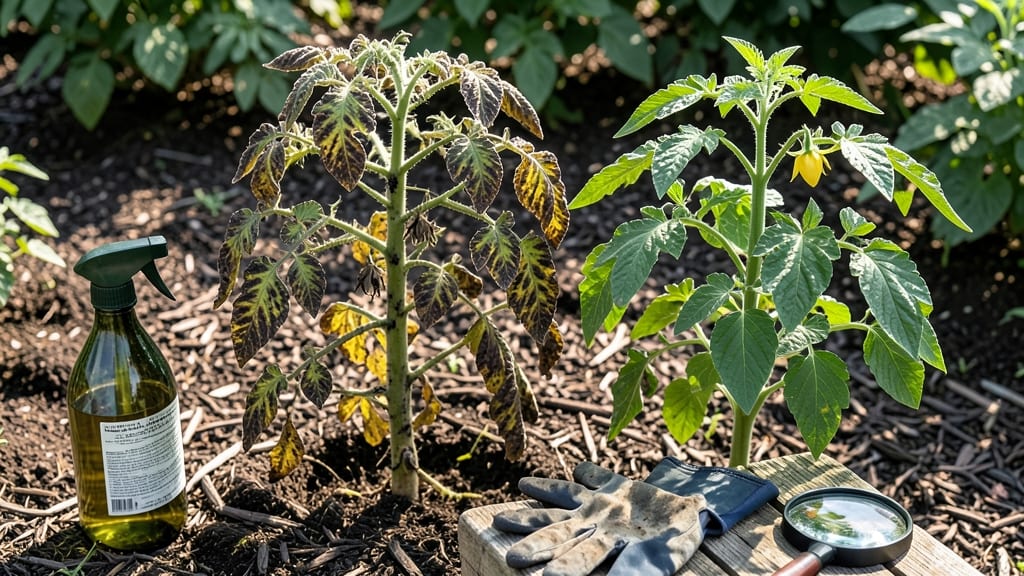
That brown, crusty mess on the tomato leaf disease pictures you’ve spotted isn’t just dirt—it’s early blight, and if you don’t act fast, your harvest could be history. 🌱 I’ve watched this disease turn lush plants into sad, spotted shadows, but there’s hope: catching it early means saving your tomatoes.
The key is knowing what to look for—yellow rings, dark spots, or weird brown patches—and acting before the fungus spreads.
Early blight starts at the bottom of leaves, creeping upward like a slow-motion takeover. Late blight shows up as greasy, dark spots that spread fast, while powdery mildew coats leaves in a white, flour-like dust.
Each disease has its own telltale signs, and spotting them early is your best defense. I’ll show you exactly what to watch for, so you can stop the spread before it ruins your season.
Once you recognize the problem, prevention is simpler than you think: prune for airflow, rotate crops, and spray with a mix of baking soda and water (yes, really). For stubborn cases, copper fungicides work like a charm—but the sooner you act, the less damage you’ll face.
Your tomatoes deserve a fighting chance, and this is how you give it to them.
This isn’t just about fixing a problem—it’s about protecting your hard work. Whether you’re growing in a backyard plot or a balcony container, these tips will keep your plants thriving. Let’s turn those spotted leaves into a thing of the past.
Root Causes Of Tomato Leaf Problems
Understanding why tomato leaves develop diseases is the first step to preventing them. These issues rarely appear out of nowhere—they’re usually the result of a mix of environmental stress, microbial invaders, or poor growing conditions.
Let’s break down the key culprits behind tomato leaf diseases, so you can spot the warning signs early and take action.
Fungi thrive in warm, humid conditions and are among the most common causes of tomato leaf diseases. These microscopic organisms spread through spores, which can linger in soil, water, or even on tools. Once they find a weak spot—like a damaged leaf or overcrowded plants—they take hold and multiply rapidly.
- Early Blight (Alternaria solani) – Thrives in hot, dry weather but needs moisture to spread.
It starts as small brown spots with concentric rings, eventually turning leaves crispy and brown. - Late Blight (Phytophthora infestans) – A notorious destroyer, this fungus spreads quickly in cool, wet conditions (think foggy mornings or heavy dew).
It causes dark, greasy-looking spots that spread fast, often leading to plant collapse. - Powdery Mildew (Oidium spp.) – A white, powdery coating appears on leaves, blocking sunlight and stunting growth. It loves shady, humid environments and can weaken plants enough to invite secondary infections.
Why it happens: Fungi spores are always present in gardens, but they only cause problems when conditions are just right—usually high humidity (above 75%), poor air circulation, or overhead watering. Overwatering or planting tomatoes too closely together creates the perfect breeding ground.
Unlike fungi, bacteria spread like wildfire and can destroy a tomato plant in days. They enter through wounds (like insect bites or pruning cuts) and multiply in the plant’s vascular system, clogging its ability to transport water and nutrients.
- Bacterial Spot (Xanthomonas perforans or Pseudomonas syringae) – Tiny, water-soaked spots with yellow halos appear, often on lower leaves first.
In humid weather, these spots expand and merge, creating large dead areas. - Bacterial Wilt (Ralstonia solanacearum) – A devastating disease where leaves suddenly wilt and turn brown, even if the soil is moist. The bacteria block the plant’s water pathways, leading to rapid decline.
Why it happens: Bacteria spread through contaminated water, tools, or even splashing rain. They also love warm temperatures (75–90°F) and high humidity, making summer gardens prime targets. Once established, they’re nearly impossible to eradicate—prevention is key.
Pests don’t just eat leaves—they create entry points for diseases. Insects like aphids, spider mites, and hornworms chew on foliage, leaving wounds that fungi and bacteria can exploit. Some pests, like whiteflies, even spread viruses that cause leaf discoloration and curling.
- Aphids – These sap-sucking insects excrete honeydew, a sticky substance that fosters sooty mold (a black fungal growth).
- Spider Mites – Their feeding weakens leaves, making them susceptible to fungal infections like powdery mildew.
- Hornworms – While they munch on leaves, their frass (poop) can harbor fungal spores, accelerating decay.
Why it happens: Pests thrive in stressed plants (drought, nutrient deficiencies) and overcrowded gardens. When tomato plants are weak, pests move in, and diseases follow—often within days.
Tomatoes are tough, but they have limits. Extreme weather, poor soil health, or improper care can weaken leaves, making them vulnerable to diseases.
- Overwatering or Poor Drainage – Soggy soil suffocates roots and invites fungal growth like root rot or blight.
- Underwatering or Heat Stress – Wilting leaves lose their protective barrier, making them easy targets for bacterial infections.
- Nutrient Deficiencies – Lack of nitrogen, magnesium, or potassium weakens leaves, reducing their ability to fight off pathogens.
- Sudden Temperature Shifts – Cold nights followed by hot days shock plants, lowering their resistance.
Why it happens: Tomatoes need balanced care—consistent moisture, well-draining soil, and protection from extreme temps. When any of these factors are off, leaves become stressed and more susceptible to diseases.
Many tomato diseases linger in gardens from year to year. If you don’t clean up properly, last season’s problems can return with a vengeance.
- Infected Debris – Leaving behind diseased leaves or stems in compost or soil spreads spores.
- Reused Containers or Tools – Fungal spores can hitch a ride on pruners, gloves, or pots, reinfecting new plants.
- Crop Rotation Neglect – Planting tomatoes (or nightshades like peppers) in the same spot year after year builds up pathogens in the soil.
Why it happens: Diseases like early blight or verticillium wilt can survive in soil for years. Without proper rotation (waiting 3–4 years before replanting in the same spot) or sterilization, the cycle repeats.
💡 Pro Tip: The best defense is a strong offense—healthy plants resist diseases better! Focus on prevention (proper spacing, sanitation, and resistant varieties) to keep your tomato leaves thriving. 🍅💪
Fixing tomato leaf diseases fast
Seeing brown spots, yellowing leaves, or strange growths on your tomato plants can be alarming—but don’t panic! Most tomato leaf diseases are treatable, especially if you catch them early.
Below, we’ve mapped out the best fixes for each common issue, along with simple prevention tips to keep your plants thriving. 🌱💪
Fungal infections thrive in damp conditions, so act quickly to stop the spread.
🔥 Remove Infected Leaves Immediately
- How: Snip off yellow or brown leaves with clean scissors or pruners.
- Why: Fungi spread through spores, so removing infected foliage reduces contamination.
- Pro Tip: 💡 Sterilize your tools with rubbing alcohol between cuts to avoid spreading spores.
🍳 Apply Fungicide (Organic or Chemical)
- How: Spray plants with a copper-based fungicide (like copper sulfate) or a baking soda mix (1 tbsp baking soda + 1 quart water + a few drops of dish soap).
- When: Apply in the early morning to avoid burning leaves in sunlight.
- Frequency: Reapply every 7–10 days or after heavy rain.
🌡️ Improve Air Circulation & Reduce Moisture
- How:
- Space plants 18–24 inches apart for better airflow.
- Water at the base (not overhead) to keep leaves dry.
- Remove lower leaves that brush against wet soil.
Viruses are tricky—they often require removal of infected plants to prevent spread.
🔪 Destroy Infected Plants Completely
- How: Pull up and burn or trash (not compost) plants showing mosaic patterns, stunted growth, or distorted leaves.
- Why: Viruses can’t be cured—only contained.
👨🍳 Strengthen Plant Immunity
- How:
- Rotate crops—never plant tomatoes, peppers, or eggplants in the same spot next year.
- Use resistant varieties like ‘Mountain Merit’ or ‘Defiant PhR’ for future seasons.
- Keep aphids away (they spread viruses)—spray with neem oil or introduce ladybugs.
Bacteria spread fast in warm, wet conditions—act fast to limit damage.
🔪 Prune & Dispose of Infected Foliage
- How: Cut off spotted leaves and sterilize tools between cuts.
- Warning: 🚨 Do NOT compost infected plant material—bacteria can survive.
🍳 Copper or Antibacterial Sprays
- How: Use a copper fungicide (effective against some bacteria) or a hydrogen peroxide spray (1 tbsp 3% H₂O₂ per quart of water).
- When: Apply every 5–7 days until new growth appears.
⏰ Adjust Watering Habits
- How:
- Water early in the day so leaves dry before evening.
- Avoid overhead sprinklers—drip irrigation is best.
- Ensure proper drainage—bacteria thrive in soggy soil.
Sometimes, "diseases" are just your plants crying out for help!
📊 Test & Amend Soil
- How:
- Do a simple soil test (home kits work!) to check pH and nutrient levels.
- Fix low nitrogen? Add compost or fish emulsion.
- Fix yellow lower leaves? Likely magnesium deficiency—sprinkle Epsom salt (1 tbsp per gallon of water).
💪 Boost Plant Health Naturally
- How:
- Mulch with straw or grass clippings to retain moisture and nutrients.
- Avoid over-fertilizing—too much salt can burn roots.
- Companion plant with basil or marigolds to deter pests and improve growth.
Stop diseases before they start with these easy habits:
- 🌡️ Rotate crops—never plant tomatoes in the same spot two years in a row.
- 💡 Plant disease-resistant varieties (check seed packets for labels like "V" or "F").
- 🌧️ Improve drainage—raise beds or add sand to clay soil.
- 🍃 Clean up debris—remove old plants and weeds where fungi/bacteria hide.
- 🐞 Encourage beneficial insects—ladybugs, lacewings, and predatory mites eat pests that spread disease.
With these steps, your tomato plants can bounce back—even if they’ve been hit hard. Early action is key, so check leaves weekly and act at the first sign of trouble. Happy gardening! 🍅✨
Frequently asked questions
How can I tell if my tomato plant has early blight vs. late blight?
Early blight shows concentric brown rings on leaves, starting at the bottom and spreading upward. Late blight appears as dark, greasy spots that spread rapidly, often causing leaves to wilt and collapse. Check the stem—late blight causes blackened, sunken areas, while early blight usually spares the stems.
What’s the fastest way to stop powdery mildew from spreading?
Remove all infected leaves immediately, then spray with a baking soda mix (1 tbsp baking soda + 1 quart water + a drop of dish soap). Improve airflow by spacing plants 18-24 inches apart and watering at the base. Reapply every 7 days until the mildew disappears.
Can I still save my tomatoes if the leaves have bacterial spot?
You can slow it down but not cure it—prune infected leaves and sterilize tools with rubbing alcohol. Use copper fungicide every 5-7 days and water at the base only. For severe cases, remove the plant entirely to prevent spread. Bacterial spot spreads fast in warm, wet conditions.
Why do my tomato leaves turn yellow even when the soil is wet?
Yellow leaves with wet soil could mean magnesium deficiency (fix with Epsom salt) or root rot from poor drainage. Check for mushy roots—if present, repot in fresh soil with perlite. Overwatering or compacted soil can also block nutrients, causing yellowing.
How do I prevent diseases in my tomato plants next season?
Rotate crops (wait 3-4 years before replanting tomatoes), use disease-resistant varieties, and improve drainage. Clean tools and remove debris after harvest. Plant basil or marigolds nearby to deter pests that spread diseases.