
Watering
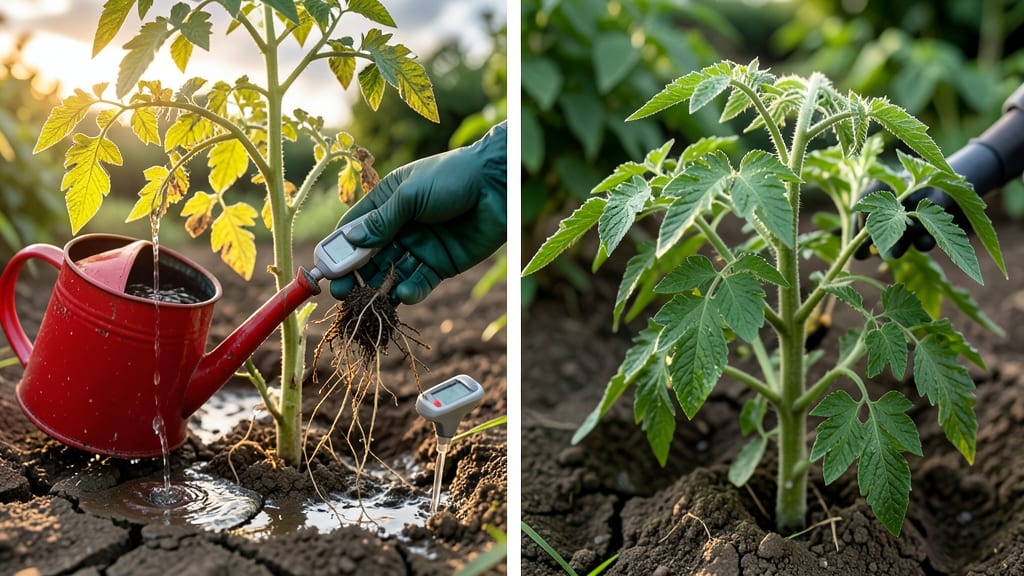
When your tomato plant too much water, the first 24 hours are critical—yellowing leaves and drooping stems don’t mean it’s too late to save it. 🌱 I’ve nursed plants back from the brink with these exact steps, and the best part?
You don’t need fancy tools, just a keen eye and a willingness to adjust your routine.
Overwatering happens when roots suffocate in soggy soil, starving the plant of oxygen and nutrients. The telltale signs—wilting despite moist soil, yellowing lower leaves, or a foul smell at the base—are your plant’s SOS signals.
The fix starts with cutting back water immediately and giving the roots a chance to breathe.
Within a day, you’ll see the first signs of recovery as the plant starts pulling itself together. Focus on watering only when the top inch of soil feels dry, and consider adding perlite or sand to improve drainage.
Your tomatoes will bounce back stronger, with glossy green leaves and a renewed vigor for fruiting.
Prevent future drama by sticking to a consistent watering schedule—deep but infrequent soaks work best—and always check the soil before reaching for the hose. A healthy tomato plant is resilient, but it needs your help to stay that way.
Root Causes Of Overwatered Tomatoes
Too much water can turn your thriving tomato plant into a sad, soggy mess—but why does this happen? Understanding the science behind overwatering helps you fix the problem fast. Here’s a breakdown of the key culprits:
Tomatoes hate sitting in wet feet. When soil doesn’t drain properly, excess water pools around the roots, cutting off oxygen.
Without oxygen, roots suffocate, leading to: - Root rot (a fungal infection that turns roots black and mushy). - Stunted growth—plants can’t absorb nutrients efficiently. - Yellowing leaves (chlorosis) due to nutrient lockout.
Why it’s dangerous: Compacted or clay-heavy soil holds water like a sponge. Even "well-draining" potting mixes can fail if pots lack drainage holes.
Skipping a watering day but then drowning the plant? This creates hydroponic shock—roots struggle to adapt to sudden moisture swings.
Signs include: - Wilting despite wet soil (a classic overwatering red flag). - Blossom end rot (calcium deficiency triggered by erratic water uptake). - Fungal spores thriving in damp conditions.
Why it’s dangerous: Tomato roots need consistency. Overwatering after drought stress forces roots to "drown" while trying to recover.
Not all water stress is from your hose. External conditions can worsen overwatering:
- High humidity (traps moisture near leaves, inviting diseases like early blight).
- Cold temperatures (slows evaporation, keeping soil soggy longer).
- Rainfall + poor mulching (water pools instead of draining away).
Why it’s dangerous: These factors turn your garden into a petri dish for root rot and pests. A tomato plant in 90°F heat recovers faster than one in 60°F dampness.
Potted tomatoes are especially vulnerable because:
- Small pots dry out fast—but if you overcompensate, roots suffocate.
- No drainage holes = waterlogged soil in minutes.
- Plastic pots trap heat, speeding up evaporation and fungal growth.
Why it’s dangerous: A 5-gallon pot can go from bone-dry to swampy in hours. Roots in containers have less room to escape moisture than in-ground plants.
Overwatering flushes away nutrients, but it also disrupts soil chemistry:
- Salinity buildup (from fertilizers dissolving in excess water, burning roots).
- pH swings (too much water leaches beneficial microbes).
- Oxygen deprivation (roots switch to anaerobic respiration, producing toxic ethanol).
Why it’s dangerous: Even "dry" soil can hide these silent killers. A soil test reveals if your watering habits are washing away fertility.
Overwatered soil is an open invitation for:
- Fungus gnats (larvae feast on rotting roots).
- Aphids/mites (thrive in damp, stressed plants).
- Bacterial wilt (spreads via water-saturated stems).
Why it’s dangerous: Pests weaken plants further, making recovery nearly impossible without intervention.
Pro Tip: 💡 Check soil moisture with your finger—if the top 2 inches are damp, hold off. Tomato roots need aerated soil, not a swamp.*
Revive Your Tomato Plant Fast
🌱 Overwatered tomato plants can look like a lost cause, but with the right steps, you can nurse them back to health—often within 24 hours. The key is acting quickly and addressing the root (literally!) of the problem.
Below are targeted fixes based on the most common causes of waterlogged tomatoes, along with prevention tips to keep your plants thriving.
Cause: Soggy soil cuts off oxygen, causing root rot and wilting.
Fix: 🔥 Step 1: Stop Watering Immediately
- No more H₂O until the soil dries out. Overwatering is the fastest way to kill a plant.
🍳 Step 2: Loosen Compacted Soil
- Gently rake or fork the top 2–3 inches of soil to improve drainage. Avoid damaging roots!
👨🍳 Step 3: Elevate the Plant (If Possible)
- If in a container, tilt it or place it on a drip tray to let excess water escape. For in-ground plants, mound soil around the base to lift roots slightly.
🥘 Step 4: Use a Fan for 24 Hours
- Place a small fan nearby to speed up evaporation and dry the soil faster.
Prevention: ✅ Test soil moisture before watering—stick your finger 1–2 inches deep. If damp, wait. ✅ Use well-draining soil (mix in perlite or sand if needed). ✅ Water deeply but less often—tomatoes prefer 1–2 inches per week, not daily drips.
Cause: Overwatering can leach nutrients and leave behind salt buildup, burning roots.
Fix: 🔥 Step 1: Run a Gentle Flush
- Water the plant slowly with room-temperature water for 10–15 minutes to rinse out salts.
🌡️ Step 2: Add Organic Matter
- Mix compost or worm castings into the topsoil to restore balance.
🎯 Step 3: Adjust Watering Habits
- Switch to rainwater or distilled water if your tap water is hard (high in minerals).
Prevention: ✅ Use mulch (straw or wood chips) to reduce evaporation and keep roots cool. ✅ Avoid fertilizing until the plant recovers—salts + water = double trouble.
Cause: Excess moisture invites blight, mold, or root rot.
Fix: 🔪 Step 1: Trim Damaged Leaves
- Snip off yellow, mushy, or blackened leaves with sterilized scissors to prevent spread.
⏰ Step 2: Apply Fungicide (If Needed)
- Spray with neem oil or copper fungicide (follow label instructions). For severe cases, hydrogen peroxide (3%) can help—dilute 1:9 with water and spray foliage.
💡 Step 3: Improve Airflow
- Prune nearby plants to reduce humidity around your tomato.
Prevention: ✅ Water at the base (not overhead) to keep leaves dry. ✅ Space plants 18–24 inches apart for better airflow. ✅ Rotate crops yearly to avoid fungal buildup in soil.
Once your tomato plant is on the mend, keep these pro tips in mind:
- Wait to fertilize until new growth appears (usually 1–2 weeks).
- Monitor soil moisture with a moisture meter for peace of mind.
- Harvest early—stressed plants may drop fruit faster, so pick ripe tomatoes promptly.
Remember: Tomatoes are resilient! With the right care, your plant can bounce back—and even produce more fruit once it’s healthy again. 🍅💪
Frequently asked questions
Why does my tomato plant wilt even when the soil feels wet?
Wilting with damp soil is a classic sign of overwatering. When roots suffocate from excess moisture, they can't absorb water or nutrients, causing the plant to droop. This happens because soggy soil blocks oxygen, forcing roots to "drown" despite visible moisture at the surface.
How can I tell if my tomato plant has root rot from too much water?
Check the roots - healthy ones are firm and white, while rotted roots turn black, mushy, and smell foul. If you see these signs, stop watering immediately and trim away the affected roots with sterilized scissors before replanting in fresh, dry soil.
Is it better to underwater or overwater tomato plants?
Neither extreme is ideal, but tomatoes tolerate slight underwatering better than overwatering. While they'll wilt temporarily when dry, overwatering causes permanent root damage. Aim for 1-2 inches of water per week, adjusting for rainfall and heat.
Can I save a tomato plant with yellow leaves from overwatering?
Yes, but act fast! Trim yellow leaves to reduce stress, improve drainage, and let the soil dry completely. Within 1-2 weeks, new green growth should appear if the roots are still healthy. Avoid fertilizing until the plant shows signs of recovery.
What's the best way to water tomato plants to prevent overwatering?
Use the finger test: stick your finger 1-2 inches deep - if it feels damp, wait. Water deeply 2-3 times per week (more in extreme heat) at the base, not overhead. Mulch helps maintain even moisture without drowning roots.