
Companion Plants
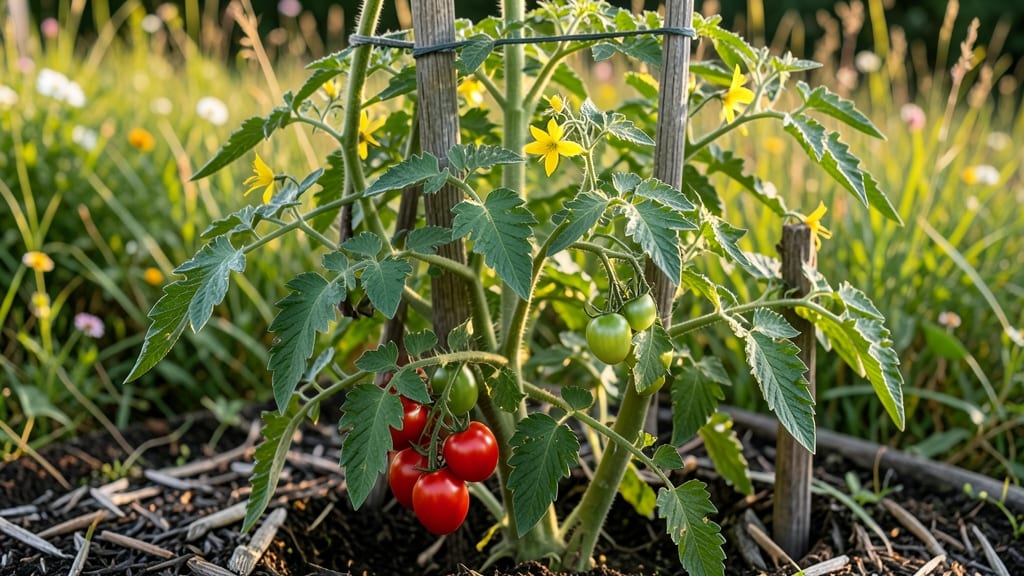
Tomato plants and sunlight require 6 to 8 hours of direct sunlight daily for optimal growth, with at least 10 hours needed for maximum fruit production. Varieties like cherry tomatoes tolerate partial shade, while beefsteaks demand full sun exposure to ripen properly.
Sunlight is the lifeblood of tomato plants, driving both leaf development and fruit ripening through photosynthesis. 🌞 Without enough light, plants become leggy and produce fewer blossoms, while excessive midday sun can scorch leaves in hot climates.
I’ve found that morning sun paired with afternoon shade works best in Southern gardens, where temperatures often exceed 90°F. For container growers, south-facing windows or grow lights can bridge the gap when natural light falls short.
What’s fascinating is how different tomato varieties respond: heirloom beefsteaks need full sun to develop their signature deep red colors, while bush varieties like Roma thrive with just 5-6 hours of direct light.
The key is balancing intensity with duration—too little light stunts growth, but too much without proper hydration leads to stress. If your plants start wilting despite adequate water, it’s often a sign they’re getting more sun than they can handle.
💡 In This Article
- How Sunlight Affects Tomato Plant Growth and Fruit Ripening
- Adjusting Sunlight for Different Tomato Varieties and Growing Conditions
How sunlight affects tomato plant growth and fruit ripening
Sunlight triggers photosynthesis in tomato plants, where chlorophyll absorbs light energy to convert carbon dioxide and water into glucose—the plant’s fuel. For tomatoes, this process is especially critical because they’re heavy feeders, requiring 2-3 times more light than leafy greens to produce both foliage and fruit.
The leaves contain chloroplasts packed with chlorophyll, which appear green but actually reflect green light while absorbing red and blue wavelengths most efficiently. When light hits these pigments, it kickstarts the chemical reactions that power growth and fruit development.
The intensity of sunlight matters just as much as duration. Tomatoes need full-sun exposure (6+ hours of direct light) to develop the energy reserves required for flowering and fruiting.
Studies show that plants receiving 10+ hours of sunlight produce 30-50% more fruit than those with only 6 hours, thanks to increased photosynthesis and ethylene production. Ethylene, a plant hormone triggered by UV light, is what turns green tomatoes red and enhances their sweetness.
Without sufficient UV exposure, tomatoes may stay green or develop a pale, watery flavor—something I’ve noticed with indoor-grown varieties that lack natural sunlight.
Full-sun conditions also boost a tomato plant’s disease resistance. Sunlight helps dry foliage quickly after morning dew, reducing the risk of fungal diseases like early blight.
In contrast, partial shade—where plants receive less than 4 hours of direct light daily—can lead to weak stems, yellowing leaves (chlorosis), and poor fruit set. The trade-off? In hot climates like Arizona or Florida, afternoon shade protects leaves from scorching while still allowing morning sun to fuel photosynthesis.
This balance is why many gardeners use shade cloth during peak summer hours.
Different tomato varieties respond uniquely to light conditions. Indeterminate varieties like 'Sungold' or 'Brandywine' need full sun to thrive, growing vines that can reach 10+ feet and producing fruit continuously.
Determinate types, such as 'Roma' or 'Celebrity,' are more adaptable and can tolerate 5-6 hours of sunlight while still yielding well. The key difference lies in their growth habits: indeterminates prioritize vine expansion and fruit production, while determinates focus on compact growth and early harvests.
Light quality also plays a role. Blue light (400-500 nm) promotes leafy growth and compact stems, while red light (600-700 nm) encourages flowering and fruiting. Grow lights designed for tomatoes often mimic this spectrum, with a red-to-blue ratio of 3:1 to optimize both growth and fruit development.
If you’re growing tomatoes indoors, a full-spectrum LED bulb with this balance can replicate natural sunlight, though it won’t fully replace the benefits of outdoor UV exposure.
One common mistake is assuming "more sun is always better." In reality, tomatoes in high-desert climates (like Albuquerque) or coastal areas with fog (like San Francisco) may need afternoon shade to prevent leaf burn. The goal is to provide enough light for photosynthesis without causing heat stress.
A simple test: If your tomato leaves feel crispy to the touch by midday, they’re likely getting too much direct sun without adequate hydration.