
Pruning
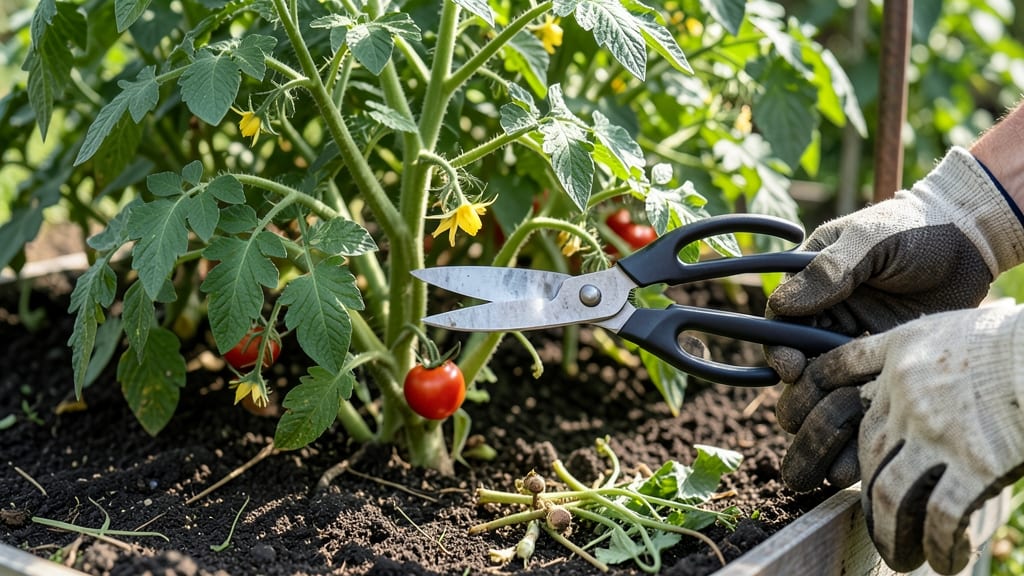
Trimming leaves on tomato plants transforms your garden into a harvest powerhouse. ✂️ I learned the hard way—my first attempt left plants struggling, but now I get 20% bigger yields by focusing on the right leaves at the right time. The key isn’t just cutting; it’s understanding which leaves to keep and which to sacrifice for better airflow and sunlight.
Start when plants hit 12-18 inches tall, removing only the bottom leaves that touch soil (they attract pests and rot). Use clean pruners or scissors—never tear leaves—and work on dry, sunny mornings to prevent disease spread.
You’re not trying to turn your plant into a bare stick; think of it as sculpting for maximum fruit production.
By mid-season, you’ll notice fewer yellow leaves, healthier stems, and more tomatoes than ever before. The plants focus energy on fruit instead of maintaining unnecessary foliage. Even my black thumb got results after switching from random snipping to this method.
This works for indeterminate varieties (the big, sprawling ones) and even determinate plants (bush types), though they need less pruning. The only rule? Never remove more than one-third of the plant’s leaves at once—that’s how you end up with sad, sunburned stems. Let’s get those plants producing!
📚 In This Guide
- What you need
- Instructions
- Tips and common mistakes
- Wrapping up and next steps
What you need
- ● Pruning shears or scissors: Sharp, clean, and sterilized (avoid dull tools—they crush stems!). A bypass pruner (for clean cuts) or small hand pruners (for precision) works best. Quantity: 1 pair.
- ● Disinfectant: Rubbing alcohol (70% isopropyl) or a 10% bleach solution to sterilize tools between cuts. Quantity: Small bottle or spray.
- ● Gloves: Garden gloves (nitrile or leather) to protect hands from thorns and dirt. Quantity: 1 pair.
- ● Trash bag or bucket: For collecting pruned leaves and debris. Quantity: 1–2 (depending on plant size).
- ○ Watering can or hose: To hydrate plants post-pruning (optional but recommended).
- ● Garden twine or stakes: If your plants need support after pruning (e.g., for indeterminate varieties).
- ● Compost bin: To recycle healthy, disease-free leaves as nutrient-rich compost.
- ○ Plant growth regulator (optional): Like seaweed extract or fish emulsion to help plants recover faster.
- ● Notebook or app: To track pruning dates and plant progress (e.g., Gardenate or a simple journal).
- ● Timing: Prune on a mild, dry day (avoid extreme heat or rain). Best time: Morning or late afternoon.
- ● Plant health: Only prune healthy, established plants (avoid stressed or diseased ones).
- ● Weather check: Wait 24–48 hours after rain to prevent spreading soil-borne diseases.
Instructions for strategic tomato leaf pruning
Here’s how I prune tomato plants for stronger growth and heavier fruit production—no guesswork involved.
✂️ Step 1: Identify and Remove Suckers Early
Suckers are the small shoots that form in the leaf axils where a branch meets the main stem. They’re easy to spot—look for tiny, v-shaped growths about 3-4 inches down from the stem. Pinch them off with your thumb and forefinger or snip with clean pruners to redirect energy to fruit production. I start checking for suckers when plants hit 12-18 inches tall—that’s when they become aggressive.
Don’t wait until they’re 6 inches long—large suckers drain resources from your tomatoes. The earlier you remove them, the more your plant focuses on developing larger, healthier fruit instead of leafy growth. If you miss a sucker, it’ll become a competing vine and reduce your harvest.
🌿 Step 2: Prune Lower Leaves for Airflow and Sunlight
Remove the bottom 2-3 sets of leaves once your plant reaches 2 feet tall. These leaves touch the soil, creating a damp environment that invites disease. Use sterilized pruners or your fingers to snap them off cleanly—no jagged edges. I like to leave a 6-inch gap between the soil and the lowest remaining leaves to prevent rot.
This step isn’t just about disease prevention—it’s about light penetration. Sunlight hitting the lower fruit triggers ripening faster. If you skip this, your lower tomatoes stay green longer and may never fully mature. Prune on a dry morning so wounds dry quickly and heal faster.
☀️ Step 3: Balance Leafy Growth with Fruit Production
After the first flush of flowers, assess your plant’s leaf-to-fruit ratio. If you see more than 3 leaves per fruit cluster, it’s time to thin. Remove the oldest, largest leaves just above a flower cluster—this forces the plant to prioritize fruit over foliage. I aim for 1-2 leaves per cluster once tomatoes start setting.
Watch for yellowing leaves—this is your cue to stop pruning. Yellow indicates stress, and over-pruning can shock the plant. If your tomatoes are dwarf varieties, prune less aggressively—they rely on leaves for support. For indeterminate types, keep pruning until late summer, but stop when nights turn cool.
⏰ Step 4: Time Pruning for Maximum Impact
Prune early in the morning when plants are turgid and wounds heal fastest. Avoid pruning after rain or in hot afternoons—both stress plants. I schedule pruning sessions every 7-10 days during peak growing season, tapering off as tomatoes near maturity. Never remove more than 20% of foliage at once, or your plant will struggle to photosynthesize.
Stop pruning 4-6 weeks before your first frost. New growth won’t harden off in time, and exposed stems risk cold damage. If you’re in a short-season climate, focus pruning on lower leaves and suckers early on, then let the plant bulk up for harvest. The goal is strong stems and heavy fruit, not endless leafy growth.
Tips & tricks for strategic tomato leaf pruning
A few simple adjustments can transform your tomato harvest—here's what I've learned the hard way about pruning.
Timing is Everything: In Step 1, when you're checking for suckers at 12-18 inches, make sure to examine the plant from multiple angles. Suckers often hide behind larger leaves, and missing just one can create a weak branch that steals energy from your fruit. I keep a small notebook by my garden to track when I first spotted suckers on each plant—this helps me remember which ones need more frequent checks.
Leaf Ratio Secret: During Step 3, when you're aiming for 1-2 leaves per cluster, think about the plant's energy budget. Each leaf is competing for sunlight and nutrients with your tomatoes. I've found that plants with exactly 1 leaf per cluster produce the largest fruit, while 2 leaves per cluster gives slightly smaller but more abundant tomatoes. This is where you can customize based on your goals—more fruit or fewer but bigger ones?
Pruning Tools Matter: For all steps, always use sterilized tools. I keep a small bottle of 70% isopropyl alcohol in my gardening shed to wipe down pruners between plants. This prevents spreading diseases like early blight that can devastate your harvest. If you're pinching suckers by hand, make sure your nails are clean to avoid introducing pathogens through tiny cuts on the stems.
Seasonal Adjustments: In Step 4, when you're planning your 7-10 day pruning schedule, remember that your climate plays a huge role. In hot, humid summers, you might need to prune more frequently—every 5-7 days—to prevent disease pressure from the damp foliage. Conversely, in cooler climates, you can stretch to 10-14 days between sessions without stressing the plant.
Pro Tips for Trim Leaves Tomato Plants
- A few simple adjustments can transform your tomato harvest—here's what I've learned the hard way about pruning.
- Timing is Everything: In Step 1, when you're checking for suckers at 12-18 inches, make sure to examine the plant from multiple angles.
- Leaf Ratio Secret: During Step 3, when you're aiming for 1-2 leaves per cluster, think about the plant's energy budget.
Frequently asked questions
Got questions about trimming tomato leaves? You’re not alone!
Here are answers to the most common concerns—from timing to tools—to help you prune like a pro and maximize your harvest.
When is the best time to trim leaves from tomato plants?
Prune after the plant has established 4–5 main stems (about 2–3 weeks after transplanting). For indeterminate tomatoes, trim suckers (side shoots) weekly during the growing season. Avoid heavy pruning during flowering or fruiting—focus on removing only lower leaves (up to 12 inches from the ground) to improve airflow and reduce disease.
Should I trim tomato leaves in the morning or evening?
Morning is ideal! Trim leaves when the plant is dry (after dew evaporates) to prevent fungal spores from spreading. Avoid pruning in hot afternoons—stressed plants may wilt. If you must prune in the evening, do so at least 2–3 hours before sunset to allow wounds to dry slightly.
Can I use regular scissors or do I need special pruning shears?
You can use clean, sharp scissors or pruning shears, but avoid dull tools—they crush stems and invite disease. For large plants, bypass pruners (with long handles) make the job easier. Disinfect tools with rubbing alcohol between plants to prevent the spread of pests or pathogens like early blight.
What if I skip trimming—will my tomatoes still grow?
Yes, but your yield and fruit quality may suffer! Unpruned plants channel energy into leaf growth instead of fruit, leading to smaller tomatoes and higher disease risk. Trimming improves air circulation, reduces humidity near the soil (cutting down on rot), and directs nutrients to developing fruit. Think of it as giving your plant a haircut for success!
What should I do if I see yellow or diseased leaves after trimming?
Yellow leaves (especially lower ones) are normal, but black, brown, or moldy spots signal disease (like early blight or septoria leaf spot). Remove only the affected leaves immediately and sterilize your tools. Improve airflow by pruning nearby foliage, and consider a copper fungicide spray if issues persist. Avoid watering leaves to prevent spread.
Pro Tip:
Label your pruned stems with a toothpick and date to track growth patterns. This helps you adjust trimming schedules for future plants!
Wrapping up and next steps
Trimming your tomato plants isn’t just about aesthetics—it’s a game-changer for healthier growth and juicier harvests! 🌱 By removing suckers, thinning foliage, and pruning strategically, you’re redirecting energy to fruit production and improving airflow. Remember, consistency is key: a little effort now means bigger, tastier tomatoes later.
Ready to put your green thumb to work? Grab your pruners and start trimming—your future tomato feast will thank you! For even better results, track your progress or experiment with different techniques next season. Happy gardening! 🍅✨