
Companion Plants
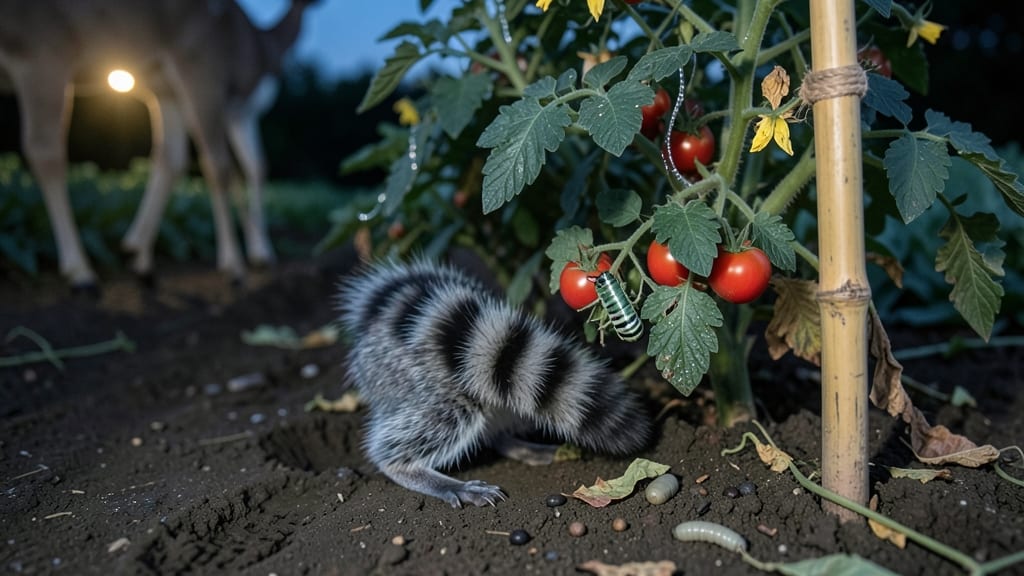
What animals eat tomato plants at night are primarily deer, raccoons, rabbits, and nocturnal pests like tomato hornworms or cutworms, which devour leaves and damage fruit. Look for chewed foliage, droppings, or missing sections to identify the culprit.
Nighttime garden raids on tomato plants are often the work of opportunistic creatures drawn to the plants' tender leaves and sweet fruit. 🌙 Deer and raccoons tend to target larger plants, leaving behind jagged tears and scattered droppings, while rabbits prefer young seedlings, nipping stems cleanly at the base.
Insects like cutworms create irregular holes in leaves, while tomato hornworms strip entire branches bare overnight. The key to protecting your harvest lies in understanding these patterns—whether it's the size of the damage or the time of year the raids peak.
For instance, raccoons are most active during summer months when fruit ripens, while rabbits may strike in early spring when new shoots emerge. 🐇 Identifying these habits lets you tailor your defenses, whether that means installing motion-activated lights for larger animals or handpicking caterpillars before they skeletonize your plants.
The damage isn't just cosmetic—severe nighttime feeding can stunt growth or reduce yield, making prevention a garden essential.
💡 In This Article
- Nocturnal Tomato Plant Predators: Behavior and Damage Patterns
- Natural and Chemical Solutions to Deter Nighttime Tomato Thieves
Nocturnal tomato plant predators: behavior and damage patterns
Deer are the heavyweight culprits of nighttime tomato raids, using their 24-inch-tall leaps to browse entire plants. They typically leave behind jagged, uneven tears along leaf edges and stems, often targeting the most tender new growth.
Their droppings—small, pellet-like, and scattered—are a dead giveaway, especially in early morning when dew clings to the garden. 🌿 What makes them particularly destructive is their habit of returning to the same plants night after night, which can stunt growth or even kill young seedlings entirely.
Raccoons, on the other hand, are the opportunistic thieves of the garden world. These masked bandits use their dexterous finger-like toes to pluck tomato fruit directly off the vine, leaving behind clean, circular bite marks where they've severed the stem.
Their damage often appears overnight, with entire clusters of tomatoes vanished—only to find scattered shells or half-eaten fruit nearby. Unlike deer, raccoons are drawn to ripe tomatoes, making late summer and early fall their peak activity seasons when fruit is plentiful.
Rabbits take a more surgical approach, targeting young tomato plants with their sharp incisors to create clean, 45-degree angle cuts at the stem base. This "nibbling" leaves plants wilted and dying overnight, often without visible foliage damage.
Their droppings are small, round pellets, typically found in clusters near the base of affected plants. 🐰 What sets rabbits apart is their preference for tender new shoots—often striking in spring when seedlings first emerge, which can devastate an entire crop before it even bears fruit.
Nocturnal insects like tomato hornworms and cutworms operate on a different scale but cause just as much havoc. Hornworms, which can grow up to 4 inches long, strip entire leaves overnight, leaving behind only the tougher veins in a "skeletonized" pattern.
Cutworms, meanwhile, create irregular holes in leaves or sever stems at ground level, causing plants to topple. Both leave behind silvery slime trails and frass (insect droppings) that cling to foliage, making them easier to spot in the morning light.
The timing of these attacks varies by predator. Deer and rabbits are most active during the new moon phases when moonlight is minimal, while raccoons and insects thrive under any darkness.
Seasonal patterns also play a role—deer and rabbits target young plants in spring, while raccoons and hornworms focus on ripe fruit in late summer.
Understanding these rhythms helps gardeners time their defenses effectively, whether that means installing motion-activated lights during new moon periods or handpicking caterpillars before they reach destructive sizes.
What most gardeners don't realize is that these predators often leave behind more than just physical damage—they can introduce diseases.
Deer saliva, for instance, contains bacteria that can infect tomato plants, while raccoon urine may carry pathogens harmful to both plants and humans. 🦌 This dual threat of destruction and contamination makes early identification and intervention critical for protecting both your harvest and your garden's health.