
Pests
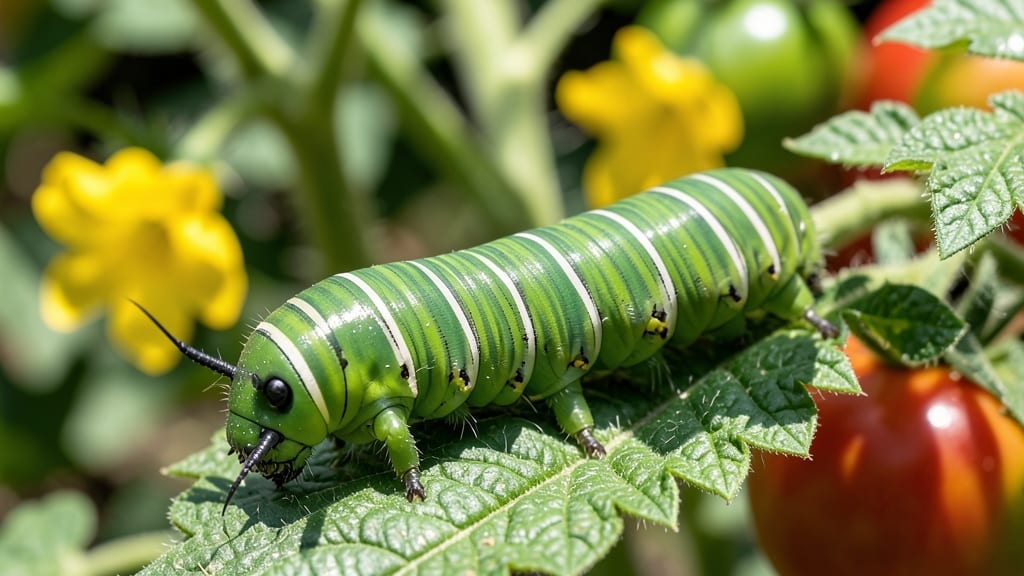
Tomato worms, specifically hornworm larvae, look like thick, green caterpillars with white diagonal stripes and a smooth, glossy body, often reaching 3-4 inches long. Adult hornworms are large moths with striking black-and-white markings on their wings.
What do tomato worms look like? These pests are the larval stage of hornworms, and their appearance is one of the most distinctive in the garden. 🌱 These caterpillars have a vibrant green body that can grow up to 3-4 inches long, making them easy to spot on tomato plants.
The smooth, slightly translucent skin and white diagonal stripes running along their sides help them blend into foliage while they feed.
Adult hornworms, on the other hand, transform into moths with a wingspan of about 3-4 inches, featuring bold black and white patterns that make them stand out at night.
What makes these pests so noticeable is their voracious appetite—they can strip a tomato plant bare in just a few days. Look for chewed leaves, droppings, and even the worms themselves hiding under leaves or clinging to stems.
Identifying them early is key to protecting your plants before they cause serious damage.
💡 In This Article
- Identifying Tomato Hornworm Larvae vs Adult Moths
- How to Spot Tomato Worms on Plants and Prevent Damage
Identifying tomato hornworm larvae vs adult moths
The tomato hornworm larvae you're most likely to encounter are thick, cylindrical caterpillars with a vibrant emerald-green body that can grow up to 3-4 inches in length.
Their smooth, slightly glossy skin and white diagonal stripes along each side make them instantly recognizable. 🌿 These stripes act as a camouflage mechanism, helping them blend into the foliage while they munch on tomato leaves.
One unique feature is their V-shaped markings near the head, which further mimics the veins of leaves.
When examining these larvae closely, you'll notice their horn-like projections on the rear end—these are actually modified abdominal segments called "osmeteria." When threatened, hornworms can evert these structures, releasing a foul-smelling chemical to deter predators.
The larvae's body is surprisingly firm to the touch, with a slight translucency that reveals their internal organs when held up to light. Their feeding habits leave behind large, irregular holes in leaves, often with only the main veins remaining.
Adult hornworms undergo complete metamorphosis, emerging as large sphinx moths with a 3-4 inch wingspan. Their wings feature striking black and white patterns, including bold diagonal bands and a distinctive white "V" shape on the forewings.
Unlike their caterpillar stage, adult moths have a hairy thorax and long, slender proboscis for feeding on nectar.
These moths are most active at night, which is why gardeners rarely see them during the day. 🌙 The transformation from larva to moth takes about 2-3 weeks, depending on temperature and food availability.
What sets hornworms apart from other garden pests is their rapid growth rate. A newly hatched larva is only about 1/4 inch long but can double in size within a week.
Their life cycle includes 5-6 larval stages before pupating, with the entire process from egg to adult taking roughly 30-40 days in warm climates. This quick development means infestations can escalate rapidly if left unchecked, which is why early identification is crucial for protecting your tomato plants.
One common point of confusion is distinguishing hornworm larvae from other green caterpillars like loopers or cutworms. Hornworms lack the looping motion of loopers and don't have the dark banded pattern of cutworms. Their smooth, uniform green color and lack of bristles are key identifiers.
Additionally, hornworms often have a slightly swollen abdomen near the rear, which sets them apart from other pests that tend to be more uniformly shaped.
Understanding these physical differences helps gardeners take targeted action. For example, knowing that hornworms prefer to feed on the upper leaves of tomato plants means you should check these areas first.
Their large droppings, which resemble tiny green pellets, are another telltale sign of their presence. 🐛 Recognizing these details allows for more effective monitoring and control before the larvae can cause significant damage to your garden.