
Companion Plants
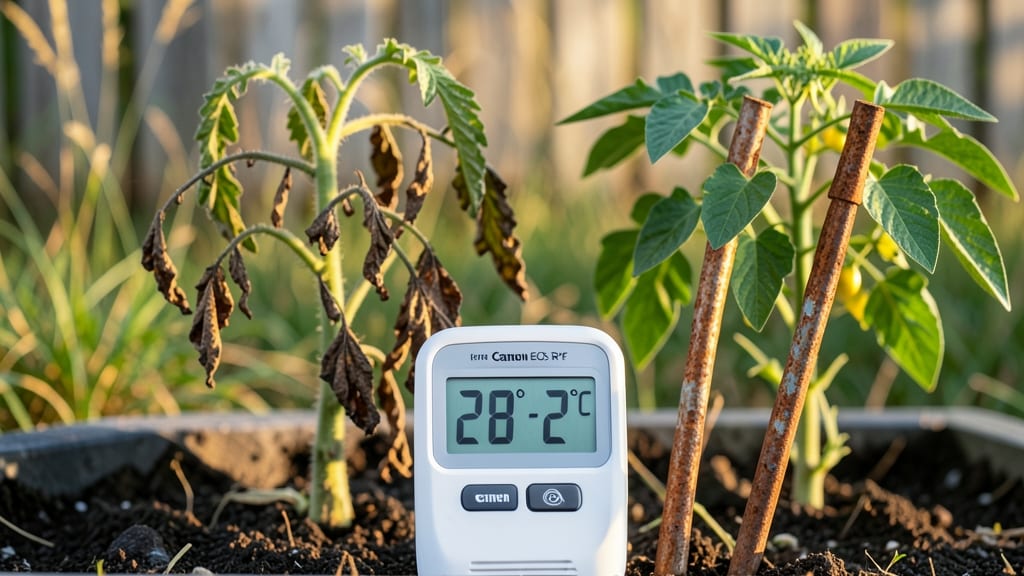
Tomato plants die when temperatures hit 104°F or higher for prolonged periods, though even brief spikes above 95°F can trigger irreversible damage.
Picture this: your lush 🍅 plants thriving in USDA Zone 6a’s spring warmth, only to wilt dramatically after a single scorching afternoon. The problem isn’t just heat—it’s how long your tomatoes endure it, and whether they’re shielded from the sun’s worst assaults.
Most gardeners assume wilting means temporary stress, but the truth is far more urgent. Without intervention, heat stress can halt fruit production, scorch leaves, and even kill the plant in as little as 24 hours during extreme heatwaves.
In this guide, you’ll discover the exact temperature thresholds that signal danger, how to spot early warning signs before it’s too late, and the simple yet effective strategies to protect your harvest—no matter how brutal the summer gets.
Critical heat thresholds: when tomato plants die from extreme heat
Tomato plants thrive in warm conditions, but when temperatures climb too high, they can suffer irreversible damage—sometimes within hours. The lethal temperature threshold for tomatoes typically starts at 105°F (40.5°C) during the day, but nighttime temperatures above 85°F (29.5°C) can also trigger stress.
Understanding these critical heat thresholds helps you act before your plants wilt permanently.
Heat stress affects tomatoes differently based on duration and intensity. A single day at 100°F (38°C) may cause wilting, but prolonged exposure above 95°F (35°C) can kill plants entirely. Indeterminate varieties (like 'Sungold') are more vulnerable than determinate types (like 'Roma') because their vines continue growing season-long.
Here’s a breakdown of the exact temperature thresholds where tomatoes suffer irreversible damage, including how long exposure matters:
| Temperature Range (°F/°C) | Daytime Impact | Nighttime Impact | Duration Risk | Plant Response |
|---|---|---|---|---|
| 85–90°F (29.5–32°C) | Mild stress; wilting | Safe for short-term | >3 days = stunted growth | Leaf curling, blossom drop |
| 90–95°F (32–35°C) | Severe wilting | Stress begins | >2 days = fruit scarring | Fruit sunscald, leaf bleaching |
| 95–100°F (35–38°C) | Irreversible damage | Critical night stress | >1 day = root burn | Root collapse, permanent wilting |
| 100–105°F (38–40.5°C) | Plant shutdown | Lethal overnight | >6 hours = death | Cell death, no recovery |
| >105°F (40.5°C+) | Instant fatality | Instant fatality | Any exposure = death | Plant tissue necrosis |
Nighttime temperatures are just as critical as daytime highs. Tomatoes need cool nights (60–70°F/15–21°C) to recover from daytime heat.
If nighttime temps stay above 85°F (29.5°C) for more than 24 hours, roots struggle to absorb water, leading to permanent wilting. Determinate varieties handle brief heat spikes better than indeterminate types, which suffer cumulative damage.
Heatwaves also accelerate fruit sunscald, where exposed tomatoes develop white or gray patches from direct sunlight. This isn’t lethal but reduces quality. To prevent it, use lightweight shade cloth (30–50%) during peak afternoon heat.
For extreme climates, consider early-maturing varieties like 'Early Girl' or 'Stupice,' which ripen before the worst heat arrives.
Soil temperature matters too. Roots stop functioning effectively above 90°F (32°C). Mulching with straw or wood chips keeps soil cooler by up to 10°F (5.5°C). If your area frequently hits 100°F (38°C), opt for heat-tolerant hybrids like 'Heatmaster' or 'Solar Fire,' bred to withstand higher temps.
Monitor your plants for early heat stress signs: yellowing leaves, wilting that doesn’t recover by evening, or blossoms dropping without setting fruit. These are warnings to act before temperatures cross the 95°F (35°C) threshold.
In my garden, I’ve saved plants by moving them to partial shade during heatwaves, even if it means reduced fruit size.
If your tomatoes hit 105°F (40.5°C), recovery is unlikely. Focus on preventive care: drip irrigation to keep foliage cool, reflective mulch to deflect heat, and avoiding overhead watering (which increases leaf burn). For determinate varieties, harvest early—even green tomatoes will ripen indoors.
🌱
Signs your tomato plants are dying from heat stress (before it’s too late)
Tomato plants can suffer silently from heat stress, showing subtle signs long before they collapse. The first warning is often leaf curling or yellowing edges, as the plant tries to reduce water loss.
Even worse, blossom drop becomes rampant when temperatures climb above 90°F (32°C) during the day. These aren’t just temporary setbacks—they’re your plant’s last-ditch efforts to survive.
Watch for fruit sunscald, where exposed sides of tomatoes develop pale, leathery patches from direct sunlight. This happens when daytime highs exceed 95°F (35°C) without relief. The real danger?
By the time you see these symptoms, your plant may already be past the point of recovery—especially if nighttime temps stay above 75°F (24°C).
- Daytime danger: 100°F (38°C)+ for 2+ hours → irreversible wilting
- Nighttime stress: 80°F (27°C)+ without cooling → fruit abortion
- Lethal limit: 110°F (43°C)+ → cellular damage within hours
Tomatoes are tropical plants at heart—they thrive in 70-85°F (21-29°C) ranges. When temps creep above 90°F (32°C) for extended periods, their metabolic processes shut down, leading to rapid decline.
Don’t overlook stunted growth or drooping leaves that don’t perk up after watering. These are classic signs of heat exhaustion, where the plant’s vascular system struggles to transport water. At this stage, act fast: move plants to shade immediately and increase watering frequency to every 2-3 days (morning only).
For indeterminate varieties (like 'Sungold' or 'Brandywine'), heat stress causes fruit cracking and blossom end rot due to uneven water absorption. Determinate types (like 'Roma' or 'Celebrity') may simply stop producing flowers entirely when stressed. Both scenarios mean lost yield if ignored.
If your tomatoes develop white or gray patches on leaves, it’s not just heat—it’s heat-induced fungal pressure. The combination of high temps and humidity creates the perfect storm for diseases like early blight. Remove affected leaves immediately and apply a copper fungicide as a preventative measure.
Your last chance to save a heat-stressed tomato plant is to prune damaged foliage and provide afternoon shade using shade cloth (30-50% coverage). For severe cases, consider harvesting early—even underripe tomatoes can ripen indoors if detached carefully. The key is acting within 48 hours of first symptoms appearing.