
Companion Plants
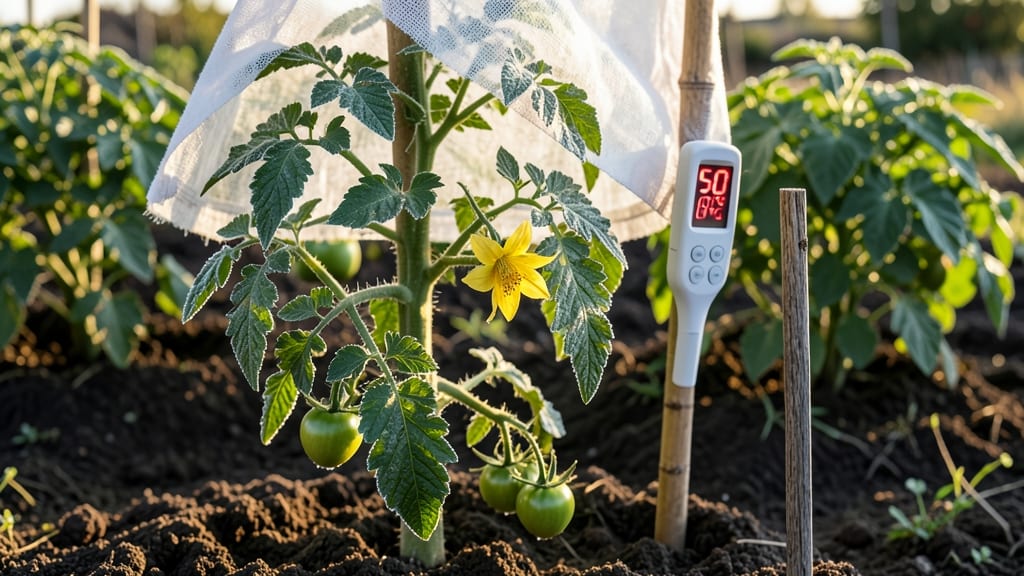
Tomato plants suffer damage when the temperature is too cold for them, dropping below 50°F (10°C), with severe stress occurring under 45°F (7°C) or colder. Frost at 32°F (0°C) or lower will kill plants outright, while prolonged exposure to 40°F (4°C) stunts growth and weakens roots.
Cold weather disrupts tomato plants' cellular functions, causing irreversible damage when temperatures drop too low. 🌱 The 50°F (10°C) threshold marks where growth slows dramatically, while 45°F (7°C) triggers stress responses like leaf yellowing and blossom drop.
Even brief dips below 32°F (0°C) can be fatal, as ice crystals rupture plant tissues. Varieties like 'Stupice' tolerate slightly cooler conditions, but most commercial tomatoes need protection when nights dip below 55°F (13°C).
To safeguard your plants, use row covers or frost cloths when temperatures approach 40°F (4°C), and apply thick mulch to insulate roots. 🌡️ For gardeners in Zones 8-10, cold frames or even DIY plastic tunnels can extend the growing season by trapping heat.
If frost is forecasted, harvesting ripe fruit and covering plants with blankets can save them from severe damage.
💡 In This Article
- Tomato Plant Cold Tolerance: Science Behind Temperature Thresholds
- Protecting Tomato Plants from Cold Weather: Practical Solutions
Tomato plant cold tolerance: science behind temperature thresholds
Tomato plants are warm-season crops, meaning their cellular machinery shuts down when temperatures drop too low. At 50°F (10°C), metabolic processes slow dramatically—photosynthesis drops by 20-30%, and nutrient uptake through roots becomes inefficient.
Below 45°F (7°C), the plant's defense mechanisms kick in, producing ethylene gas that causes leaf yellowing and premature fruit drop. This chilling injury occurs because cold temperatures disrupt the plant's membrane integrity, causing proteins and enzymes to malfunction.
The real damage happens at 32°F (0°C), where ice crystals form within plant cells. These crystals puncture cell walls, releasing toxic compounds that kill the plant.
Even brief exposure to frost can be fatal, but prolonged cold at 40°F (4°C) causes long-term stress—roots stop absorbing water, stems become brittle, and new growth halts. 🌡️ This is why gardeners in transitional zones (like USDA Zone 8) often see stunted plants or poor yields after unexpected cold snaps.
Not all tomato varieties respond the same way. Cold-hardy types like 'Stupice' can tolerate brief dips to 36°F (2°C) thanks to genetic adaptations that protect cell membranes. In contrast, heat-loving varieties like 'Better Boy' show visible damage at 48°F (9°C) and may not recover from exposure below 50°F (10°C).
The difference lies in their lipid composition—cold-hardy tomatoes have higher levels of unsaturated fats in cell membranes, which remain flexible in cooler temps.
What most gardeners don't realize is that cold stress compounds over time. A plant that survives 40°F (4°C) for one night may still produce, but repeated exposure weakens its immune system, making it vulnerable to fungal diseases like early blight.
The roots, which are most sensitive to cold, can take weeks to recover—if they recover at all. This is why professional growers monitor soil temperatures, aiming to keep roots above 55°F (13°C) for optimal health.
Here's what happens at different temperature ranges:
- 50-55°F (10-13°C): Growth slows, photosynthesis declines by 10-20%
- 45-49°F (7-9°C): Chilling injury begins—leaf discoloration, blossom drop
- 40-44°F (4-7°C): Severe stress—roots stop functioning, stems weaken
- 32°F (0°C) or below: Frost damage—cell rupture, plant death within hours
The key takeaway is that tomato plants are more resilient to brief cold snaps than prolonged chilly conditions. A single night at 40°F (4°C) might be survivable, but consistent temps below 50°F (10°C) will stunt your plants' growth and reduce your harvest.
Understanding these thresholds helps you plan protection strategies before the cold hits. 🌱