
Pruning
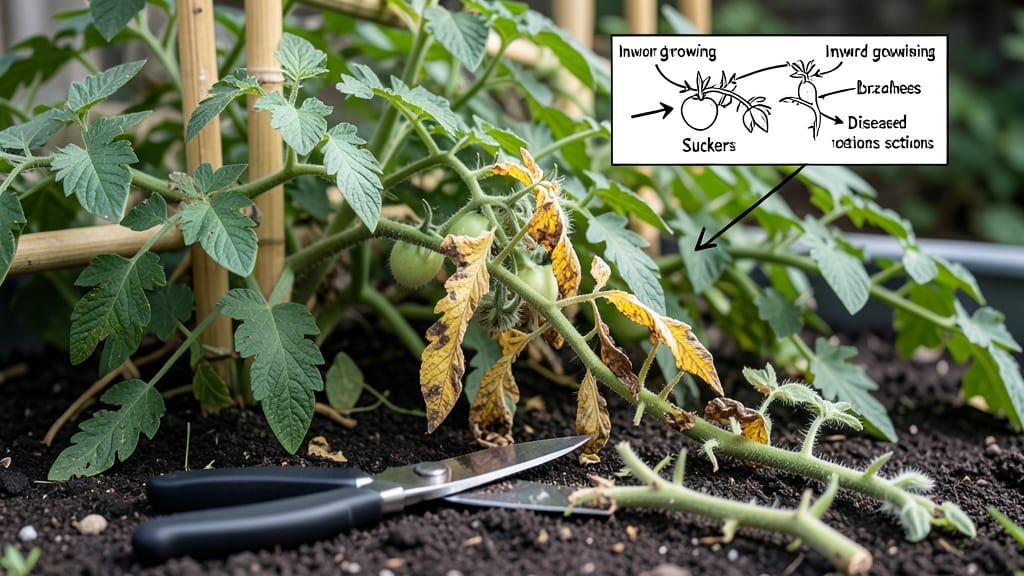
Pruning tomato plants isn't about cutting everything—it's about directing energy to where it matters most. 🌱 The key is removing those little side shoots called "suckers" that grow where the main stem meets a branch, plus any branches that crowd the plant.
I've seen firsthand how this simple habit turns a tangled mess into a fruit-loaded powerhouse.
Start early in the season when plants are young and keep pruning throughout summer. You'll be looking for those small, leafy shoots between the main stem and branches—pinch them off with your fingers or snip with clean shears.
This isn't about making your plant look perfect; it's about creating space for bigger, healthier fruit to develop.
The payoff comes in bigger, juicier tomatoes and fewer disease problems. With better airflow, your plants stay drier, which means less risk of fungal issues.
Plus, the energy that would've gone into those extra branches now fuels the main plant's growth—think of it as redirecting your garden's resources to where they'll do the most good.
This method works for both indeterminate (vining) and determinate (bush) tomatoes, though determinate types need less aggressive pruning. Just remember: prune when plants are dry, use clean tools, and never remove more than a third of the plant at once. Your future harvest will thank you!
📚 In This Guide
- What you need
- Instructions
- Tips and common mistakes
- Wrapping up and next steps
What you need
- ● Pruning shears or sharp bypass pruners – Choose sterilized, sharp tools (avoid dull blades—they crush stems and invite disease). A 5-inch to 7-inch size works best for most tomato plants.
- ○ Gloves – Nitrile or leather gloves to protect your hands from thorns and sap (optional but highly recommended if you’re sensitive to plant oils).
- ● Disinfectant (70% isopropyl alcohol or bleach solution) – 1 part bleach to 9 parts water to sterilize tools between cuts and prevent the spread of bacteria/fungi.
- ● Garden twine or plant ties – 3–4 feet per plant to secure the main stem to a stake or trellis after pruning.
- ○ Stakes or trellis (optional but critical for indeterminate tomatoes) – 6–8 feet tall bamboo stakes or a durable trellis system to support the plant’s weight as it grows.
- ● Handheld spray bottle with water – To mist cuts and encourage faster healing.
- ● Epsom salt (magnesium sulfate) – 1 tablespoon per gallon of water for a post-pruning foliar spray to boost plant recovery.
- ● Garden journal or markers – To label plants or track pruning dates (great for beginners!).
- ● Compost bin or mulch – To collect pruned branches for nutrient-rich compost.
How to prune tomato plants for bigger, healthier fruit
Pruning tomato plants might seem intimidating, but it’s all about focusing energy where it matters most—directing growth toward fruit production. Here’s how to do it right.
✂️ Step 1: Identify the Main Stem and Suckers
Start by locating the main stem—this is the thick, central vine that grows straight up from the base. It’s the backbone of your tomato plant, and you’ll want to keep it intact. Look for smaller shoots growing between the main stem and branches. These are called suckers, and they’re the first things to remove.
Suckers grow in the V-shaped junction where a leaf meets the stem. They’ll appear as thin, wiry shoots. Pinching them off early prevents wasted energy—the plant would otherwise grow more leaves instead of fruit. Use your fingers or clean pruning shears to gently twist or snip them off just above the leaf junction.
✂️ Step 2: Prune Suckers Regularly Through the Season
Check for suckers every 5-7 days once your plant starts flowering. Early pruning leads to stronger growth and more fruit later. Focus on removing suckers that are smaller than a pencil—they’re easier to manage and less likely to stress the plant.
Here’s the thing—don’t prune too aggressively. Leave the first few suckers below the first flower cluster intact. These can develop into strong branches that support more fruit. Once your plant is flowering, prioritize removing suckers above the fruit clusters to keep energy flowing downward.
✂️ Step 3: Thin Overcrowded Branches for Airflow
As your tomato plant grows, branches can become dense, blocking sunlight and airflow. This invites disease and weakens fruit production. Look for crossing or rubbing branches—these need to go. Use clean pruning shears to trim them back to a healthy leaf node.
Also, if a branch is yellowing or diseased, cut it off immediately. Don’t leave it—it’ll spread problems to the rest of the plant. Always sterilize your shears with rubbing alcohol between cuts to prevent contamination. Prune on a dry, sunny day to help wounds heal faster.
☀️ Step 4: Prune for Light and Fruit Access
Your goal is to create an open, sunlit canopy. Trim any leaves that shade the fruit clusters—especially those growing near the base of the plant. This ensures sunlight reaches the tomatoes, improving flavor and reducing rot.
For indeterminate varieties (the ones that keep growing all season), keep pruning suckers and thinning leaves until late summer. Determinate tomatoes (bush types) need less pruning—just remove suckers and diseased leaves. Stop pruning 4-6 weeks before your first frost to let the plant focus on ripening existing fruit.
⏰ Step 5: Time Your Pruning for Best Results
Prune early in the morning when plants are hydrated and temperatures are cooler. Avoid pruning in hot afternoons—it stresses plants and slows recovery. After trimming, water deeply to help the plant recover and reduce shock.
Watch for new suckers after each pruning session. They’ll appear as tiny buds in the leaf junctions. Stay consistent—pruning weekly keeps your plant focused on producing fruit instead of unnecessary foliage. With practice, you’ll see bigger, healthier tomatoes and fewer problems with disease.
Tips & tricks for pruning tomato plants like a pro
Confession: I skipped proper pruning for years and ended up with leafy bushes instead of fruit. Here's what I learned the hard way.
Visual Identification: When checking for suckers in Step 1, look for the classic "V" shape where leaves meet the main stem. The sucker will appear as a tiny nub—about the thickness of a toothpick—growing from that junction. I now carry a small magnifying glass to spot these early, especially on dense plants. Remember, the main stem is your plant's highway for nutrients, so never cut into it!
Pruning Frequency: The 5-7 day check in Step 2 is non-negotiable once flowering starts. I set a phone reminder because I tend to forget. For indeterminate varieties, I prune every 5 days during peak growth, while determinate types only need attention every 7-10 days. The key is consistency—don't let those suckers grow larger than a pencil, or you'll be playing catch-up all season.
Branch Support: After thinning branches in Step 3, I've found that tying the main stem to a sturdy stake with soft plant ties creates better airflow around the plant. This simple addition prevents the plant from flopping over and gives you better access to the lower branches. I use bamboo stakes because they're affordable and biodegradable.
Seasonal Timing: That 4-6 week window before frost in Step 4 is crucial for indeterminate varieties. I mark my calendar with a big red "STOP PRUNING" reminder. For determinate types, I stop completely when the first fruit sets. The goal is to let the plant focus all its energy on ripening what's already there rather than growing new leaves.
Pro Tips for Which Branches To Prune On Tomato Plants
- Confession: I skipped proper pruning for years and ended up with leafy bushes instead of fruit.
- Visual Identification: When checking for suckers in Step 1, look for the classic "V" shape where leaves meet the main stem.
- Pruning Frequency: The 5-7 day check in Step 2 is non-negotiable once flowering starts.
Frequently asked questions
Got questions about pruning tomato plants? You’re not alone! Here are some of the most common concerns—plus quick, actionable answers to keep your tomatoes thriving.
Why should I prune tomato plants at all?
Pruning directs energy toward fruit production, improves airflow (reducing disease risk), and prevents overcrowding. Indeterminate varieties need pruning for bigger, healthier harvests, while determinate types benefit less but still profit from light trimming. Think of it as giving your plant a spa day—less clutter = more flavor!
When is the best time to prune tomato branches?
Start pruning early—once the plant reaches 12–18 inches tall—and continue throughout the growing season. Avoid pruning during flowering or fruiting periods (like late summer) to prevent stress. Morning sessions on dry, warm days are ideal. Pro tip: Never prune more than 1/3 of the plant at once!
What if I accidentally prune too much? Can I fix it?
Don’t panic! If you’ve over-pruned, your plant may look sad at first, but it’ll bounce back. Focus on watering deeply and fertilizing lightly (with a balanced 10-10-10 mix) to support regrowth. Avoid heavy pruning again for 2–3 weeks. Over time, new shoots will emerge—patience is key!
Do I need to prune determinate tomato varieties?
Determinate tomatoes (like ‘Roma’ or ‘Celebrity’) produce fruit in clusters and don’t need heavy pruning. Instead, remove only suckers growing below the first flower cluster and trim any diseased or crossing branches. Light pruning improves airflow, but avoid cutting into the main stem—these plants are self-supporting!
What if my tomato plant looks stressed after pruning?
Stress signs (yellowing leaves, wilting, or stunted growth) often mean you pruned too aggressively or in poor conditions. Troubleshoot with:
- Shade cloth for 2–3 days to reduce sun stress.
- Mulch to retain moisture and cool roots.
- Hold off on fertilizing until new growth appears.
Wrapping up and next steps
Pruning your tomato plants might feel like a daunting task, but with the right knowledge, it’s a game-changer for bigger, healthier fruit! 🌱 Focus on removing suckers, overcrowded branches, and damaged growth—this boosts airflow and directs energy to where it matters most.
Whether you’re growing determinate or indeterminate varieties, a little strategic trimming goes a long way in maximizing your harvest.
Now that you’re armed with the when, what, and how, grab those pruners and get to work! Start small—even just a few cuts can make a difference—and watch your tomato plants thrive. Happy pruning, and may your garden be bountiful! 🍅✨