
Planting
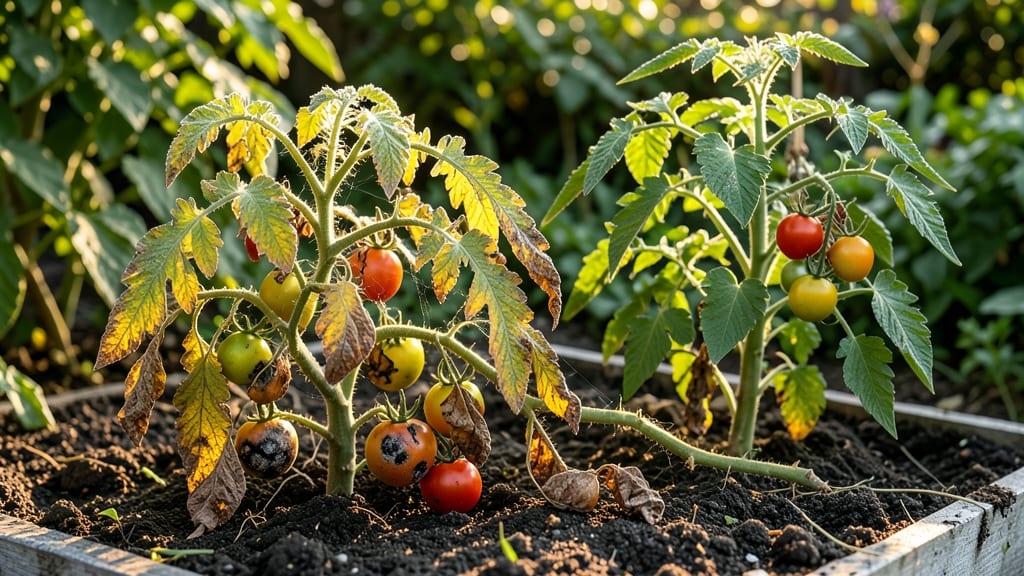
When your tomato plants show signs of the most common tomato plant problems, it’s time to diagnose fast. 🌱 I’ve seen blight turn a thriving plant into a crispy mess in days, and yellowing leaves that aren’t just from old age—there’s always a fix, but you’ve got to act quick.
The most common issues—blight, pests, or nutrient deficiencies—often share symptoms, so I’ll walk you through the telltale signs: brown spots, curled leaves, or stunted growth. You’ll learn how to spot them early and stop them before they spread.
By the end, you’ll have a quick-reference checklist to save your plants in minutes, not hours. No more guessing whether to prune, spray, or just wait it out—just clear, actionable steps.
Works for home gardens, containers, or even balcony plants. Let’s get those tomatoes back on track!
The Hidden Triggers Behind Tomato Troubles
Tomato plants are resilient, but they’re not invincible. When issues arise, they’re usually the result of environmental stress, pest pressure, or cultural mismanagement. Understanding the why behind these problems is the first step to fixing them fast.
Below, we break down the most common culprits—from soil to sky—and explain how they disrupt your tomato’s growth.
Tomatoes thrive in warm but not scorching conditions (ideal daytime temps: 70–85°F / 21–29°C). When temperatures stray too far from this range, plants react in predictable ways:
- Heat Stress (Above 90°F / 32°C):
- 🔥 Symptoms: Wilting, yellowing leaves, sunburn (white or brown patches), and blossom drop (flowers fall off before fruiting).
- 🔬 Why it happens: High heat disrupts pollination (bees avoid thick air) and causes transpiration stress, where plants lose water faster than roots can absorb it. Cell membranes also degrade, leading to sun scorch.
- 💡 Pro tip: Use shade cloth (30–50%) during peak afternoon sun or mulch heavily to keep roots cool.
- Cold Stress (Below 50°F / 10°C):
- ❄️ Symptoms: Stunted growth, purple or blackened leaves, and blossom end rot (even if calcium is present).
- 🔬 Why it happens: Cold slows enzyme activity in cells, halting nutrient uptake. It also triggers calcium deficiency-like symptoms because cold roots can’t absorb calcium efficiently, even if it’s in the soil.
- 💡 Pro tip: Cover plants with frost blankets or row covers at night. Avoid planting too early in cool climates.
Water is a double-edged sword for tomatoes. Inconsistent moisture—whether from drought or overwatering—throws off their delicate balance.
- Underwatering:
- 💧 Symptoms: Drooping leaves (even when soil is slightly damp), crispy edges, and blossom end rot (calcium can’t move in the plant without proper water pressure).
- 🔬 Why it happens: Tomatoes have deep, fibrous roots that need consistent moisture to transport water and nutrients. When soil dries out, roots shrink, creating air gaps that block calcium uptake. Transpiration (water loss through leaves) exceeds absorption, leading to stress.
- 💡 Pro tip: Water deeply 1–2 times per week (1–2 inches per week) rather than daily shallow watering. Use drip irrigation to keep soil evenly moist.
- Overwatering:
- 🌧️ Symptoms: Yellowing lower leaves, mushy stems, root rot (black, foul-smelling roots), and stunted growth.
- 🔬 Why it happens: Tomatoes hate waterlogged soil because it cuts off oxygen to roots. Pythium and Phytophthora fungi thrive in soggy conditions, attacking roots and blocking nutrient uptake. Overwatering also leaches nutrients (like nitrogen) from the soil.
- 💡 Pro tip: Ensure pots or garden beds have drainage holes and use well-amended soil (50% compost). Let the top 1–2 inches of soil dry out between waterings.
Tomatoes are heavy feeders and demand a precise mix of nutrients and soil conditions. Get it wrong, and they’ll scream for help.
- Nitrogen Deficiency:
- 🍃 Symptoms: Pale yellow leaves (starting on older growth), stunted stems, and slow growth.
- 🔬 Why it happens: Nitrogen is crucial for chlorophyll production and leaf growth. If soil lacks organic matter or has been over-farmed, microbes can’t convert nitrogen into plant-available forms. Overwatering or leaching also washes it away.
- 💡 Pro tip: Add compost or aged manure before planting. Use a balanced fertilizer (10-10-10) early in the season.
- Calcium Deficiency (Blossom End Rot):
- 🍅 Symptoms: Dark, sunken spots on the blossom end of fruits, even on young tomatoes.
- 🔬 Why it happens: Calcium is mobile in the plant, but it requires consistent water pressure to move from roots to fruits. Issues like fluctuating moisture, high nitrogen, or root damage block its transport. pH imbalances (below 6.0) also make calcium unavailable.
- 💡 Pro tip: Maintain pH 6.2–6.8, water evenly, and apply crushed eggshells or calcium nitrate as a foliar spray.
- pH Imbalances:
- 📉 Symptoms: Yellowing leaves (if too alkaline), stunted growth (if too acidic), or nutrient lockout (even if fertilizer is present).
- 🔬 Why it happens: Tomatoes prefer slightly acidic soil (pH 6.2–6.8). Below 5.5, aluminum and manganese toxicity occurs. Above 7.0, calcium, phosphorus, and iron become unavailable because soil particles bind to them.
- 💡 Pro tip: Test soil with a home pH kit. Amend with sulfur (to lower pH) or lime (to raise pH) 2–3 months before planting.
Not all tomato problems are environmental—some are tiny, hungry, or microscopic.
- Pests (Aphids, Whiteflies, Hornworms):
- 🐜 Symptoms: Chewed leaves, sticky residue (honeydew), curled or distorted foliage, or missing fruit.
- 🔬
Quick Fixes for Tomato Troubles
Tomato plants are resilient, but even the hardiest varieties need a little TLC when issues pop up. Whether your leaves are wilting, your fruit is cracking, or pests are throwing a party on your plants, these practical solutions will help you diagnose and fix the most common tomato problems—fast.
Let’s roll up our sleeves and get your plants back in fighting shape!
Cause: Calcium deficiency (often from uneven watering or soil pH issues). Fix:
- 💧 Water Consistently – Keep soil evenly moist (not soggy, not dry). Use a drip irrigation system or water deeply 1–2 times daily in extreme heat.
- 🧂 Boost Calcium – Sprinkle crushed eggshells or calcium-rich fertilizer (like gypsum or bone meal) around the base. Mix 1 tbsp of eggshell powder into the soil near roots.
- 🌡️ Mulch to Lock in Moisture – Use straw or grass clippings to prevent soil temperature swings, which stress roots.
- 🍅 Prune Affected Fruit – Remove severely rotten tomatoes to redirect the plant’s energy to healthier growth.
Prevention Tip: 💡 Test your soil pH (aim for 6.0–6.8). If it’s too acidic, add lime to balance it.
Cause: Chewing insects (hornworms, aphids, whiteflies) devouring leaves and fruit. Fix:
- 🔍 Scout Early – Check undersides of leaves daily for eggs or larvae. Act fast!
- 🦋 Handpick Hornworms – Grab them (they’re huge!) and drop them in soapy water. Pro tip: 🌙 Do this at dusk when they’re sluggish.
- 🌿 Spray Homemade Pesticides –
- Soap Spray: Mix 1 tbsp mild dish soap + 1 quart water. Spray directly on pests (avoid blooms).
- Neem Oil: 1 tbsp neem oil + 1 tsp mild soap + 1 quart water. Spray every 5–7 days (safe for beneficial insects).
- 🐝 Attract Predators – Plant basil, marigolds, or dill nearby to lure ladybugs and lacewings, which eat pests.
Prevention Tip: ✨ Row covers (fine netting) can block pests before they arrive—perfect for early-season protection!
Cause: Overwatering, underwatering, nutrient deficiency, or disease (like early blight). Fix:
- 💧 Check Soil Moisture –
- Lower leaves yellow? → Overwatering (roots suffocating). Let soil dry slightly between waterings.
- Upper leaves yellow? → Underwatering or heat stress. Water deeply at the base (not leaves).
- 🌿 Fertilize Smartly –
- Nitrogen deficiency (yellow lower leaves): Use balanced fertilizer (10-10-10) or compost tea.
- Magnesium deficiency (yellow between veins): Sprinkle Epsom salt (1 tbsp/gallon water) every 2 weeks.
- 🔪 Prune & Improve Airflow – Remove yellowed leaves and space plants 18–24 inches apart to prevent fungal diseases.
Prevention Tip: 🌡️ Mulch heavily to regulate soil temperature and retain moisture—prevents stress-related yellowing!
Cause: Inconsistent watering or rapid growth (common in hot, dry weather). Fix:
- 💧 Water Like a Pro –
- Deep & frequent: Water early morning (1–2 inches per week). Use drip irrigation to avoid wetting leaves.
- Mulch thickly (3–4 inches) to keep roots cool and moisture stable.
- 🌱 Shade Cloth in Heatwaves – If temps hit 90°F+, use 30% shade cloth for 2–3 hours/day to slow fruit growth.
- 🍅 Harvest Early – Pick tomatoes slightly green if cracks appear. They’ll ripen indoors!
Prevention Tip: 🎯 Drip irrigation on a timer takes the guesswork out of watering—set it and forget it!
Cause: Humid conditions, poor airflow, or wet foliage. Fix:
- 🌬️ Improve Airflow –
- Prune suckers & lower leaves to let air circulate.
- Space plants 2–3 feet apart (or grow vertically in cages).
- 🍄 Fungicide Sprays –
- Baking Soda Spray: Mix 1 tsp baking soda + 1 tbsp oil + 1 gallon water + dash of soap. Spray weekly.
- Copper Fungicide: Follow label instructions for early blight prevention.
- 🌱 Rotate Crops – Never plant tomatoes in the same spot next year (fungi linger in soil).
Prevention Tip: ⏰ Water at soil level (not overhead) and remove diseased leaves immediately to contain outbreaks!
Cause: Overwatering or poor drainage (roots suffocate). Fix:
- 🚰 Drain the Soil –
- Stop watering immediately and let soil dry out.
- Dig a trench around the plant to improve drainage.
- 🌱 Repot or Amend Soil –
- If in containers, repot in fresh, well-draining mix (add perlite or sand).
- For in-ground plants, mix in compost + coarse sand to aerate roots.
- 💊 Fungicide Treatment – Use hydrogen peroxide (3%) (1 tbsp/gallon water) to kill fungus in soil.
Prevention Tip: 🔥 Use raised beds or containers with drainage holes if your soil stays soggy!
Final Pro Tip: 🌟 Keep a garden journal! Note when problems appear, weather patterns, and fixes—it’ll help you predict and prevent issues next season. Happy growing! 🍅✨
Frequently asked questions
Why are my tomato leaves turning yellow?
Yellowing leaves usually signal nutrient deficiencies (like nitrogen or magnesium) or watering issues. Check the pattern: Lower leaves yellowing? Likely nitrogen deficiency or overwatering. Upper leaves yellow? Could be underwatering or heat stress. Test soil moisture and adjust watering—aim for 1–2 inches per week. For magnesium deficiency (yellow between veins), try Epsom salt spray (1 tbsp/gallon) every 2 weeks.
How do I prevent blossom end rot on my tomatoes?
Blossom end rot is caused by calcium deficiency due to uneven watering or pH imbalances. Keep soil consistently moist (not soggy) and mulch to stabilize moisture. Boost calcium with crushed eggshells or gypsum, and maintain soil pH at 6.2–6.8. Prune affected fruit to redirect the plant’s energy.
What should I do if my tomato plants have brown spots?
Brown spots could mean fungal disease (early blight), bacterial spot, or heat stress. Improve airflow by pruning lower leaves and spacing plants 2–3 feet apart. For fungal issues, spray with baking soda mix (1 tsp baking soda + 1 tbsp oil + 1 gallon water) weekly. Remove diseased leaves immediately to prevent spread. If spots are dry and crispy, it’s likely heat stress—provide afternoon shade during heatwaves.
Are my tomato plants dying from pests or disease?
Look for clues: Chewed leaves or missing fruit? Likely pests like hornworms or aphids. Sticky residue? Aphids or whiteflies. Crispy or mushy stems? Disease (like early blight) or root rot. Handpick large pests (like hornworms) at dusk, or spray with neem oil (1 tbsp + 1 tsp soap per quart of water). For diseases, improve airflow and avoid overhead watering.
Can I still save my tomato plants if they’re wilting?
Wilting can mean underwatering, overwatering, or heat stress. First, check soil moisture—if dry, water deeply at the base. If soil is soggy, stop watering and improve drainage. For heat stress, provide shade cloth (30–50%) during peak sun. Mulch heavily to retain moisture and cool roots. Most plants recover within 24–48 hours if the issue is fixed early.