
Pruning
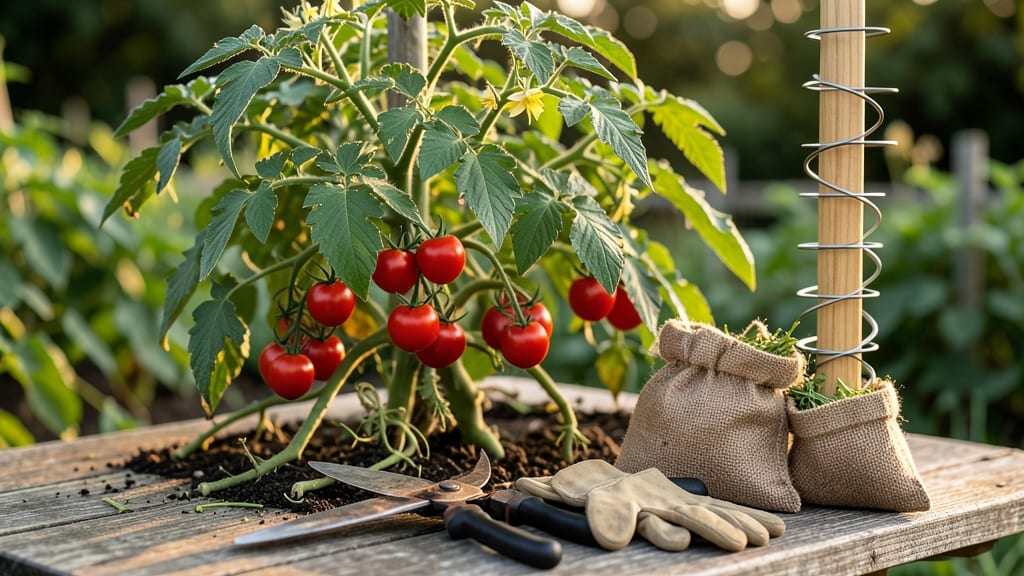
Trimming overgrown tomato plants isn't just about cleaning up—it's about redirecting energy to bigger fruit and stronger vines. ✂️ I've learned the hard way that skipping this step leads to crowded foliage, disease, and tiny tomatoes.
The right cuts make all the difference between a garden full of dinner-plate slices and one with pea-sized disappointment.
Start by identifying your tomato type: indeterminate varieties (like Sungold or Cherokee Purple) need regular pruning all season, while determinate types (like Roma or Celebrity) rarely need trimming.
Gather sharp pruners, gloves, and a spray bottle of diluted bleach water (1 part bleach to 9 parts water) to sterilize tools between cuts—this prevents spreading disease. The goal is airflow and sunlight reaching every fruit, not just the top.
Look for those little shoots growing in the "V" between the main stem and branches—those are suckers, and they're energy vampires. Pinch or cut them off cleanly, leaving a small stub.
Focus on removing suckers below the first flower cluster, and never prune more than one-third of the plant at once. You'll see the difference in 2-3 weeks: thicker stems, more flowers, and tomatoes that actually fill out their potential.
Common mistakes include over-pruning (which stresses plants) or removing too many leaves (reducing photosynthesis). Save the pruning for cloudy days to avoid shocking the plant, and always prune in the morning when the plant is firm.
The payoff? Plants that stay productive until frost and fruit that's heavier and sweeter than you've ever grown before.
📚 In This Guide
- What you need
- Instructions
- Tips and common mistakes
- Wrapping up and next steps
What you need
- ● Pruning shears or secateurs (bypass or anvil type, sterilized with rubbing alcohol or a 10% bleach solution): Choose sharp, high-quality shears (e.g., Felco or Fiskars) to make clean cuts.
- ● Avoid dull tools—they crush stems and invite disease.
- ● Garden gloves (nitrile or leather, cut-resistant if thorny varieties like 'Solar Fire' or 'Cherokee Purple').
- ● Disposable pruning bags or bucket (5-gallon size) to collect trimmings and prevent pests.
- ● Hose with nozzle (for rinsing tools and cleaning wounds on plants).
- ● Compost bin or pile (to recycle healthy trimmings).
- ● Rubbing alcohol (70% isopropyl) or bleach solution (1 part bleach to 9 parts water) for sterilizing tools between cuts.
- ● Staking system or tomato cages (if your plants aren’t already supported; opt for 5-6 ft stakes for indeterminate varieties).
- ● Sharp knife or loppers (for thicker stems, up to ½-inch diameter).
- ● Plant tie clips or soft raphia twine (to secure vines to stakes without damaging them).
- ● Copper-based fungicide (e.g., Copper Soap) to treat cuts if your area is prone to blight.
- ● Hand lens (10x magnification) to inspect for pests or disease before pruning.
- ● Pruning sealant (e.g., Tree Seal) for large wounds (though most tomato plants heal fine without it!).
- ● Sunscreen and hat—because even gardeners need to stay protected! 😎
Step-by-Step guide to trimming overgrown tomato plants
Here's how I reshape tomato vines to boost fruit production and plant health.
✂️ Step 1: Identify and Remove Suckers
Suckers are the small shoots growing in the crotch between the main stem and branches. These compete with your fruit for energy, so I remove them early. Use your thumb and forefinger to gently pinch them off at the base—no need for shears here. Start checking for suckers when plants reach 12-18 inches tall, and repeat weekly until flowering begins.
Here's the thing—don't wait until suckers grow larger than your pinky. The larger they get, the more stress you put on the plant when removing them. You'll see healthy, bushier growth within days of consistent suckering. If you accidentally break a branch while pinching, just trim it back to the nearest leaf node with clean, sharp pruners.
🌿 Step 2: Prune Lower Leaves for Airflow
Once your plant reaches 3-4 feet tall, start removing the lower leaves—those touching or below the soil level. Use sterilized pruners to make clean cuts just above a leaf node or small stem. This prevents soil-borne diseases like blight from splashing onto the foliage. I aim to remove about 1/3 of the lower leaves to maintain airflow while keeping enough foliage for photosynthesis.
Watch for yellowing leaves as a signal that pruning is needed. These lower leaves aren't contributing much to fruit production anyway. After pruning, you'll notice the plant's energy shifts upward, focusing on new growth and flower clusters. This is when you'll see stronger stems and heavier fruit sets in 2-3 weeks.
☀️ Step 3: Thin Fruit Clusters for Larger Harvests
When flower clusters form, thin them to 1-2 fruit per cluster if they're crowded. Use your fingers to gently twist off excess tomatoes at the base—don't pull, as that can damage the stem. The goal is to leave the largest, healthiest-looking tomatoes. This ensures the remaining fruit gets maximum nutrients, resulting in bigger, tastier tomatoes.
I know it seems counterintuitive to remove fruit, but trust me—your plant will reward you. You'll see fewer but significantly larger tomatoes, and the remaining fruit will ripen more evenly. Stop thinning once clusters are 2-3 inches in diameter, as the plant won't support further growth at that stage.
⏰ Step 4: Maintain Pruning Through the Season
Continue pruning throughout the growing season, focusing on three key areas: removing any remaining suckers, trimming leaves that shade fruit clusters, and cutting back any diseased or yellowing foliage. I prune in the morning on dry days to allow wounds to heal quickly. Always use clean, sharp tools to make precise cuts—ragged edges invite pests and diseases.
Here's what to watch for: If you notice new suckers forming near the top of the plant after flowering begins, leave them. These can support additional fruit production. But if you see suckers lower down, remove them immediately. Regular pruning keeps your plant productive until the first frost, giving you a longer harvest window.
Tips & tricks for perfect tomato plant pruning
These precision-focused tips will help you transform your tomato plants into productive powerhouses.
Timing Secret: The 12-18 inch height threshold for sucker removal is your first critical window. I've found that plants pruned at this stage develop stronger main stems that can support 30-50% more fruit weight later in the season. Use a small ruler to check heights—this consistency matters more than you might think.
Tool Technique: Sterilize your pruners between cuts with rubbing alcohol to prevent spreading disease. I keep a small spray bottle of diluted bleach solution (1 part bleach to 9 parts water) nearby for quick sanitizing. For the 1/3 lower leaf removal in Step 2, I work from the bottom up, making cuts just above leaf nodes to encourage new growth from those points.
Visual Cues: When thinning fruit clusters to 1-2 tomatoes per cluster, look for fruit that's already showing color or size advantages. The 2-3 inch diameter stopping point is when the plant's energy shifts to ripening existing fruit rather than supporting new growth. I mark clusters with a small piece of twine if I'm unsure about which to keep.
Seasonal Strategy: Prune in the morning when temperatures are cooler—this reduces stress on the plant and allows wounds to heal faster. After the 2-3 week recovery period following Step 2, you'll notice new growth emerging from the leaf nodes where you made cuts. This is your plant's way of telling you it's ready for more fruit production.
Pro Tips for Trim Overgrown Tomato Plants
- These precision-focused tips will help you transform your tomato plants into productive powerhouses.
- Timing Secret: The 12-18 inch height threshold for sucker removal is your first critical window.
- Tool Technique: Sterilize your pruners between cuts with rubbing alcohol to prevent spreading disease.
Frequently asked questions
Got questions about trimming your tomato plants? You’re not alone! Here are answers to the most common concerns—so you can prune with confidence and keep those vines thriving.
When is the best time to trim overgrown tomato plants?
Start pruning once your plants are at least 6–8 inches tall and have a few sets of true leaves. For indeterminate varieties (like cherry tomatoes), trim regularly throughout the season—especially after fruit sets. Determinate tomatoes (bush types) need minimal pruning, just removing suckers and damaged foliage. Pro tip: Morning is ideal—plants recover faster from trims when it’s cooler.
How much can I cut off a tomato plant without harming it?
Never remove more than 1/3 of the plant’s foliage at once. Heavy pruning shocks the plant, reducing energy for fruit production. Focus on selective cuts: suckers (shoots in leaf axils), yellowing leaves, and branches growing inward. Warning: Over-trimming can lead to sunburn on exposed fruit—leave enough leaves to shade them.
Will pruning tomato plants increase yield or just make them look better?
Pruning correctly boosts yield by directing energy to fruit production. Removing suckers improves airflow, reducing disease risk, and larger plants produce more tomatoes. However, over-pruning can backfire—too few leaves mean less photosynthesis. Balance is key: trim aggressively early in the season, then taper off as fruit swells.
Can I prune tomato plants in hot or cold weather?
Avoid trimming during heatwaves (above 90°F) or cold snaps (below 50°F). Extreme temps stress plants, slowing recovery. Wait for mild, cloudy days or early morning/evening hours. If you must prune in heat, water deeply before and after to help the plant recover faster.
What should I do with the pruned branches and leaves?
Don’t toss them! Disease-free clippings can be composted or used as mulch. If leaves show signs of blight or pests, bag and discard them in the trash (not compost) to prevent spreading. You can also chop small stems into mulch around the base of healthy plants for a nutrient boost.
What if my tomato plant looks sad after pruning?
Give it time! A few days of wilting or slowed growth are normal. Revitalize it with:
- Deep watering (1–2 inches per week)
- Balanced fertilizer (low in nitrogen)
- Morning sunlight (avoid harsh afternoon sun)
Wrapping up and next steps
Trimming your overgrown tomato plants isn’t just about tidying up—it’s a game-changer for healthier vines and a bountiful harvest! 🌱 By mastering the art of pruning, you’re giving your plants the space to focus energy on fruit production, stronger stems, and better airflow.
Remember, consistency is key, so check your plants regularly and adjust as they grow.
Now that you’re armed with the know-how, roll up your sleeves and get pruning! 🌟 Start with one plant at a time, and soon, you’ll be the proud gardener of robust, fruitful tomato vines. Happy growing!