
How To
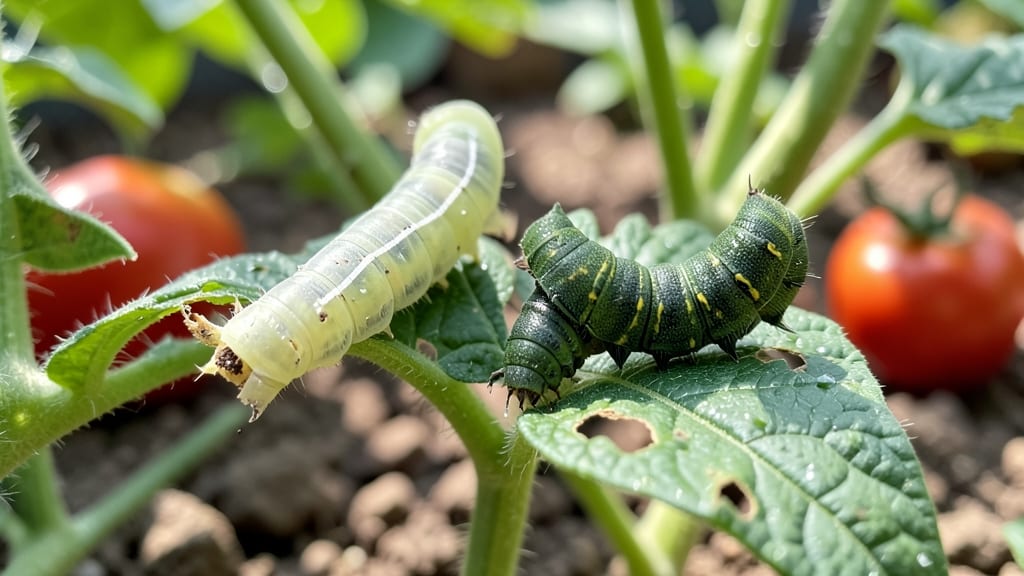
Insects that eat tomato leaves include hornworms, aphids, and spider mites, which can defoliate plants quickly if left unchecked. Early identification by checking undersides of leaves and stems helps prevent severe damage.
Tomato plants face constant threats from leaf-munching pests like hornworms, which can strip entire plants overnight, and aphids, whose sticky honeydew attracts mold. 🌱 The real danger lies in their lifecycle—eggs hidden on stems hatch into voracious larvae that multiply exponentially.
I've seen firsthand how spider mites, though tiny, create webs that suffocate leaves, turning them yellow and brittle. Catching these pests early means checking both leaf surfaces and soil levels for signs of webbing or tiny eggs.
These insects don't just eat—they transmit diseases like early blight through their feeding wounds. A single hornworm can devour a leaf in hours, while aphids sap nutrients, leaving plants stunted and vulnerable.
The key to protection? Regular inspections and understanding each pest's unique damage pattern—chewing holes for hornworms, curled leaves for aphids, and stippled surfaces for mites.
💡 In This Article
- How Tomato Leaf-Eating Insects Damage Plants
- Natural and Chemical Controls for Tomato Leaf Pests
How tomato leaf-eating insects damage plants
The damage these insects cause goes far beyond simple leaf loss. Hornworms, for example, use powerful mandibles to chew through leaves, stems, and even small fruits.
Their feeding creates irregular holes with frass (insect droppings) scattered around, which can block sunlight and reduce photosynthesis by up to 40% in severe cases. 🌱 The real kicker? These caterpillars grow from 1/4-inch eggs to 3-4 inch larvae in just 3-4 weeks, multiplying exponentially if unchecked.
Aphids take a different approach—they pierce plant cells with their stylets to suck out sap, leaving behind a sticky residue called honeydew. This sugary substance fosters sooty mold growth, which further blocks light and weakens the plant's ability to absorb nutrients.
What's worse? A single aphid can produce 70-80 offspring in her lifetime, creating colonies that can number in the thousands within weeks. Their saliva also contains toxins that distort leaf growth, causing curled or stunted foliage.
Spider mites operate on an even smaller scale but with devastating efficiency. These microscopic pests create fine webbing on leaf undersides while using their chelicerae to puncture cells and drain fluids.
The damage appears as yellow stippling that eventually turns brown and crispy. 🕷️ What makes them particularly dangerous is their rapid reproduction cycle—under ideal conditions, they can complete their life cycle in just 7-10 days, allowing populations to explode when conditions are dry and hot.
All three pests contribute to plant decline through nutrient depletion, but they also serve as disease vectors. Hornworms spread bacterial wilt through their feeding wounds, while aphids transmit viruses like tomato yellow leaf curl.
The combined stress from pest damage and disease creates a perfect storm that can kill tomato plants in as little as 2-3 weeks during peak growing season. This is why early detection—looking for eggs on stems, frass trails, or webbing—is absolutely critical.
The lifecycle stages of these insects are what truly accelerates destruction. Hornworm eggs are laid in clusters on leaves, while aphids give birth to live young rather than laying eggs. Spider mites overwinter in protected areas and emerge in spring when conditions are favorable.
Understanding these patterns helps gardeners intervene at the right time—before the damage becomes irreversible. For instance, removing hornworm eggs manually can prevent an entire plant from being defoliated within days.
What most gardeners don't realize is how these pests work together. Aphid populations often attract beneficial insects like ladybugs, but they also create conditions that favor spider mites. The honeydew from aphids provides food for fungal growth, which in turn stresses the plant further.
This interconnected damage system is why comprehensive monitoring—checking both leaf surfaces and soil levels—is essential for maintaining healthy tomato plants throughout the growing season.