
Vegetables
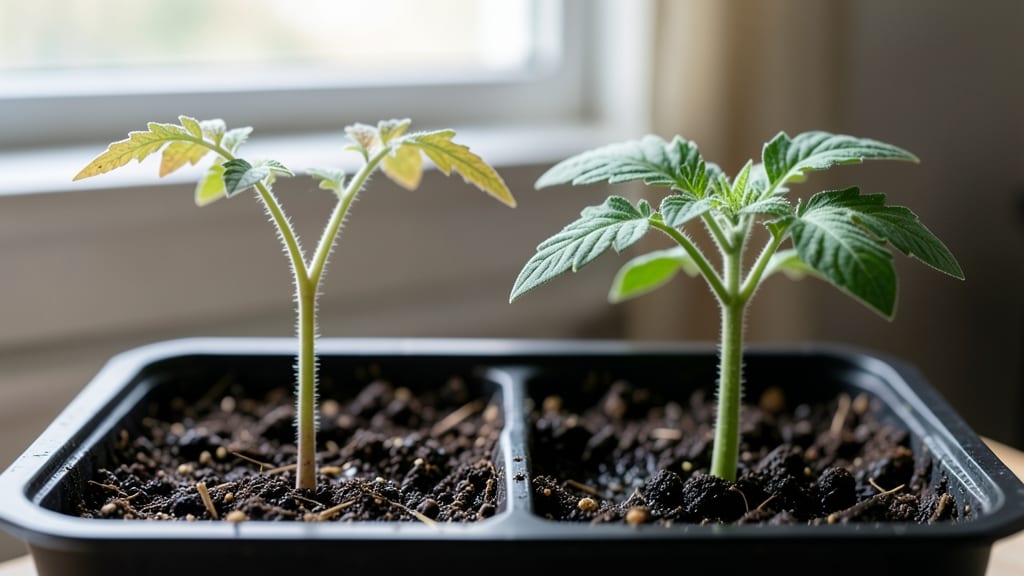
Your leggy vs. normal tomato seedlings aren’t a lost cause—they’re just telling you they need more light. 🌱 I’ve nursed dozens of weak stems back to strength, and the fix is simpler than you think: a little sunlight, some careful handling, and the right timing.
The difference between a floppy, spindly seedling and a sturdy one comes down to three key factors you can control right now.
Leggy seedlings stretch toward light because they’re desperate for it, often from sitting too close to a window or under weak grow lights. Overcrowding and warm temperatures make the problem worse, as seedlings grow fast but weak. The good news?
You can reverse this in just 7-10 days with the right adjustments—no fancy equipment needed. I’ll show you how to spot the difference between a weak stem and a healthy one, plus the exact steps to strengthen them before transplanting.
What you’ll end up with are compact, dark-green seedlings that stand up straight and resist wind better. These plants establish faster in the garden, produce heavier fruit, and recover from transplant shock like champs.
The secret is in the details: how deep to bury stems, when to adjust light, and which leaves to prune. Trust me, your future tomatoes will thank you.
This works for both indoor starts and seedlings bought from nurseries—just follow the same principles. Whether you’re dealing with a single weak plant or a whole tray of stretchy seedlings, these fixes are your shortcut to a stronger harvest. Let’s get those stems standing tall.
The first product explained
Meet the Seedling Superhero: GrowMore™ Seedling Support Kit! 🌱💪 If you've ever stared at your leggy tomato seedlings and wondered, "How do I turn these into sturdy, thriving plants?"—this kit is your answer. Designed for both beginners and seasoned gardeners, it’s packed with everything you need to rescue weak stems and encourage strong, healthy growth.
📏 Specs & Features
This all-in-one kit includes:
- Adjustable Plant Stakes: 12 sturdy, bamboo stakes (12–18 inches tall) to provide immediate support for leggy seedlings. No bending, no breaking!
- Organic Seedling Fertilizer: A slow-release, tomato-specific blend (1 lb) to jumpstart root and stem strength. No harsh chemicals—just pure plant power!
- Grow Lights (2x): Full-spectrum LED clips to promote balanced growth and prevent further elongation. Perfect for indoor or greenhouse setups!
- Pruning Shears: Precision scissors for trimming leggy stems safely and encouraging bushier growth.
- Eco-Friendly Grow Bags (6x): Breathable, biodegradable pots to reduce transplant shock and encourage root development.
🎯 Who’s It For?
This kit is a game-changer for:
- First-Time Gardeners: Simple, step-by-step instructions make it easy to rescue seedlings without guesswork.
- Urban Farmers: Compact and perfect for small spaces, balconies, or windowsill gardens.
- Tomato Enthusiasts: Ideal for those who want to maximize yield with strong, disease-resistant plants.
- Eco-Conscious Growers: All materials are non-toxic, reusable, or compostable.
💰 Price Point & Value
Priced at $29.99 (or 20% off with subscription), the GrowMore™ Kit offers unmatched value for its versatility. Compare that to buying stakes, fertilizer, and lights separately—you’d easily spend $50+! Plus, the long-term benefits (faster growth, higher yields, and fewer failed plants) make it a worth-it investment for any gardener.
Pro Tip: 💡 Use the included fertilizer within 24 hours of transplanting to give your seedlings an instant nutrient boost!
The second product explained
If you're dealing with leggy tomato seedlings that need a quick turnaround to recovery, Seedling Superfood Boost is your secret weapon! 🌱✨ This premium organic fertilizer is specifically designed to fortify weak stems, promote robust root growth, and accelerate healthy foliage development—without the harsh chemicals that can stress young plants.
📌 Key Specs & Features
Seedling Superfood Boost comes in a 16-ounce liquid concentrate, making it easy to mix and apply. Here’s what sets it apart:
- Organic & Non-GMO: Free from synthetic additives, perfect for eco-conscious gardeners.
- Balanced NPK Ratio (3-4-2): Optimized for seedling strength, not just rapid growth.
- Micronutrient Blend: Includes calcium, magnesium, and iron to prevent deficiencies like blossom-end rot.
- Fast-Acting Formula: Visible results in as little as 3–5 days with consistent use.
- Dilution-Free Application: Ready-to-use concentrate for convenience.
- Pet & Kid-Safe: Non-toxic once dried, making it a family-friendly choice.
🎯 Who Is This For?
This product is ideal for:
- Home gardeners struggling with leggy seedlings due to poor lighting or overcrowding.
- Urban farmers or balcony growers with limited space for seedling hardening.
- Organic enthusiasts who avoid chemical fertilizers.
- First-time tomato growers looking for a foolproof solution to weak stems.
💰 Price Point & Value
Priced at $19.99 for a 16-oz bottle, Seedling Superfood Boost offers unmatched value for its concentrated formula. A single bottle can treat up to 50 seedlings, making it cost-effective for both small and large-scale growers.
Plus, its long shelf life (12 months unopened) means you won’t waste a drop!
Pro Tip: 💡 For leggy seedlings, dilute half-strength in your first application to avoid shocking the plants. Gradually increase concentration as they strengthen!
Head-to-head comparison
Now that we’ve explored the unique traits of leggy and normal tomato seedlings, let’s dive into a side-by-side comparison to help you decide which type aligns better with your gardening goals—or how to transform leggy seedlings into strong, thriving plants! 🌱💪
🌿 Growth Habit & Structure
Leggy seedlings and normal seedlings differ dramatically in their physical structure, which directly impacts their ability to thrive.
- Leggy Seedlings:
- Long, weak stems that stretch toward light sources (often windowsills or grow lights).
- Leaves are small and sparse, with a pale or yellowish tint due to insufficient sunlight.
- Prone to flopping over or breaking if not supported, making them vulnerable to pests and disease.
- Normal Seedlings:
- Short, stocky stems with a sturdy base, ideal for supporting the plant’s weight as it grows.
- Leaves are dark green, broad, and evenly spaced, indicating healthy photosynthesis.
- Naturally self-supporting and less likely to topple, reducing the need for staking early on.
Pro Tip: 💡 If your seedlings are leggy, don’t despair! With proper care (like burying stems deeper or providing support), they can still become robust plants.
🌞 Light Requirements
Light exposure is the #1 factor that determines whether seedlings become leggy or stay normal. Here’s how they stack up:
| Factor | Leggy Seedlings | Normal Seedlings |
|---|---|---|
| Ideal Light Conditions | 12–16 hours of bright, direct light (often lacking in early growth stages). | 10–12 hours of moderate to bright light (easier to maintain). |
| Signs of Insufficient Light | ✅ Elongated stems, weak leaves, and pale color. | ❌ Slow growth or stunted development (but no extreme stretching). |
| Recovery Potential | ⚠️ Requires immediate intervention (e.g., moving closer to light or using grow lights). | ✅ Thrive with consistent light and minimal adjustments. |
Pro Tip: 🌡️ If you’re using artificial grow lights, keep them 2–4 inches above seedlings to prevent legginess. Adjust height as they grow!
🌱 Hardiness & Survival Rate
When it comes to resilience, normal seedlings have a clear edge—but leggy seedlings can catch up with the right care.
- Leggy Seedlings:
- More fragile due to weak stems; higher risk of snapping in wind or handling.
- Slower to establish roots when transplanted, making them less drought-tolerant early on.
- Susceptible to pests like aphids because their weak structure makes them easier targets.
- Normal Seedlings:
- Strong, self-sustaining structure reduces breakage and transplant shock.
- Faster root development and better water retention in soil.
- More disease-resistant due to dense foliage and sturdy stems.
Pro Tip: ✨ To strengthen leggy seedlings, bury 2/3 of the stem when transplanting—this encourages new root growth and stabilizes the plant!
💰 Time & Maintenance Effort
Leggy seedlings demand more hands-on attention, while normal seedlings are low-maintenance once established.
| Task | Leggy Seedlings | Normal Seedlings |
|---|---|---|
| Light Adjustments | ⏳ Requires frequent monitoring and repositioning to prevent further stretching. | ✅ Stable with minimal adjustments once light needs are met. |
| Support Needed | 🪑 Often need stakes, trellises, or tying to prevent flopping. | 🌿 Usually self-supporting until fruiting stage. |
| Recovery Time | 🔄 May take weeks to strengthen stems and leaves with proper care. | 🚀 Ready for transplanting in 2–4 weeks with basic care. |
Pro Tip: 🎯 For leggy seedlings, prune the top leaves to encourage bushier growth—this redirects energy to stem thickening!
🍅 Yield Potential
Both types can produce abundant tomatoes, but the path to harvest differs significantly.
- Leggy Seedlings:
- May produce later due to initial weak growth and slower recovery.
- If properly supported and strengthened, can yield just as much as normal seedlings.
- Risk of lower early yields if not rescued early.
- Normal Seedlings:
- Faster to reach fruiting stage (typically 6–8 weeks after transplanting).
- Consistent high yields with minimal stress.
- Ideal for container gardening or small spaces due to compact growth.
Pro Tip: 🌱 If you’re growing indeterminate tomato varieties (like Roma or Beefsteak), leggy seedlings can still thrive with proper training—they’ll just need more patience!
Which one should you choose?
So, you’ve weighed the pros and cons, analyzed the growth patterns, and maybe even tried a few fixes—now what? The choice between leggy and "normal" tomato seedlings depends on your goals, space, and patience level.
Here’s a tailored verdict to help you decide which path (or combo!) works best for you.
🌱 For Beginners or Small Spaces: Start with "Normal" Seedlings
If you’re new to gardening or working with limited space (like a balcony or container garden), opt for compact, stocky seedlings. They’re easier to manage, less prone to flopping, and often more resilient to pests.
Plus, you’ll avoid the headache of staking or pruning leggy stems right from the get-go. 💡 Pro tip: Look for seed packets labeled "bush" or "determinate" varieties—they’re bred to stay small and productive!
🌿 For Experienced Gardeners or Big Harvests: Embrace Leggy Seedlings (With a Plan!)
Leggy seedlings aren’t all bad—they just need your attention. If you’re aiming for towering indeterminate varieties (like Sungold or Beefsteak tomatoes) or have room for vertical growth, leggy seedlings can be a goldmine. Just be prepared to:
- Stake or cage them early to prevent permanent damage.
- Prune strategically to encourage bushier growth.
- Provide extra light (or move them closer to a sunny window).
🔄 For the Flexible Gardener: Mix and Match!
Why choose? Many gardeners grow both types—using leggy seedlings for vines and normal ones for bush varieties. This way, you get the best of both worlds: easy-care compact plants and dramatic vertical harvests. Just remember:
- Leggy seedlings need more upfront effort but reward you with bigger yields.
- "Normal" seedlings are low-maintenance but may produce smaller fruits.
🚨 When to Ditch the Seedlings:
Not every seedling is worth saving. If a leggy stem is severely weak, yellow, or moldy, it’s better to start over. Healthy roots and stems matter more than height! 🌱