
Watering
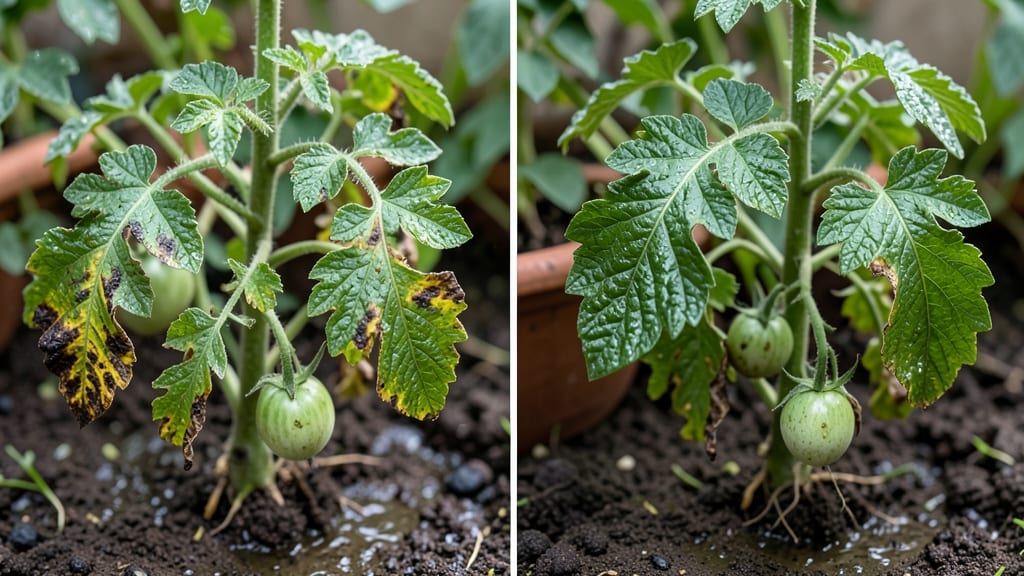
Your tomato plants are in trouble—the overwatered tomato leaves are yellowing, the stems are moldy, and that sad, droopy look means you’ve been pushing it too far. 🌱 I’ve nursed back more tomato plants than I’d like to admit, and the key is acting fast before the roots rot completely.
The problem starts with soggy soil that suffocates roots, blocking oxygen and inviting fungal infections like early blight. You’ll spot it in the bottom leaves first—yellowing, then browning, sometimes with a white or gray fuzzy mold. Even worse? The plant stops producing fruit because it’s too busy trying to survive.
Within 24 hours, you can turn things around by cutting back on water, improving drainage, and pruning the worst-affected leaves. The goal is to shock the plant back to health—less water, more airflow, and a little organic fungicide if needed.
By day 3, you’ll see new growth pushing through, and those tomatoes will be back on track. Prevent it next season with raised beds, proper spacing, and a mulch layer to keep moisture even. Containers? Drill drainage holes if they’re not there—trust me, your tomatoes will thank you.
Root Causes Of Soggy Tomato Leaves
When your tomato plants sport overwatered tomato leaves, it’s rarely just about "too much water." The real culprits lie in how that moisture interacts with soil, roots, and plant biology. Let’s break down the science behind why soggy leaves happen—and how to fix it before it’s too late.
Tomatoes thrive in well-draining soil, but when water can’t escape, roots suffocate. Here’s why drainage fails:
- Compacted Soil: Heavy clay or tightly packed dirt blocks water flow, creating a perched water table right where roots live. Roots deprived of oxygen can’t absorb nutrients, leading to yellowing or wilting leaves—even if the soil feels damp.
- No Amendments: Pure garden soil or potting mix without perlite, vermiculite, or compost acts like a sponge, holding water instead of releasing it gradually. Pro tip: Aim for a soil mix that’s 40% organic matter (like compost) and 60% mineral-based (sand, grit, or coconut coir).
- Container Drainage Issues: Pots without holes or cracked clay (which can’t self-repair) trap water at the bottom. Even "self-watering" containers can drown roots if the reservoir isn’t emptied regularly.
Tomatoes need consistent moisture but hate soggy feet. These mistakes throw the balance off:
- Overly Frequent Watering: Watering every day (or even every other day in hot climates) keeps soil saturated, starving roots of oxygen. A simple test: Stick your finger 2 inches deep—if it’s damp, wait.
- Ignoring Weather: Rain + overhead watering = double the moisture. Pro tip: Use a rain gauge or track local forecasts to adjust watering. A general rule: 1 inch of water per week (including rain) is ideal for tomatoes.
- Using the Wrong Method: A gentle soaker hose or drip irrigation delivers water to roots without wetting leaves (which can spread disease). Hose blasts or overhead sprinklers lead to evaporation waste and fungal issues.
Waterlogged soil + humid air = a fungal buffet for pathogens like early blight, late blight, or root rot. Here’s how excess moisture invites trouble:
- Leaf Surface Moisture: Wet leaves for more than 4–6 hours create the perfect environment for Phytophthora (a water mold) or Alternaria (early blight). Look for brown spots with yellow halos—a classic sign.
- Root Rot Spread: Pythium and Phytophthora thrive in anaerobic (oxygen-deprived) soil. Infected roots can’t uptake water or nutrients, causing leaves to yellow, wilt, or drop—even with "plenty" of water.
- Mulch Gone Wrong: Thick organic mulch (like grass clippings) breaks down and traps moisture against stems. Use 2–3 inches of straw or wood chips instead, keeping it 2 inches away from the stem.
Hot, humid days make overwatering far worse. Here’s why:
- High Heat = Faster Evaporation: In 90°F+ weather, soil dries out quickly—but if you overcompensate with deep watering, roots get no oxygen between sessions.
- Humidity + Water = Fungal Explosion: When air humidity exceeds 70%, fungal spores spread like wildfire. Pro tip: Improve airflow with pruning and spacing plants 18–24 inches apart.
- Cold Soil Slows Drainage: In cool weather (below 60°F), soil drains 20–30% slower. Tomatoes need warmer roots (70–85°F) to thrive—otherwise, they stress and drop leaves.
Next up: How to diagnose whether your tomato’s droop is from overwatering—or something else entirely. 🕵️♂️
Revive Your Tomatoes in 3 Simple Steps
Overwatered tomato leaves can feel like a death sentence, but don’t panic—your plants are often more resilient than they appear! The key is acting fast with the right fixes, tailored to the root cause (literally).
Below, we’ll break down practical solutions for each common scenario, plus prevention tips to keep your tomatoes thriving.
If your tomatoes are drowning in waterlogged soil, the first priority is draining excess moisture and improving airflow.
🔥 Stop watering immediately
- Pause all watering for 2–3 days to let the soil dry out. Check moisture by sticking your finger 1–2 inches deep—if it’s damp, wait longer.
- Avoid overhead watering (like sprinklers), which can encourage fungal diseases like early blight.
Use a soaker hose or drip irrigation at the base instead.
🍳 Improve soil drainage fast
Add organic matter: Mix in compost, coconut coir, or perlite to loosen compacted soil.
This helps water drain while retaining nutrients. - Raise the plant (temporarily): If your container or bed stays soggy, prop up the pot with bricks or move the plant to a higher, well-draining spot for a few days. - For containers: Drill drainage holes if missing, and use a fast-draining potting mix (like 60% compost, 30% perlite, 10% vermiculite).
👨🍳
Flush Out Salt Buildup (If Using Fertilizer) Overwatering can leave behind salty residue, which burns roots. To cleanse the soil: 1. Water deeply with plain water until it runs out the drainage holes.
- Apply a chelated iron or Epsom salt rinse (1 tbsp per gallon of water) to flush out excess salts.
Once the soil is drying out, give your tomatoes a helping hand to bounce back.
💡 Prune damaged foliage
- Snip off yellow or mushy leaves with sterilized pruners (dip in rubbing alcohol first). This prevents disease spread and lets the plant focus energy on healthy growth.
- Avoid pruning green but wilted leaves—they may recover once roots stabilize.
🎯 Fertilize lightly (but right)
- Hold off on nitrogen-heavy feeds (like blood meal) until new growth appears—too much can stress roots further.
- Use a balanced, water-soluble fertilizer (like 5-5-5) diluted to half-strength to encourage recovery.
Apply only after soil is slightly dry. - For organic growers: A fish emulsion or seaweed extract (1 tsp per gallon) adds micronutrients without overloading roots.
✨ Shield from stressors
- Move to shade (50–70% sunlight) for 3–5 days to reduce transpiration (water loss) while roots recover.
- Avoid wind: Use a small windbreak (like a cardboard barrier) to prevent further leaf stress.
The best revenge? A watering routine that keeps soil happy—not soggy.
📊 Master the "finger test" for watering
- Stick your finger 1–2 inches deep in the soil. Water only when the top 1–2 inches are dry.
- Morning watering is key: Water early in the day (6–9 AM) so foliage dries quickly, reducing fungal risks.
💪 Upgrade your watering game
- Drip irrigation or soaker hoses deliver water slowly and directly to roots, cutting waste and runoff.
- Self-watering pots (with reservoirs) are a game-changer for containers—they prevent overwatering while keeping soil moist.
- Mulch like a pro: Apply 2–3 inches of straw or wood chips to retain moisture without suffocating roots.
🍎 Choose the right container (if growing in pots)
- Minimum size: 5-gallon pots for dwarf varieties, 7+ gallons for indeterminate tomatoes.
- Fabric grow bags (with drainage) are a great alternative to clay pots—they dry faster and reduce root rot.
- Terracotta vs. plastic: Terracotta dries out quicker but cracks in freezing temps; plastic holds moisture longer but can overheat.
- 🌡️ Check humidity: If your area is humid, water less frequently but deeply to avoid fungal issues.
- 🎯 Rotate plants: Move containers every few days to ensure even sunlight and airflow.
- ⏰ Time your harvest: Pick tomatoes before overwatering becomes an issue—ripe fruit is less sensitive to stress.
- 💧 Rainy season? If heavy rain is forecast, cover plants with a tarp (secured with bricks) to prevent waterlogging.
Remember: Overwatered tomatoes often recover within 5–7 days if you act fast. Stay patient, adjust your watering habits, and soon you’ll be enjoying juicy, homegrown tomatoes—not soggy leaves! 🍅🌿
Frequently asked questions
How can I tell if my tomato plant is overwatered vs. underwatered?
Check the soil first—overwatered plants have soggy, cool soil that smells musty, while underwatered plants have dry, cracked soil. Look at the leaves: Overwatered plants show yellowing bottom leaves with brown edges and may have mushy stems, while underwatered plants have crispy, dry edges and droop during the day but recover at night.
Can I save my tomato plant if the leaves are already mushy?
Yes, but act fast! Prune off all mushy or yellow leaves with sterilized scissors, then let the soil dry out for 2-3 days. If the stem feels soft or black, the roots may be rotting—repot the plant in fresh, dry soil or start a new plant from a healthy stem cutting. Keep it in bright, indirect light while it recovers.
Why do my tomato leaves turn yellow after watering?
Yellow leaves after watering usually mean root suffocation from poor drainage or overwatering. The excess water blocks oxygen, causing roots to rot and leaves to yellow from nutrient starvation. Check for white or gray mold on stems—this signals fungal growth from wet conditions. Improve drainage immediately by adding perlite or moving to a raised bed.
Is it better to underwater or overwater tomatoes?
Tomatoes prefer consistent moisture but hate soggy soil. Underwatering causes stress and smaller fruit, while overwatering leads to root rot and disease. The best approach is the "finger test": Water only when the top 1-2 inches of soil are dry. Use drip irrigation or soaker hoses to deliver water directly to roots without wetting leaves.
How long does it take for overwatered tomato plants to recover?
With immediate action, most plants show improvement in 3-5 days—new growth appears within 7-10 days if roots aren't severely damaged. Recovery depends on how quickly you: stop watering, prune damaged leaves, and improve drainage. If the plant remains limp or moldy, it may need repotting in fresh soil or replacement.