
Vegetables
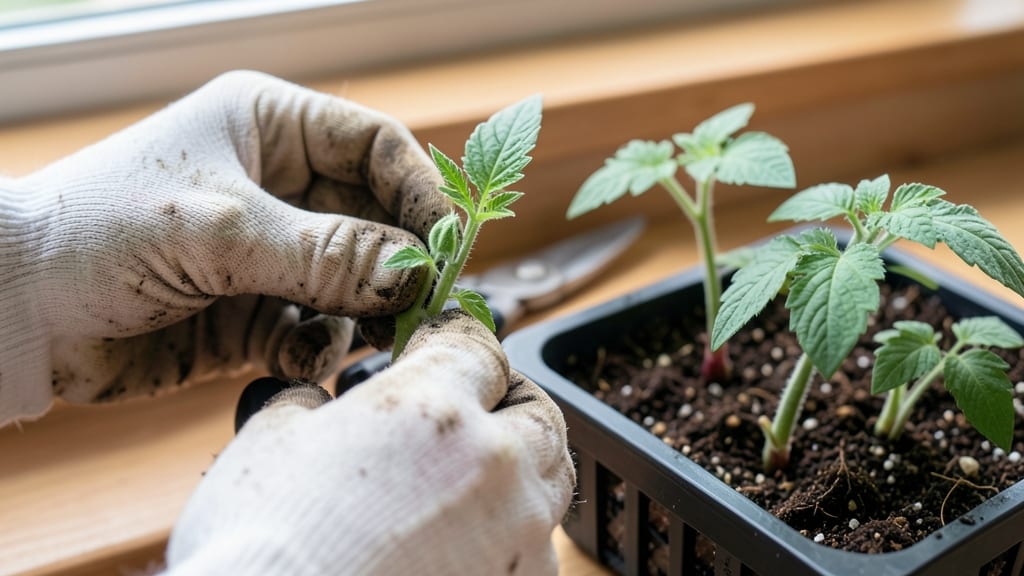
Pinching tomato seedlings transforms leggy, weak plants into sturdy bushes with more flowers and fruit. 🌱 I used to ignore this step—until my first pinched plants produced twice as many tomatoes as my neighbors' unpruned ones.
The secret lies in encouraging side shoots that become new stems, each bearing its own clusters of blooms.
You only need clean pruners or your fingers for this 5-minute task. Wait until seedlings have 4-6 true leaves (not just seed leaves) and are about 6 inches tall. Pinch off the top set of leaves just above a leaf node where new growth will emerge.
The plant responds by sending out 2-4 new side shoots, creating a bushier structure.
What you end up with is a tomato plant that looks like a small tree, not a single stem with a few clusters. Each of those side shoots will develop into a new branch with its own flowers and fruit, potentially doubling your harvest.
The plants also stand stronger against wind and disease, and you avoid the frustration of tomatoes growing on just one or two main stems.
This works for all tomato varieties—determinate (bush) and indeterminate (vining)—though indeterminate types benefit most. The key is consistency: pinch once, then repeat every 2-3 weeks as new shoots grow. Even if you miss a pinch, your plants will still outperform unpruned ones by summer's end.
📚 In This Guide
- What you need
- Instructions
- Tips and common mistakes
- Wrapping up and next steps
What you need
- ● Gearing up to pinch your tomato seedlings? Here’s what you’ll need to get started—no fancy tools required, just a few essentials! 🌱
- ● Pro tip: ✨ Work on a dry day or after watering—pinching damp seedlings can spread soil-borne pathogens!
Step-by-step instructions for pinching tomato seedlings
Let's turn those skinny seedlings into sturdy, productive plants with just your fingers.
🌱 Step 1: Identify the Right Time to Pinch
Wait until your tomato seedlings have 4-5 true leaves—those are the leaves that come after the initial pair of seed leaves. You'll know it's time when the plants look like they've got a full set of leaves and are about 6-8 inches tall. Pinching too early stunts growth; too late and the plant won't respond as well.
I always check for healthy, dark green leaves and stems that are thick enough to pinch without snapping. If the seedlings look leggy or weak, wait a few more days—they need to be strong enough to handle the stress of pruning.
✂️ Step 2: Locate the Pinch Point
Look at the stem just above the third or fourth true leaf, where a small set of leaves is starting to form. This is the spot you'll pinch—it's called the "growth node." You'll see a tiny bump or a cluster of tiny leaves emerging here. This is where new branches will grow if you encourage them.
Don't pinch too high or too low. Pinching too high removes too much of the plant, while pinching too low won't encourage enough branching. The goal is to remove the top portion of the plant just above that growth node, leaving the lower leaves intact.
🌿 Step 3: Perform the Pinch
Use your thumb and forefinger to gently squeeze and pinch the stem just above the growth node. You don't need scissors—your fingers are perfect for this job. The pinch should remove the top portion of the plant cleanly, leaving a small stub. This signals the plant to focus its energy on growing side branches rather than just one long stem.
Be decisive but gentle. If you're hesitant, the stem might tear instead of cleanly pinching, which can damage the plant. You'll see the pinch point heal over in a few days, and soon after, tiny leaves will start sprouting from the sides.
☀️ Step 4: Monitor and Encourage Growth
After pinching, keep your seedlings in bright, indirect light for a few days to help them recover. You'll notice new growth starting from the sides within 1-2 weeks. This is the bushier growth you're encouraging, and it means the plant is redirecting its energy to create more stems and leaves.
Water your seedlings gently at the base to avoid disturbing the new growth. If you see any yellowing leaves, it's a sign of stress—adjust your watering or light exposure. Once the new branches are a few inches long, you can repeat the pinching process on those branches to encourage even more growth.
🌱 Step 5: Repeat for a Bushier Plant
After the first set of side branches grows to about 6 inches tall and has 3-4 leaves, pinch those branches as well. This creates a cascading effect, encouraging even more side growth. Think of it like training a vine to spread out instead of growing just one long stem.
Keep an eye on your plant's overall shape. If it starts to look too crowded or leggy again, it's time for another pinch. With each pinch, your tomato plant will become bushier and more productive, setting the stage for a bigger harvest later in the season.
Tips & tricks for bushier tomato plants
These little tricks will help you transform leggy tomato seedlings into sturdy, productive plants that yield bigger harvests.
Timing is Everything: The 4-5 true leaves stage is your golden window—this is when your seedlings have enough energy to handle the pinch without going into shock. I've seen beginners rush and pinch at 3 leaves, only to have their plants struggle to recover. Wait until you see that fourth true leaf emerging, and you'll know it's time. The 6-8 inch height guideline is just that—a guideline. Focus more on leaf count and stem thickness than inches.
Growth Node Spotlight: Here's what nobody tells you—the growth node is your secret weapon. That tiny bump above the third or fourth leaf isn't just any spot—it's where the plant's hormonal signals tell it to branch. I've learned the hard way that pinching too high above this node removes too much growth potential, while pinching too low doesn't stimulate enough branching. Aim for that sweet spot right above where those little leaf clusters are forming.
Recovery Care: After you pinch, your seedlings need some TLC. The first 1-2 weeks are critical—they're redirecting all their energy to grow those side branches. I always move my pinched seedlings to a slightly shadier spot for 2-3 days to reduce stress, then gradually increase light. Watch for those first tiny leaves sprouting from the sides within 7-10 days. If you see yellowing leaves, it's a sign you're overwatering or the light is too intense.
Visual Cues for Success: When you're ready to repeat the pinching process on those new branches, look for two key indicators: branches that are about 6 inches tall AND have 3-4 leaves. The leaves should be a vibrant green, not pale or yellow. I use my fingers to gently squeeze the stems—if they feel sturdy but not woody, they're ready. This second pinch creates that beautiful cascading effect that makes tomato plants look like little bushes instead of single stems.
Pro Tips for Pinching Tomato Seedlings
- These little tricks will help you transform leggy tomato seedlings into sturdy, productive plants that yield bigger harvests.
- Timing is Everything: The 4-5 true leaves stage is your golden window—this is when your seedlings have enough energy to handle the pinch without going into shock.
- Growth Node Spotlight: Here's what nobody tells you—the growth node is your secret weapon.
Frequently asked questions
Got questions about pinching tomato seedlings?
You’re not alone! Here are answers to the most common concerns—plus pro tips to keep your plants thriving.
When is the best time to pinch tomato seedlings?
Pinch your seedlings after they’ve developed their first true leaves (not the tiny seed leaves) and before they flower. For most varieties, this is when they’re 6–8 inches tall. The goal? Encourage bushier growth before energy goes into fruiting.
How much should I pinch off?
Remove the top set of leaves (usually the top 1–2 inches) just above a leaf node (where new leaves sprout). Avoid cutting too much—think of it like trimming hair: shape, don’t shave! Over-pinching stresses plants.
What if my seedlings are already flowering?
Don’t panic! If your seedlings are flowering early, pinch anyway—it’ll redirect energy to stronger stems. Just be patient: You may sacrifice some early fruit, but your long-term harvest will be bigger and healthier. For late bloomers, prioritize pinching before flowers appear.
Are there alternatives to pinching?
Yes! If pinching feels harsh, try:
- Pruning shears for cleaner cuts on thicker stems.
- Topping (cutting the main stem entirely) for determinate tomatoes to encourage side shoots.
- Support structures (cages/trellises) to reduce the need for heavy pruning.
Why are my pinched seedlings looking sad or wilted?
Wilting after pinching is normal—plants need 1–2 weeks to recover. If it persists, check for:
- Underwatering (pinching increases transpiration).
- Overcrowding (thin seedlings if needed).
- Pests/disease (inspect leaves for damage).
Wrapping up and next steps
Pinching tomato seedlings might seem like a small task, but it’s a game-changer for bushier plants and bigger harvests! 🌱 By mastering this simple pruning trick, you’ll encourage stronger roots, more flowers, and a bountiful yield—all while keeping your garden thriving.
Don’t hesitate; grab those shears and give it a try!
Ready to take your tomato-growing skills to the next level? Start pinching your seedlings today and watch your garden transform! For even more tips, explore our guide on optimal tomato care.