
Companion Plants
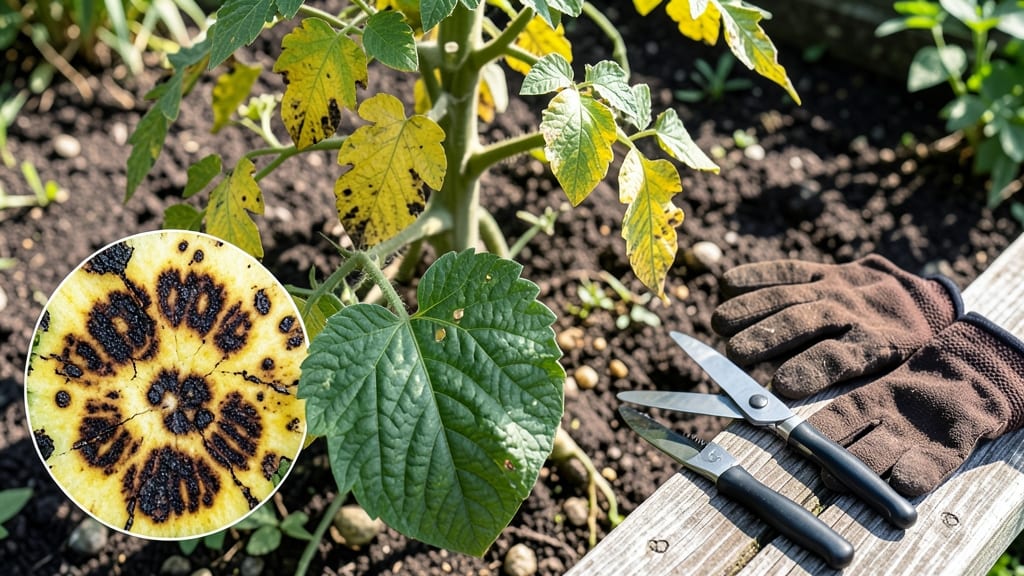
A tomato plant has black spots on the leaves—don’t panic, because your harvest isn’t doomed yet.
You just need a 3-step fungal blight cure before the problem spreads. 🌱 I’ve saved dozens of tomato plants from this exact issue, and the fix starts with identifying whether those spots are from early blight, bacterial spot, or environmental stress (spoiler: the solution is similar).
The first step is stopping the spread—prune infected leaves immediately and avoid overhead watering, which turns leaves into disease magnets. Most gardeners make this mistake and end up with a full-blown outbreak.
A quick spray with neem oil or copper fungicide (organic options work great) can stop it in its tracks. Within 7-10 days, you’ll see new growth pushing through, and those black spots will slow down—if not disappear entirely.
The key is acting fast and keeping your plants dry and well-spaced. I’ve had plants bounce back completely after just one treatment. This works for container tomatoes, raised beds, and in-ground gardens alike. The sooner you tackle it, the more tomatoes you’ll save for your summer meals.
Let’s get those plants healthy again!
Root Causes of Leaf Spots
Black spots on tomato leaves aren’t just a cosmetic issue—they’re a cry for help from your plant! Understanding the why behind these unsightly marks is the first step to saving your harvest.
Below, we break down the most common culprits, backed by science and practical insights to help you diagnose the problem accurately.
Fungi are the most frequent offenders when it comes to black spots on tomato leaves. These microscopic organisms thrive in warm, humid conditions and can spread rapidly if left unchecked.
Two of the most destructive fungal diseases affecting tomatoes are early blight (Alternaria solani) and late blight (Phytophthora infestans), both of which cause dark, irregular spots that often develop concentric rings.
- Early Blight: Starts as small, dark brown or black spots with yellow halos on lower leaves. Over time, the spots expand and may develop a "target-like" pattern.
This fungus survives in soil and plant debris, making it a recurring problem in gardens. - Late Blight: Produces greasy-looking, dark spots that can appear on leaves, stems, and even fruits.
Unlike early blight, late blight spreads fast—especially in cool, wet weather—and can devastate an entire crop in days. It’s the same fungus that caused the Irish Potato Famine, so don’t ignore it!
Why it happens: Fungi spores land on leaves, germinate in moisture, and penetrate the leaf surface through natural openings like stomata (tiny pores). Overhead watering or poor air circulation creates the perfect breeding ground, giving fungi the upper hand.
If the black spots on your tomato leaves are small, raised, and water-soaked with yellow borders, you’re likely dealing with bacterial spot (Xanthomonas perforans or Pseudomonas syringae). This bacterial disease is common in warm, humid climates and can spread through water splashing, tools, or even contaminated seeds.
- Symptoms: Tiny, dark spots (1/16 to 1/8 inch) that enlarge and may merge into larger lesions. Severe infections can cause leaves to yellow, crinkle, or drop prematurely. - Spread: Bacteria thrive in wet conditions and can hitchhike on wind, rain, or garden tools.
Once established, they multiply rapidly, especially in crowded plants with poor airflow.
Why it happens: Bacteria enter the plant through wounds, stomata, or natural openings. They multiply in the leaf tissue, triggering a defensive response that manifests as dark, necrotic spots. Unlike fungi, bacteria don’t produce spores—they rely on direct contact and moisture to spread.
Not all black spots are caused by pathogens! Environmental factors like heat stress, overwatering, or nutrient deficiencies can also lead to leaf discoloration and spotting. While these issues don’t spread like diseases, they weaken your plant, making it more susceptible to infections.
- Heat Stress: Tomatoes are sensitive to extreme temperatures. When daytime highs exceed 90°F (32°C), leaves may develop sunscorch—small, dark, dry spots, often on the upper surface.
This happens when the plant’s protective wax layer breaks down under intense sunlight. - Overwatering or Poor Drainage: Waterlogged soil can lead to root rot, which starves the plant of oxygen and nutrients.
As a result, leaves may develop dark, mushy spots, especially near the edges or between veins.
This is often accompanied by yellowing (chlorosis). - Nutrient Deficiencies: A lack of magnesium (a key component of chlorophyll) or calcium (essential for cell structure) can cause interveinal chlorosis (yellowing between veins) and dark, necrotic spots.
Magnesium deficiency, for example, often starts on older leaves, while calcium issues (like blossom end rot) may appear as dark, sunken spots on fruits—but can also stress leaves.
Why it happens: Environmental stress disrupts the plant’s cellular processes. Heat damages cell membranes, while excess water or poor drainage suffocates roots, cutting off nutrient and water supply. Without proper care, these conditions create the perfect storm for secondary infections to take hold.
Sometimes, black spots aren’t caused by diseases at all—they’re the result of pest activity. Insects like aphids, spider mites, or tomato hornworms can leave behind dark, irregular marks as they feed on leaves.
- Aphids and Spider Mites: These tiny pests suck sap from leaves, causing stippling (tiny white or black dots) and discoloration.
Heavy infestations can lead to leaf curling and stunted growth. - Tomato Hornworms: While they don’t cause spots directly, their feeding can create ragged, blackened holes in leaves.
Look for their distinctive green bodies and white diagonal stripes. - Fungal Galls or Sooty Mold: Some pests (like whiteflies) excrete honeydew, a sticky substance that attracts sooty mold—a black, fuzzy fungus that coats leaves and blocks sunlight.
Why it happens: Pests physically damage leaf tissue, disrupting the plant’s ability to photosynthesize. The resulting stress can lead to secondary infections, compounding the problem. Additionally, honeydew from sap-sucking insects creates a sticky surface where fungal spores love to land and grow.
💡 Pro Tip: To narrow down the cause, examine the underside of leaves (fungi often start there) and check for patterns—are spots random, ringed, or clustered? Are they accompanied by yellowing, wilting, or sticky residue? Your observations will help you target the right treatment!
Fix Black Spots Fast
Black spots on your tomato leaves don’t have to mean the end of your harvest! With the right approach, you can nurse your plants back to health and prevent future outbreaks.
Below, we’ve mapped out practical, step-by-step solutions tailored to the most common causes—fungal diseases, pests, or environmental stress—so you can act confidently and save your tomatoes.
If the black spots are spreading rapidly, turning yellow or brown, or appearing as greasy-looking lesions, a fungal infection is likely to blame. Here’s how to stop the spread and restore your plants:
🔥 Step 1: Remove Infected Foliage Immediately
- 👨🍳 Snip off any leaves with black spots using sterilized pruners (wipe with rubbing alcohol between cuts).
- 🗑️ Dispose of infected leaves in the trash (not compost)—fungal spores can survive in compost piles.
- ✨ Pro Tip: Work during dry, sunny mornings to reduce humidity, which fuels fungal growth.
🍳 Step 2: Apply Fungicidal Treatments
Choose one or more of these organic or chemical options:
- 🌿 Copper fungicide (e.g., Bordeaux mixture or copper soap): Spray on both leaf surfaces every 7–10 days until new growth appears.
- 🧴 Baking soda spray: Mix 1 tsp baking soda + 1 tbsp vegetable oil + 1 tsp dish soap in 1 quart of water.
Spray leaves early in the morning (avoid direct sunlight to prevent leaf burn). - 💊 Neem oil: A natural antifungal and insect repellent. Mix 1 tbsp neem oil + 1 tsp mild soap in 1 quart of water.
Spray every 5–7 days for 2–3 weeks.
🌡️ Step 3: Adjust Growing Conditions Fungi thrive in wet, warm environments.
Take these steps to dry out your plants: - 💦 Improve air circulation: Space plants 18–24 inches apart and use fan oscillators on low speed near the garden. - 🌧️ Water at the base: Avoid overhead watering.
Use drip irrigation or soaker hoses to keep leaves dry. - ☀️ Maximize sunlight: Ensure 6–8 hours of direct sun daily—fungi struggle in bright, dry conditions.
🎯 Prevention for Next Season
- 🌱 Rotate crops: Don’t plant tomatoes (or nightshades like peppers/eggplants) in the same spot for 3 years.
- 🌱 Plant resistant varieties: Try ‘Mountain Merit,’ ‘Defiant PhR,’ or ‘Celebrity’—these tomatoes are bred to resist blight.
- 🌱 Solarize soil: In late summer, cover soil with clear plastic for 4–6 weeks to kill fungal spores before replanting.
If black spots are tiny, scattered, or accompanied by webbing, pests (or their droppings) may be the culprit. Here’s how to evict them for good:
🔪 Step 1: Blast Off Pests with Water
- 💦 Spray leaves with a strong stream of water to knock off mites and aphids. Do this early in the day so leaves dry quickly.
- 🕷️ Repeat every 2–3 days until pests disappear.
👨🍳 Step 2: Use Natural Predators or Sprays
- 🐞 Ladybugs or lacewings: Release beneficial insects (available at garden centers) to eat aphids and mites.
- 🧴 Insecticidal soap: Mix 2 tbsp mild castile soap + 1 quart water.
Spray directly on pests (avoid flowers to protect pollinators). - 🌿 Neem oil or horticultural oil: Spray every 5–7 days to suffocate eggs and adults.
⏰ Step 3: Monitor and Maintain Cleanliness
- 🕵️ Check undersides of leaves daily for new pests.
- 🧹 Remove debris: Clear fallen leaves and weeds where pests hide.
- 🌿 Companion plants: Interplant basil, marigolds, or garlic to repel pests naturally.
💡 Prevention Tips
- 🌱 Mulch with straw: Keeps soil moist (pests hate dry conditions) and reduces weed competition.
- 🌱 Prune regularly: Remove crowded branches to reduce hiding spots for pests.
- 🌱 Quarantine new plants: Inspect every new plant before adding it to your garden.
If spots appear after extreme weather or fertilizer overuse, your tomatoes may be suffering from physiological damage. Here’s how to revive them:
🌿 Step 1: Adjust Watering Practices
- 💧 Water deeply but infrequently: Let soil dry 1–2 inches deep between waterings to prevent stress.
- ❄️ Avoid cold water: Use lukewarm water (especially in cool climates) to prevent shock.
🍳 Step 2: Check Soil and Fertilizer
- 🧪 Test soil pH: Tomatoes prefer 6.0–6.8. Adjust with lime (to raise pH) or sulfur (to lower it).
- 🚫 Skip nitrogen-heavy fertilizers: Too much nitrogen = soft, weak leaves prone to stress.
Use a balanced 10-10-10 or tomato-specific fertilizer. - 🌱 Add compost: Mix 2–3 inches of compost into the soil to improve drainage and nutrient uptake.
☀️ Step 3: Protect from Extreme Conditions
- 🌞 Shade cloth: Use 30–50% shade cloth during heatwaves (above 90°F).
- 🧥 Row covers: Lightweight fabric can protect from late frosts (below 50°F).
- 🌱 Mulch heavily: Straw or wood chips retain moisture and regulate soil temperature.
🎯 Long-Term Prevention
- 🌱 Choose heat-tolerant varieties: Try ‘Solar Fire,’ ‘Heatmaster,’ or ‘Arkansas Traveler’ for hot climates.
- 🌱 Drip irrigation: Automates watering and prevents over/under-watering.
- 🌱 Monitor weather forecasts: Plan shade or cover for extreme heat or cold snaps.
Final Reminder: Act fast—fungal diseases spread quickly, but pests and environmental stress can often be reversed with minor adjustments. Check your plants daily, and don’t hesitate to prune aggressively if needed. Your tomatoes will bounce back with the right care! 🍅✨
Frequently asked questions
Are black spots on tomato leaves always caused by disease?
Not always! While fungal diseases like early blight are common, black spots can also result from pest damage (aphids, spider mites), heat stress (sunscorch above 90°F), or nutrient deficiencies (magnesium or calcium). Check for patterns: ringed spots = fungus, tiny dots = pests, dry spots = heat stress.
Can I still harvest tomatoes if the leaves have black spots?
Yes, but focus on healthy fruit first. If spots are from fungal diseases like early blight, the fruit itself is usually safe to eat—just wash thoroughly. For bacterial spot or severe infections, remove affected fruit and prioritize new growth that appears after treatment.
How do I know if my tomato plant has early blight vs. bacterial spot?
Early blight shows as concentric rings with yellow halos on lower leaves, while bacterial spot creates tiny, water-soaked spots with yellow borders that merge. Early blight thrives in dry conditions; bacterial spot spreads faster in wet, humid weather.
Will removing spotted leaves stop the problem?
Yes, but it's just the first step! Prune infected leaves daily and dispose of them (don't compost). Combine with copper fungicide or neem oil and improve airflow to prevent spores from spreading. Without treatment, you'll keep losing leaves.
Can I use household items to treat black spots?
Mix 1 tsp baking soda + 1 tbsp oil + 1 tsp soap in 1 quart water for a DIY fungicide. Spray early morning on dry leaves. For pests, try soapy water spray (2 tbsp mild soap per quart) or garlic spray (blend 5 cloves with 1 quart water). Always test on a small area first.