
How To
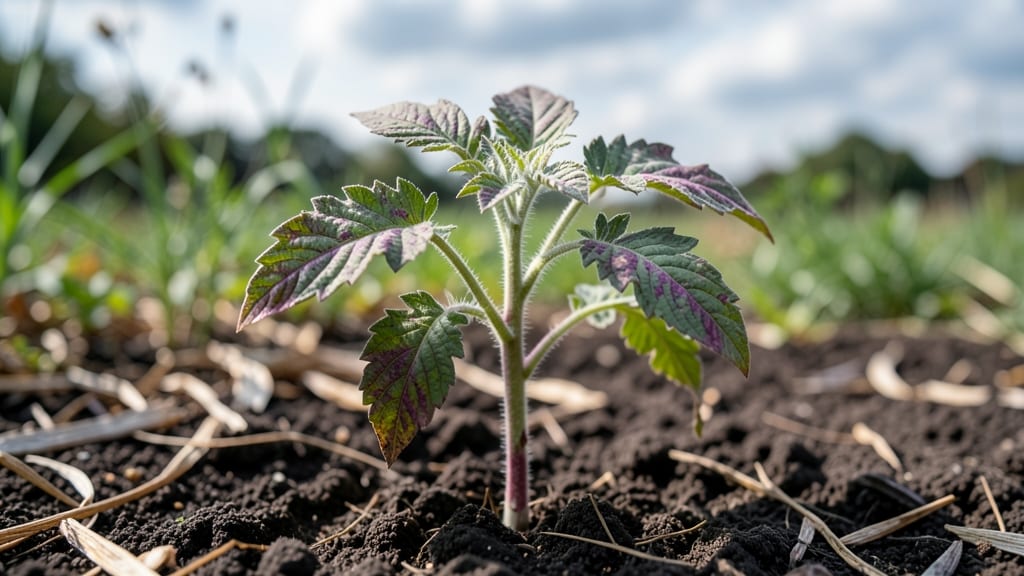
Your tomato seedlings showing purple leaves? That’s your signal to act fast—this common issue often means fungal stress or nutrient imbalance. 🌱 I’ve saved dozens of seedlings by catching this early, and the fix is simpler than you’d think, especially if you’re dealing with damp starts or cool nights.
The purple usually means phosphorus deficiency, but cold stress or early blight can trigger it too. Check the soil moisture first—soggy roots scream for help, while dry soil might need a quick watering.
A balanced fertilizer (like 10-10-10) or a sprinkle of bone meal can often turn those leaves back green in 3-5 days. Once you’ve adjusted the soil and light, keep an eye out for white mold or dark spots—those mean disease, not just nutrients.
Prune affected leaves immediately and space seedlings wider for airflow. Most seedlings bounce back within a week if you catch it early. Prevention is easy: start with warm soil (70°F+), avoid overhead watering, and rotate crops next season.
If the purple spreads fast or you see blackened stems, grab a sample and call your local extension office—they’ll help you rule out blight before it spreads.
Root Causes Behind Purple Leaves
When your tomato seedlings start showing purple or reddish hues on their leaves, it’s usually a cry for help from the plant. These color shifts aren’t just cosmetic—they’re signs of underlying stress.
Understanding the why behind these symptoms is the first step to saving your seedlings. Below, we break down the most common causes, backed by science, so you can diagnose and act fast.
Tomato seedlings often develop purple leaves when they’re starving for essential nutrients, particularly phosphorus and potassium. These elements are critical for energy transfer (phosphorus) and overall plant health (potassium).
- Phosphorus Deficiency (P)
- Why it happens: Phosphorus is vital for root growth, flowering, and fruit development. If your seedlings lack it, leaves may turn dark purple or reddish, especially along the veins.
- Actionable fix: Use a balanced fertilizer (like 10-10-10) or a phosphorus-rich amendment (bone meal). Test your soil—low pH (below 6.0) can lock out phosphorus, even if it’s present.
- Potassium Deficiency (K)
- Why it happens: Potassium regulates water movement and stress responses. Purple edges or blotches on older leaves often signal a shortage.
- Actionable fix: Apply a potassium sulfate or wood ash (for mild cases). Avoid over-fertilizing with nitrogen, which can worsen imbalances.
⚠️ Pro Tip: Purple leaves from nutrient issues usually start on older leaves and spread inward. If new growth is also affected, the problem might be deeper (like poor soil structure or root damage).
Tomato seedlings are extremely sensitive to moisture levels. Both drought and overwatering can trigger purple discoloration, but the mechanisms differ.
- Underwatering (Drought Stress)
- Why it happens: When roots can’t absorb enough water, the plant slows down photosynthesis. To prioritize survival, it redirects nutrients to critical areas (like roots), leaving leaves starved and turning purple.
- Actionable fix: Water deeply at the base of the plant (not the leaves) and check soil moisture with your finger—top 1–2 inches should be dry before watering again.
- Overwatering (Root Suffocation)
- Why it happens: Soggy soil cuts off oxygen to roots, leading to anaerobic conditions. Roots can’t absorb nutrients or water efficiently, causing stress signals like purple leaves (often paired with yellowing).
- Actionable fix: Ensure pots have drainage holes and avoid letting seedlings sit in saucers of water. Use well-draining soil mixes (add perlite or vermiculite).
💡 Quick Test: Gently tug on the seedling—if it resists (roots are tightly packed), it’s overcrowded. If it pulls out easily, roots may be rotting.
Purple leaves can also be a symptom of fungal blight, like early blight (Alternaria solani) or septoria leaf spot. These pathogens thrive in moist, warm conditions and attack tomato seedlings aggressively.
- Early Blight Symptoms
- Why it happens: The fungus Alternaria infects through wounds or stomata (leaf pores), causing dark purple-brown spots with concentric rings. Leaves may also develop yellow halos.
- Actionable fix:
- Remove infected leaves immediately (don’t compost them—dispose in the trash).
- Apply a copper fungicide or baking soda spray (1 tsp baking soda + 1 quart water + a drop of dish soap).
- Space plants for airflow and water at soil level (avoid overhead sprinkling).
- Septoria Leaf Spot
- Why it happens: This fungus creates tiny purple spots with white or gray centers. It spreads via water splashes, especially in humid climates.
- Actionable fix: Rotate crops next season (don’t plant tomatoes in the same spot for 3 years) and use mulch to reduce soil splashes.
🔥 Warning: Fungal spores can survive in soil for years. If you’ve had repeated issues, consider solarizing your soil or using a biofungicide like Trichoderma.
Tomato seedlings are temperamental about their environment. Extreme heat, cold snaps, or sudden light changes can trigger purple leaves as a stress response.
- Cold Stress
- Why it happens: Temperatures below 50°F (10°C) can damage cell membranes, leading to anthocyanin production (the pigment behind purple hues). This is the plant’s way of protecting itself from UV damage.
- Actionable fix: Use row covers or move seedlings to a warmer, sheltered spot. Avoid placing them near drafts or AC vents.
- Heat Stress
- Why it happens: High temperatures (>90°F/32°C) disrupt chlorophyll production, causing leaves to turn purple or reddish. Combined with drought, this accelerates stress.
- Actionable fix: Provide afternoon shade (use shade cloth) and ensure consistent moisture. Mulch around seedlings to regulate soil temperature.
- Light Deficiency
- Why it happens: Seedlings need 12–16 hours of light daily. Without enough light, they can’t photosynthesize efficiently, leading to purple stems and leaves.
- Actionable fix: Supplement with grow lights (LED or fluorescent) if natural light is insufficient. Keep lights 2–4 inches above seedlings and adjust as they grow.
✨ Science Note: Purple leaves from light stress often appear on new growth and may be paired with stunted, leggy stems.
Not all purple leaves are a cause for alarm! Some tomato varieties, like ‘Purple Calabash’ or ‘Indigo Rose’, naturally produce anthocyanins (purple pigments) as a sun protection mechanism or to deter pests.
- How to Tell the Difference:
- Genetic purple: Even, uniform purple on all leaves, no yellowing or spots, and the plant grows vigorously.
- Stress-induced purple: Patchy, irregular, often paired with other symptoms (yellowing, wilting, spots).
📊 Quick Check: If your seedling’s tag lists a purple variety, celebrate! Otherwise, investigate the causes above.
Quick Fixes for Purple Leaves
Now that you’ve identified why your tomato seedlings are turning purple—whether it’s fungal stress, nutrient imbalances, or environmental factors—it’s time to take action. Below are practical, step-by-step solutions tailored to each cause, along with prevention tips to keep your seedlings thriving.
If purple leaves are caused by fungal pressure (like early blight or septoria leaf spot), act fast to stop the spread and restore plant health.
🔥 Step 1: Remove Infected Leaves
- How: Snip off any purple, yellow, or spotted leaves with clean scissors or pruning shears.
- Why: Prevents spores from spreading to healthy foliage.
- Pro Tip: 💡 Dispose of infected leaves in the trash (not compost)—fungi can survive in soil!
🍳 Step 2: Apply Fungicide (Natural or Chemical)
| Option | How to Use | When to Apply |
|---|---|---|
| Baking Soda Spray | Mix 1 tsp baking soda + 1 quart water + few drops of dish soap. Spray leaves. | Every 5–7 days until symptoms fade. |
| Neem Oil | Combine 1 tbsp neem oil + 1 tsp mild soap + 1 quart water. Spray evenly. | Morning or evening (avoid direct sun). |
| Copper Fungicide | Follow label instructions for preventative spray. | At first sign of purple spotting. |
🌡️ Step 3: Improve Air Circulation & Reduce Moisture
- How:
- Space seedlings 6–12 inches apart (if crowded).
- Water only at the base (avoid overhead sprinkling).
- Use a fan on low (24/7) to dry leaves faster.
- Why: Fungi thrive in humid, stagnant air.
✨ Prevention for Future Plants
- Rotate crops (don’t plant tomatoes in the same spot yearly).
- Solarize soil (cover with clear plastic for 4–6 weeks in summer to kill fungi).
- Choose resistant varieties (e.g., ‘Mountain Merit’ or ‘Defiant PhR’ tomatoes).
Purple leaves can signal low nitrogen, phosphorus, or magnesium. Here’s how to correct it:
💪 Step 1: Test Your Soil
- DIY Test: Use a home soil kit (available at garden centers) to check pH and nutrient levels.
- Ideal pH for Tomatoes: 6.0–6.8 (adjust with lime to raise or sulfur to lower).
🥗 Step 2: Fertilize Correctly
| Nutrient Issue | Signs | Quick Fix |
|---|---|---|
| Low Nitrogen | Purple lower leaves, stunted growth | Apply balanced fertilizer (10-10-10) or compost tea. |
| Low Phosphorus | Purple veins, weak roots | Bone meal or rock phosphate (sprinkle around roots, water in). |
| Low Magnesium | Purple between veins (interveinal) | Epsom salt spray (1 tbsp per gallon of water, spray leaves weekly). |
🎯 Step 3: Feed the Soil, Not Just the Plant
- Add compost (1–2 inches around seedlings, not touching stems).
- Use worm castings for slow-release nutrients.
- Avoid over-fertilizing—too much salt can burn roots!
🔥 Prevention Tips
- Mulch with straw or grass clippings to retain moisture and nutrients.
- Rotate crops to prevent nutrient depletion.
- Avoid synthetic fertilizers early on—start with organic for gentle balance.
If purple leaves are due to heat, cold, or transplant shock, adjust the growing conditions immediately.
👨🍳 Step 1: Adjust Temperature & Light
- Too Hot? Move seedlings to partial shade (use shade cloth if temps exceed 90°F).
- Too Cold? Cover with floating row covers if nights dip below 50°F.
- Not Enough Light? Supplement with a grow light (12–16 hours/day).
💧 Step 2: Water Wisely
- Check moisture by sticking your finger 1 inch into soil—water if dry.
- Avoid soggy soil (fungi love this!)—water deeply but less often.
- Use drip irrigation to keep leaves dry.
🏡 Step 3: Acclimate Seedlings Gradually
If transplanting outdoors: 1. Hardening off: Move seedlings outside for 1–2 hours/day, increasing time over 7–10 days.
- Shade cloth: Use 30–50% shade the first few days to reduce shock.
- Morning transplanting: Plant in the early morning so roots recover by evening.
⏰ Prevention for Future Grows
- Start seeds indoors 6–8 weeks before last frost.
- Use seedling heat mats if your home is too cold.
- Monitor weather forecasts—plan transplants on cool, cloudy days.
If seedlings are severely stunted, wilted, or covered in mold, it may be time to replace them. Don’t waste time or resources on a lost cause—start fresh with new seedlings!
Final Reminder: 🌱 Act fast but stay patient. Purple leaves can recover in 1–2 weeks with the right care. Keep an eye on your seedlings, and soon you’ll be harvesting juicy, healthy tomatoes instead of fighting purple foliage!
Frequently asked questions
Are purple leaves always a sign of a problem with tomato seedlings?
Not necessarily! Some heirloom varieties like 'Purple Calabash' or 'Indigo Rose' naturally develop purple pigments as a protective mechanism against sun damage. However, if your seedlings aren't one of these varieties and show patchy purple with other symptoms (yellowing, spots, or wilting), it's definitely time to investigate further.
How quickly should I expect to see improvement after treating purple leaves?
With proper care, you should see noticeable improvement in 3-7 days. If the issue is nutrient-related (like phosphorus deficiency), applying bone meal or a balanced fertilizer can show results within 3-5 days. For fungal issues, it may take 7-10 days to see full recovery after removing infected leaves and applying fungicide.
Can I still save my tomato seedlings if the purple leaves have spread to most of the plant?
It depends on the cause. For nutrient deficiencies or environmental stress, you can often recover the plant with proper treatment. However, if fungal disease (like early blight) has caused extensive damage—especially with blackened stems or large dead patches—it may be better to remove the affected seedlings to prevent spread. Start fresh with healthy replacements if the damage is severe.
What's the best way to prevent purple leaves in future tomato seedlings?
Focus on three key areas: soil health, proper watering, and environmental control. Use well-draining soil with compost, maintain consistent moisture (not soggy), and keep seedlings in temperatures between 60-85°F. Also, choose disease-resistant varieties and rotate crops annually to prevent nutrient depletion and fungal buildup.
Is it safe to use homemade remedies like baking soda spray on tomato seedlings?
Yes, baking soda spray is completely safe when used correctly! Mix 1 teaspoon baking soda with 1 quart water and add a drop of mild dish soap as a surfactant. This solution helps prevent fungal diseases and is gentle enough for seedlings. Just avoid overusing it—apply every 5-7 days during active growth periods.