
Pruning
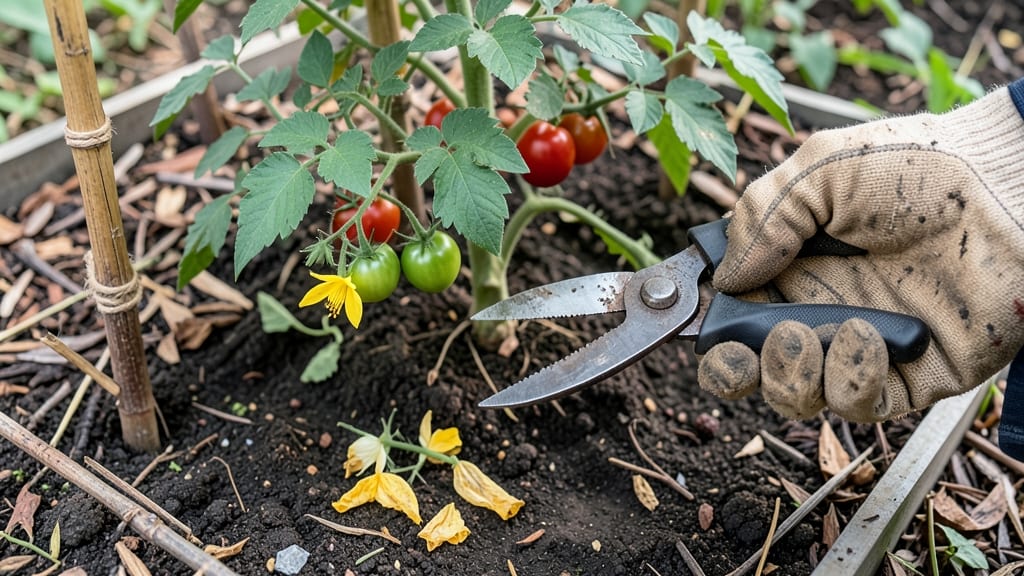
A well-pruned tomato plant doesn’t just survive summer—it thrives through fall and sometimes even winter. ✂️ I’ve seen plants that would’ve collapsed under their own weight transformed into sturdy, productive bushes that keep giving fruit long after most gardens call it quits.
The secret isn’t complicated: it’s about knowing when to cut, what to remove, and how to support the plant as it grows. Most gardeners make the same mistakes—over-pruning too early, cutting into the main stem, or ignoring the plant’s natural structure.
My first year, I nearly killed my heirloom tomatoes by trimming too aggressively in June, only to learn that patience and precision pay off. By the end of the season, that same plant produced three times the yield of my neighbors’ unpruned bushes.
The key is working with the plant, not against it. You’ll end up with stronger stems, better air circulation (which means fewer diseases), and a bush that keeps producing until frost. The pruned plants also ripen fruit faster, so you’re harvesting earlier and longer than ever before.
Plus, the shape becomes so neat you’ll want to show it off at the farmers’ market—or at least brag to your gardening group. This works for determinate (bush) and indeterminate (vining) tomatoes alike, though the techniques differ slightly.
Whether you’re growing in containers, raised beds, or the ground, the same principles apply. Let’s get those shears sharp and those plants thriving!
📚 In This Guide
- What you need
- Instructions
- Tips and common mistakes
- Wrapping up and next steps
What you need
- ● Pruning shears: Bypass pruners (sharp, clean, and sterilized with rubbing alcohol to prevent disease). Recommended: Felco or Fiskars.
- ○ Gloves: Heavy-duty gardening gloves (to protect from thorns and dirt). Optional: Nitrile-coated for extra grip.
- ● Disinfectant: 1 part bleach to 9 parts water (for sterilizing tools between cuts).
- ● Tomato plants: Disease-resistant varieties (e.g., 'Sungold,' 'Roma,' or 'Cherry'). Quantity: 1-3 plants per container (if container-gardening).
- ● Support system: Stakes: 6-8 ft wooden or metal stakes (1 per plant).
- ● Trellis: A-frame or tomato cage (for indeterminate varieties).
- ● Twine: 100 ft biodegradable twine (for tying plants to stakes).
- ● Potting mix: High-quality, well-draining soil (e.g., Miracle-Gro or Fox Farm Ocean Forest). Quantity: 5-10 gallons per plant.
- ○ Fertilizer: Balanced organic fertilizer (10-10-10 or compost). Optional: Slow-release pellets for convenience.
- ● Plant markers: Labels to track varieties and pruning dates.
- ● Mulch: Straw or shredded leaves (to retain moisture and suppress weeds).
- ● Pruning spray: Copper-based fungicide (for preventive care).
- ● Grow lights: LED lights (if extending the growing season indoors).
How to prune tomato plants for maximum yield and health
Here’s the method I’ve used for years to keep tomato plants productive, disease-resistant, and full of fruit.
✂️ Step 1: Remove Suckers Early and Often
Suckers are the small shoots that form in the crotch between the main stem and a branch. These compete with your fruit for energy, so I remove them as soon as I spot them—usually every 5-7 days during the growing season. Use clean, sharp pruning shears to avoid damaging the plant. Pinch off suckers when they’re about 2 inches long; larger ones can stress the plant.
Start pruning when your plants are about 12-18 inches tall and have a few true leaves. I focus on the lower third of the plant first, where suckers are most aggressive. If you miss a sucker, don’t panic—just remove it the next time you check. The key is consistency.
🌿 Step 2: Prune Lower Leaves to Improve Airflow
Once your tomato plants reach 3-4 feet tall, start removing the lower leaves—those below the first flower cluster. Use your fingers or shears to gently twist or cut them off at the stem. This prevents soil-borne diseases like blight from splashing onto leaves and improves airflow, which keeps the plant healthier.
I aim to leave about 18-24 inches of bare stem below the first fruit cluster. This might seem drastic, but it’s worth it—plants with better airflow produce more fruit and stay stronger in humid conditions. If you’re growing in a greenhouse or high-humidity area, prune even more aggressively.
☀️ Step 3: Thin Fruit Clusters for Larger, Healthier Tomatoes
When your tomato plants start flowering, you’ll see clusters of blossoms. To give each tomato room to grow, I thin the clusters to 2-3 tomatoes per stem. Remove smaller or weaker-looking fruits first—they’ll compete with the others for nutrients. Use your fingers to gently twist them off, or snip them with shears just above the stem.
This step is especially important for indeterminate varieties, which can produce dozens of tomatoes at once. If you leave too many on the plant, they’ll all be small and underdeveloped. I check clusters every 7-10 days and thin again if new flowers appear. You’ll see a noticeable difference in fruit size within a few weeks.
⏰ Step 4: Prune Later in the Season to Encourage More Fruit
As your tomato plants mature, focus on pruning to keep the plant’s energy flowing toward fruit production. In late summer, I stop removing suckers entirely and shift to pruning only the lower leaves that are yellowing or diseased. This helps the plant redirect its energy to ripening existing fruit and setting new blossoms for a second harvest.
If your plant is looking leggy or overgrown, you can also trim back the top growth by about 1/3 to encourage bushier growth. Do this on a cloudy day or in the evening to reduce stress on the plant. With proper late-season pruning, you’ll often get a second flush of tomatoes just before frost.
🌱 Step 5: Clean Up After Harvest to Prevent Disease
Once your tomatoes are done producing, it’s time to clean up. Remove all dead or dying leaves, stems, and fruit from the plant and the garden bed. This prevents pests and diseases from overwintering and infecting next year’s plants. I also disinfect my pruning shears with rubbing alcohol to kill any lingering pathogens.
If you’re growing in containers, you can compost the pruned material, but avoid adding it to garden beds if diseases like blight are a concern. I like to mulch around the base of the plant with straw to keep the soil clean and protect the roots over winter. A little cleanup now means a healthier, more productive plant next season.
Tips & tricks for perfect tomato plant pruning
These simple strategies will help you keep your tomato plants thriving all season long.
Timing is Everything: I can't stress enough how critical the 5-7 day sucker removal schedule is. These little shoots grow fast—sometimes overnight! I set a reminder on my phone for every Saturday morning to check my plants. The earlier you remove suckers, the less stress you put on the plant. Think of it like weeding: the sooner you tackle it, the easier it is.
Tool Selection Matters: Don't grab just any shears from your garage toolbox. Use clean, sharp pruning shears specifically for your tomato plants. I keep a dedicated pair in my gardening bucket. Dull tools crush stems instead of cleanly cutting them, which can introduce disease. After each use, I wipe them down with rubbing alcohol to prevent contamination between plants.
Visual Cues for Pruning: When pruning lower leaves in Step 2, look for leaves that are completely below the first flower cluster. These are the ones to remove. I like to imagine drawing an invisible line at the 18-24 inch mark from the soil—anything below that line gets pruned. This creates that crucial bare stem that improves airflow and prevents disease. For fruit clusters, I look for the largest, healthiest tomatoes in each cluster to keep—these are your future prize winners!
Pro Tips for Well Pruned Tomato Plant
- These simple strategies will help you keep your tomato plants thriving all season long.
- Timing is Everything: I can't stress enough how critical the 5-7 day sucker removal schedule is.
- Tool Selection Matters: Don't grab just any shears from your garage toolbox.
Frequently asked questions
Got questions about keeping your tomato plants well-pruned? You’re not alone! Here are some of the most common concerns—and straightforward answers—to help you master the art of strategic trimming for a bountiful harvest.
Why should I prune my tomato plant at all?
Pruning boosts airflow, reduces disease risk, and directs energy toward fruit production instead of excessive foliage. Determinate varieties (bush tomatoes) need minimal trimming, while indeterminate varieties (vining types) thrive with regular pruning to maximize yield and improve fruit quality. Think of it as giving your plant a spa day—less clutter, more flavor!
When is the best time to prune my tomato plant?
Start pruning when your plant is 6–12 inches tall and has a few sets of true leaves. For indeterminate varieties, trim suckers (side shoots) weekly during the growing season. Avoid heavy pruning late in the season—focus on removing diseased or overcrowded branches. Pro tip: Prune in the morning when plants are dry to reduce disease spread.
What’s the difference between suckers and leaves I should remove?
Suckers are the small shoots growing in the “V” between the main stem and a branch. Remove these to encourage upward growth. However, never prune the lower leaves (up to the first flower cluster) on indeterminate varieties—they provide energy for early fruit development. Think of it like editing a photo: cut what distracts, keep what enhances!
Can I prune tomatoes too much? What are the signs?
Yes! Over-pruning stresses the plant, leading to fewer flowers/fruit, stunted growth, or even blossom end rot. Signs include yellowing leaves, slow recovery after trimming, or a sudden drop in fruit production. If you’ve removed more than 1/3 of the foliage at once, ease up. Balance is key—aim for a semi-open canopy with sunlight reaching the lower branches.
Are there alternatives to pruning for busy gardeners?
If pruning feels overwhelming, try these low-maintenance options:
- Trellising: Grow indeterminate varieties vertically to naturally space out foliage and improve airflow.
- Dwarf varieties: Choose compact determinate tomatoes (like ‘Tiny Tim’) that require minimal pruning.
- Mulching: Use straw or grass clippings to suppress weeds and reduce competition for nutrients, indirectly supporting healthier growth.
Wrapping up and next steps
A well-pruned tomato plant isn’t just about aesthetics—it’s your secret weapon for a bountiful, year-round harvest! 🌱 By mastering strategic trimming, you’re not only boosting yield and health but also setting yourself up for effortless gardening success.
Remember, consistency is key: check your plants regularly, adapt to their needs, and enjoy the rewards of your hard work.
Ready to level up your garden game? Start by grab your pruners and revisit your pruning schedule—your future tomatoes will thank you! Happy trimming! ✂️🍅