
Watering
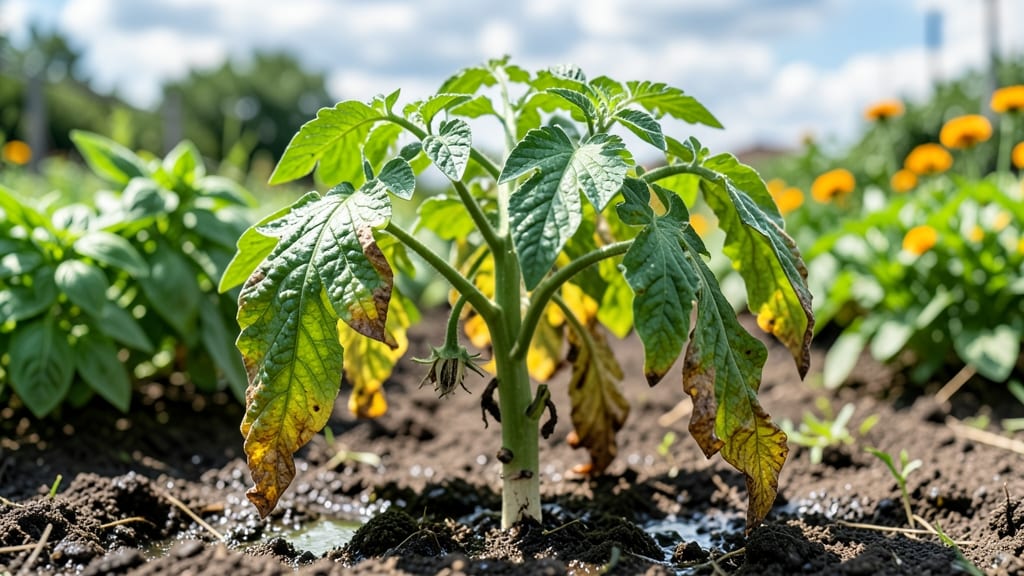
If you’re wondering what does an overwatered tomato plant look like, your droopy vines aren’t just thirsty—they’re drowning. 🌱 Overwatering turns lush green leaves into yellow, mushy messes while roots suffocate underground, and the first sign is often a plant that looks thirsty even after you watered it.
I’ve seen this mistake wipe out entire harvests, but the good news? Fixing it is simpler than you’d think.
The classic overwatered tomato plant shows up with yellowing leaves starting at the bottom, wilting stems that don’t perk up even at night, and a musty smell near the soil.
Fungal growth like black spots or white mold on leaves or stems is another dead giveaway—your plant’s basically screaming for air. Worse, the roots turn brown and mushy instead of white and firm, cutting off water and nutrients.
Here’s the fix: Let the top 2 inches of soil dry out between waterings, and upgrade to well-draining soil mixed with compost. If your pots lack drainage holes, drill them now—your tomatoes’ future depends on it.
Within a week, you’ll see new green growth as roots recover, and those vines will stand tall again.
Prevention is even easier: water deeply but only when the soil is dry, and avoid soggy soil by mulching. Once you spot these signs, act fast—overwatered plants can recover, but the longer you wait, the harder it gets. Your next harvest depends on it.
Root Causes of Overwatering
When your tomato plants start looking sad—think yellowing leaves, drooping vines, or even mushy stems—it’s often a sign they’re getting too much love in the water department. But why does this happen?
Overwatering isn’t just about pouring too much water; it’s a chain reaction triggered by poor soil conditions, improper drainage, and even environmental factors. Let’s break down the real culprits behind an overwatered tomato plant.
Tomato plants thrive when their roots have access to oxygen, but when soil stays soggy for too long, it suffocates them. Poor drainage is one of the biggest reasons overwatering occurs—whether from heavy clay soil, compacted roots, or containers without drainage holes.
Here’s what happens:
- Root asphyxiation: Water fills the air pockets in soil, cutting off oxygen to roots. Without oxygen, roots can’t absorb nutrients efficiently, leading to anaerobic conditions (a fancy term for "no air").
- Fungal growth: Excess moisture creates the perfect breeding ground for Phytophthora and Pythium, fungi that rot roots and stems. Look for dark, mushy roots or blackened spots—classic signs of fungal infection.
- Nutrient leaching: Waterlogged soil washes away essential nutrients like nitrogen, potassium, and phosphorus, starving the plant even as it sits in "wet" conditions.
Actionable fix: Amend clay soil with compost or perlite, and always use pots with drainage holes. If repotting isn’t an option, add a layer of coarse sand or gravel at the bottom of the container to improve airflow.
Even with good drainage, watering too frequently can drown tomato plants. Many gardeners assume "more water = better growth," but tomatoes are surprisingly drought-tolerant once established. Overwatering disrupts the plant’s natural hydration balance, leading to:
- Blossom end rot: While often linked to calcium deficiency, inconsistent watering (or overwatering) stresses the plant, preventing calcium uptake. Affected tomatoes develop dark, sunken spots near the blossom end.
- Leaf yellowing (chlorosis): Excess water dilutes nutrients in the soil, causing older leaves to turn yellow—a sign of nutrient starvation despite wet soil.
- Weak stem structure: Overwatered plants develop lignin-deficient stems (the "wood-like" support structure), making vines floppy and prone to snapping.
Actionable fix: Let the top 1–2 inches of soil dry out between waterings. Stick your finger in the soil—if it’s damp, wait. Use a moisture meter for precision, especially in containers.
Tomatoes hate wet feet—especially in hot or humid climates. When temperatures soar or humidity spikes, water evaporates slower, leaving soil saturated for days. This creates a double whammy:
- Slowed evaporation: High humidity reduces transpiration (the plant’s natural water-release process), so excess moisture lingers in the soil.
- Fungal pressure: Warm, damp conditions accelerate fungal spores, leading to diseases like early blight or septoria leaf spot, which thrive in overwatered environments.
- Root burn: In extreme cases, prolonged saturation can "cook" roots, causing them to turn brown and mushy—a condition called root rot.
Actionable fix: In hot climates, water deeply but infrequently (early morning is best). Use mulch to retain moisture without suffocating roots, and avoid overhead watering to reduce humidity around leaves.
Pro tip: 💡 If your tomatoes are in containers, elevate them on pot feet or bricks to improve airflow underneath—this prevents water from pooling and promotes faster drying.
Revive Your Tomatoes: Step-by-Step Fixes
Overwatering can feel like a slow-motion disaster for tomato plants, but the good news is that with the right moves, you can nurse them back to health—even if they’re looking a little worse for wear.
Below, we’ll tackle the most common signs of overwatering and match them with practical, actionable fixes so you can get your plants thriving again. Plus, we’ll share prevention tips to keep future watering woes at bay.
If your tomato plant’s leaves are yellowing (especially the lower ones) or drooping like a sad balloon, it’s likely suffering from root rot or nutrient leaching due to excess moisture. Here’s how to turn things around:
🔥 Step 1: Pause Watering Immediately
- Stop watering until the soil is dry to the touch 1–2 inches down.
Overwatering creates a suffocating environment for roots, and they need air to recover. - Pro Tip: If the soil feels soggy or smells musty, hold off for at least 3–5 days before checking again.
🍳 Step 2: Improve Soil Drainage
Poor drainage is often the root (pun intended) of overwatering problems.
Fix it with these tweaks: - Amend the soil with perlite, vermiculite, or coarse sand (1 part additive to 3 parts soil) to create air pockets. - Raise the plant’s base by placing it in a shallow tray filled with gravel or moving it to a container with drainage holes if it’s in a pot. - For garden beds: Consider mounding soil around the plant to encourage better airflow at the base.
👨🍳 Step 3: Prune Damaged Foliage
- Snip off yellow, mushy, or blackened leaves with sterilized scissors (dip in rubbing alcohol). This prevents disease spread and helps the plant focus energy on healthy growth.
- Avoid pruning green but wilted leaves—they may recover once drainage improves.
🥘 Step 4: Boost Root Health with Aeration
If roots are severely compromised, they’ll need a little TLC:
- Gently loosen the soil around the base with a fork or your hands (be careful not to damage roots).
- Add a handful of compost or well-rotted manure to encourage beneficial microbes and improve soil structure.
- For container plants: Repot into fresh, well-draining soil if the roots are circling or the soil is compacted.
If your tomato plant is limp and sad but the leaves aren’t yellow, it might be transpiration shock (too much water + not enough light) or root stress. Here’s how to perk it up:
⏰ Step 1: Water Deeply but Infrequently
- Water in the morning (never at night) to give foliage time to dry.
- Use the “finger test”: Stick your finger 2 inches into the soil.
If it’s dry, water slowly until it seeps out the drainage holes. If it’s still wet, wait another day.
🌡️ Step 2: Check for Heat Stress
- Wilting can mimic overwatering if the plant is also too hot.
Move potted plants to a shadier spot (but still with 6+ hours of sunlight). - Mist leaves lightly in the early morning to cool them down (avoid evening misting to prevent fungal issues).
🎯 Step 3: Support the Plant Temporarily
- Stake or cage the plant to prevent vines from breaking under their own weight.
- Use a fan on low speed near the plant (if indoors) to improve air circulation and speed up recovery.
Once your plant is back on track, lock in these habits to avoid future overwatering disasters:
- 💡 Use a moisture meter ($10–$20) to track soil moisture accurately—no more guesswork!
- 🔥 Water at the base only—avoid wetting leaves to prevent disease.
- 🌡️ Mulch like a pro: Apply 2–3 inches of straw or wood chips around the base to retain moisture without drowning roots.
- ✨ Choose the right pot: If container-growing, opt for fabric pots (breathable) or terracotta (porous).
- 🎯 Adjust for weather: Increase watering frequency in high heat (90°F+) but reduce it during cool, rainy days.
Remember: Tomatoes are resilient! With the right care, they’ll bounce back—often with bigger, sweeter fruit as a reward for your efforts. 🍅✨ Now go give those plants some love (and better drainage)!
Frequently asked questions about overwatered tomato plants
Why do tomato leaves turn yellow when the plant is overwatered?
Yellowing leaves (especially at the bottom) signal root suffocation or nutrient leaching. Excess water blocks oxygen, starving roots and causing them to release chlorophyll, turning leaves yellow. Check soil moisture—if it's soggy, roots can't absorb nutrients even with wet soil.
Can an overwatered tomato plant recover?
Yes! With proper care, plants often bounce back within 1-2 weeks. Stop watering immediately, improve drainage, and prune damaged leaves. Roots need air to recover—amend soil with perlite or compost if compacted. Early intervention prevents permanent damage.
How do I tell if my tomato plant is overwatered vs. underwatered?
Overwatered plants show yellow leaves, wilting despite wet soil, and musty smells. Underwatered plants have crispy brown edges, dry soil, and droop that worsens at night. Stick your finger in the soil—overwatered soil stays damp; underwatered feels bone-dry.
Will overwatering kill my tomato plant?
Not necessarily, but prolonged overwatering leads to root rot, which can be fatal. If roots turn brown/mushy, recovery is unlikely. Act fast: improve drainage, repot if needed, and prune damaged foliage. Prevention is key—water only when top 2 inches of soil are dry.
Can I use hydrogen peroxide to fix overwatered tomato roots?
Yes! Mix 1 tablespoon of 3% hydrogen peroxide per gallon of water to oxygenate roots and prevent rot. Water the soil (not leaves) with this solution every 3-4 days until recovery. It also helps prevent fungal growth. Just avoid overusing—stick to the ratio.