
How To
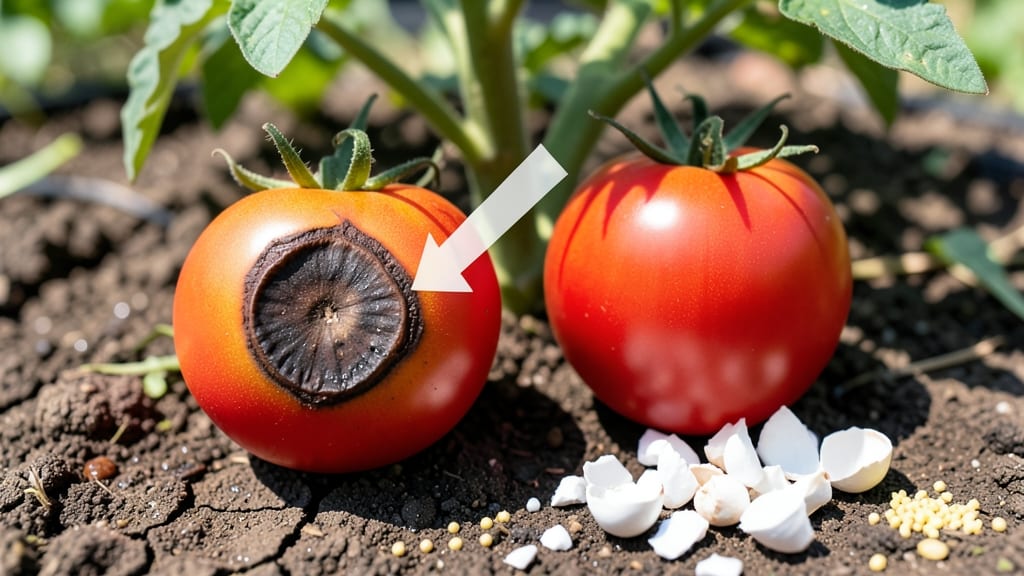
Blossom end rot of tomato is due to a calcium deficiency, causing dark, sunken spots on fruit. This occurs when plants can't absorb enough calcium, often due to uneven watering, poor soil pH, or excessive nitrogen. Immediate calcium treatments and soil adjustments can reverse early-stage damage.
The deficiency of calcium in tomato plants creates this common issue because calcium acts as a structural glue for plant cell walls.
When young fruit can't get enough, the cells collapse under pressure, leading to those telltale dark patches. 🌱 What makes this tricky is that calcium deficiency often stems from environmental factors like inconsistent watering or overly rich soil that starves roots of essential nutrients. The good news?
You can often fix existing damage by applying calcium-rich amendments like crushed eggshells or lime to the soil, while adjusting your watering routine to keep moisture consistent.
For prevention, focus on maintaining balanced soil pH (around 6.0-6.8) and avoiding heavy applications of nitrogen fertilizer, which can compete with calcium uptake.
I've found that adding a small amount of gypsum (calcium sulfate) to the planting hole at the start of the season gives tomato plants a strong calcium foundation right from the beginning.
💡 In This Article
- Why Calcium Deficiency Triggers Blossom End Rot in Tomatoes
- Effective Calcium Treatments and Soil Fixes for Tomato Plants
Why calcium deficiency triggers blossom end rot in tomatoes
Calcium acts as a critical structural component in plant cell walls, particularly in the middle lamella—the glue-like substance that holds adjacent cells together. When tomato plants can't absorb enough calcium, these cell walls weaken, especially in rapidly growing fruit.
Young tomatoes are most vulnerable because their cells are expanding quickly, requiring more calcium than the plant can supply during stress periods. 🌱 The blossom end (the bottom of the fruit) is the first to show symptoms because it's the last part to receive nutrients from the plant.
Environmental stress plays a huge role in disrupting calcium uptake. Fluctuating soil moisture—like letting plants dry out completely between waterings—causes roots to struggle, limiting their ability to absorb calcium even if it's available in the soil.
Extreme temperatures (above 90°F or below 50°F) also inhibit calcium movement within the plant. Interestingly, nitrogen-heavy fertilizers make this worse by promoting rapid leaf growth while starving roots of other essential nutrients, including calcium.
What most gardeners don't realize is that calcium deficiency isn't always about low calcium levels in the soil—it's about the plant's ability to access it. For example, sandy soils drain too quickly, while clay soils can become waterlogged, both preventing proper calcium uptake.
The key is maintaining consistent moisture levels (keeping soil 1-2 inches deep evenly damp) and ensuring roots have access to calcium through balanced soil amendments. 💧
Here's the science behind why young fruit is most at risk: Calcium moves through the plant via a process called translocation, which prioritizes actively growing tissues.
When a tomato flower sets fruit, the plant redirects calcium to the blossom end—but if environmental stress occurs during this critical 7-10 day period after pollination, the fruit's cell walls collapse under pressure, leading to those characteristic sunken spots.
To visualize the problem, imagine a balloon with weak seams. When you inflate it too quickly, the weakest points burst first. That's exactly what happens in tomato fruit when calcium is scarce during rapid growth phases.
The dark, leathery texture of blossom end rot comes from oxidized cell membranes—once the damage starts, the affected cells can't recover without immediate intervention.
One surprising factor is that calcium deficiency symptoms often appear 1-2 weeks after the stress event occurs. This delay happens because the plant continues to grow while internally struggling to transport calcium to developing fruit.
By the time you notice the dark spots, the damage may already be irreversible for that particular tomato—but the plant itself can still recover with proper care.