
Plants
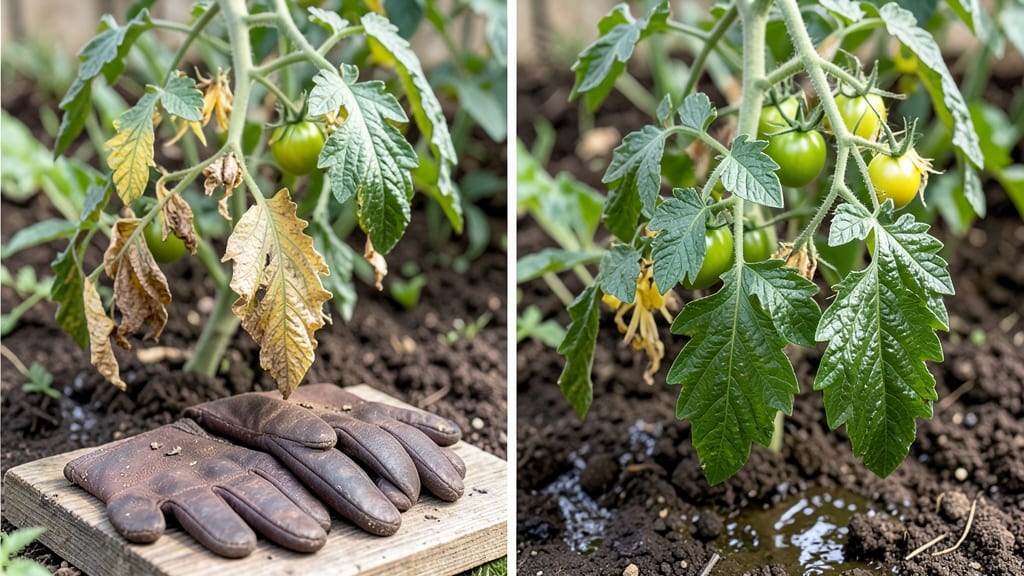
Drooping tomato plant leaves mean your harvest is at risk—but it’s rarely a death sentence. 🌱 I’ve nursed back more wilted vines than I can count, and the fixes are simpler than you’d think.
Most droop comes from three root causes: water stress, pests, or heat shock. The good news? Each has a quick, targeted solution that gets those leaves perky again in days.
Start by checking the soil—it’s the #1 culprit. Stick your finger an inch deep: if it’s bone-dry, you’re underwatering (common in sandy soil); if it’s soggy, you’ve overwatered (clay soil’s nightmare). Yellowing leaves with crisp edges?
That’s salt buildup from over-fertilizing. Pests like aphids or spider mites leave sticky residue or tiny webs, while fungal issues create brown spots with yellow halos. Grab a magnifying glass—you’ll spot clues you missed before.
Here’s the game-changer: one fix for each scenario. For water stress, deep-water in the morning and mulch to retain moisture. Pest infestations? Blast off aphids with water, then introduce ladybugs. Heat shock?
Move plants to partial shade and increase airflow. Within 24-48 hours, you’ll see leaves firming up—proof the plant’s still fighting. The key is acting fast before the roots give up.
Prevention is where it gets easy. Water at the base (never overhead), rotate plants weekly for even sun, and prune suckers to improve airflow. My droop-proof tomatoes now produce twice as much because I catch issues early.
The secret isn’t fancy tools—it’s paying attention to what the plant’s telling you through its leaves.
Root Causes Of Sagging Foliage
Understanding why your tomato plant’s leaves droop is the first step to saving it. 🌱💧 Most cases stem from stress—whether from water, soil, or environmental factors. Below, we break down the top scientific reasons behind wilting leaves, along with what triggers each issue so you can diagnose and act fast.
Tomatoes thrive on consistency, but too much water suffocates roots by blocking oxygen. When soil stays soggy for days, roots can’t absorb nutrients or breathe, leading to anaerobic stress—a condition where roots essentially "drown."
Signs include: - Yellowing leaves (chlorosis) between veins - Mushy stems at the base - Leaves curling downward like sad umbrellas
Why it happens:
- Compacted or clay-heavy soil holds excess moisture, trapping roots in waterlogged conditions.
- Lack of drainage holes in pots forces water to pool at the bottom.
- Overzealous watering (e.g., daily soakings) without checking soil moisture.
Pro tip: 💡 Stick your finger 1–2 inches into the soil—if it’s damp, wait. Tomatoes prefer "dry to the touch" soil between waterings.
While overwatering chokes roots, drought stress makes them shrink and pull nutrients from leaves, causing them to wilt. Heatwaves accelerate this by increasing transpiration (water loss through leaves), forcing the plant to conserve moisture by drooping.
Why it happens:
- Inconsistent watering (e.g., skipping days in hot weather).
- Shallow root systems in young plants or container-grown tomatoes.
- High temperatures (above 90°F/32°C) combined with low humidity.
Watch for:
- Dry, crispy leaf edges (early dehydration).
- Leaves folding upward (a survival tactic to reduce water loss).
- Soil pulling away from pot sides (indicating extreme thirst).
Fix fast: 🌡️ Water deeply early in the morning (before 10 AM) to reduce evaporation. Mulch with straw to retain moisture.
Tomatoes are heavy feeders, and deficiencies cause leaves to weaken and droop. Two key nutrients often missing:
| Nutrient | Deficiency Signs | Why It Happens |
|---|---|---|
| Nitrogen (N) | Older leaves yellow (yellowing from bottom up) | Soil depletion or poor organic matter. |
| Potassium (K) | Brown scorch on leaf edges, weak stems | Overwatering flushes K out; dry soil limits uptake. |
Other culprits:
- Magnesium (Mg) deficiency → Interveinal yellowing (chlorosis between veins).
- Calcium (Ca) deficiency → Blossom-end rot (though leaves may also wilt).
Solution: 💪 Use a balanced fertilizer (10-10-10 or 5-5-5) every 2–3 weeks during growing season. For quick fixes, try:
- Epsom salt (magnesium sulfate) for yellowing leaves.
- Crushed eggshells (calcium) worked into soil.
Hidden invaders like root-knot nematodes, fungal infections (e.g., Phytophthora), or aphids feeding on roots disrupt nutrient flow, causing wilting—often without visible leaf damage.
Why it happens:
- Overwatered soil invites fungal growth.
- Poor garden hygiene (reusing infested soil or pots).
- Weakened plants (from stress) attract pests.
Red flags:
- Stunted growth despite proper care.
- Mushy roots when gently pulled from soil.
- White/cottony growth on roots (fungus).
Act now: 🔪 Remove infected plants immediately. Treat soil with neem oil (for pests) or copper fungicide (for Phytophthora). For nematodes, solarize soil or plant marigolds as a natural repellent.
Sudden changes—like temperature swings, strong winds, or accidental root disturbance—can cause leaves to droop as the plant conserves energy.
Common triggers:
- Cold drafts (e.g., near AC units or open windows).
- Transplant shock (roots damaged when moving plants).
- Hail or heavy rain bruising stems.
Quick recovery tips:
- Move plants to a sheltered spot (e.g., under a shade cloth).
- Stake young plants to prevent wind damage.
- Handle roots gently when transplanting—avoid bending stems.
Revive Your Tomato Plant Now
Drooping tomato leaves don’t mean your harvest is lost—just that your plant is calling for help! 🌱 Whether it’s thirst, heat, or pests causing the wilt, these practical fixes will have your vines perking up in no time.
Below, we’ve matched the most common causes to easy, actionable solutions—plus tips to keep your tomatoes thriving long-term.
Signs: Yellowing leaves, mushy stems, or crispy edges—all classic signs of water stress.
Fix It Fast: ✅ Check the soil first 👨🍳—stick your finger 1–2 inches deep. If it’s soggy, you’re overwatering; if dry, it’s time to hydrate. ✅ Water deeply but less often 💦—aim for 1–1.5 inches per week (more in extreme heat).
Use a soaker hose or drip irrigation to deliver water straight to the roots, avoiding leaf wetness. ✅ Improve drainage 🏗️—if your pots lack holes or garden soil compacts easily, mix in perlite or compost to help water flow freely.
💡 Pro Tip: Water in the early morning to reduce evaporation and fungal risks. Mulch around the base with straw or grass clippings to lock in moisture.
Signs: Leaves curling upward, wilting in the afternoon, or a sunburned look (brown patches).
Fix It Fast:
✅ Provide afternoon shade 🌞—use a lightweight shade cloth (30–50%) or move potted tomatoes to a spot with morning sun + afternoon shade. ✅ Mulch heavily 🌿—a 3–4 inch layer of mulch (straw, wood chips) keeps roots cool and retains moisture. ✅ Mist leaves (gently!) 💦—on extreme heat days, lightly misting can lower leaf temperature, but avoid doing this in humidity to prevent disease.
💡 Pro Tip: If your tomatoes are in containers, switch to a larger pot (at least 5 gallons)—small pots dry out faster and overheat.
Signs: Holes in leaves, sticky residue (aphids), white mold (powdery mildew), or sudden wilting with no other obvious cause.
Fix It Fast: ✅ Identify the culprit 🔍—flip leaves to spot aphids, spider mites, or whiteflies. Check stems for cucumber beetles (they spread disease). ✅ Blast pests off 💦—spray leaves with a strong stream of water to dislodge soft-bodied insects.
Repeat every 2–3 days. ✅ Use natural sprays 🌿: - Neem oil (1 tsp + 1 quart water + drop of dish soap) for fungus and pests. - Soap spray (1 tbsp mild soap per gallon of water) for aphids and mites. ✅ Remove infected leaves ❌—snip off yellow, spotted, or moldy leaves with clean scissors and dispose of them (don’t compost!).
💡 Pro Tip: Rotate your sprays—pests build resistance! Alternate between neem oil, insecticidal soap, and horticultural oil for best results.
Signs: Pale yellow leaves (nitrogen deficiency), purple stems (phosphorus lack), or weak, spindly growth (potassium issue).
Fix It Fast:
✅ Test your soil 📊—a DIY soil test kit (or send a sample to your local extension office) reveals what’s missing. ✅ Add balanced fertilizer 🍽️—use a 10-10-10 or 5-10-10 fertilizer (NPK ratio) every 2–3 weeks during growing season. ✅ Boost with compost tea 🌱—brew compost tea (steep compost in water for 24–48 hours) and water it in for a nutrient boost. ✅ Target-specific deficiencies:
- Yellow leaves? Side-dress with alfalfa meal (high in nitrogen).
- Weak stems? Add wood ash or banana peel tea (potassium-rich).
💡 Pro Tip: Over-fertilizing burns roots—always water before and after applying fertilizer.
Signs: Sudden wilting despite proper watering, black or mushy roots when inspected, or stunted growth.
Fix It Fast:
✅ Gently inspect roots 👀—if they’re dark, slimy, or falling apart, you’ve got root rot (from overwatering). ✅ Repot affected plants 🏡—remove the tomato, trim mushy roots, and repot in fresh, sterile potting mix with perlite for drainage. ✅ Adjust watering habits 💧—let the top 1–2 inches of soil dry out before watering again. ✅ For container plants, ensure pots have drainage holes and aren’t sitting in saucers of water.
💡 Pro Tip: Prevent root rot by watering at the base (not overhead) and avoiding soggy soil at all costs.
Once your plant is revived, lock in success with these long-term habits:
- Water consistently—stick to a schedule (early morning is best).
- Monitor pests weekly—catch problems before they wilt your plants.
- Prune regularly—remove suckers and lower leaves to improve airflow.
- Rotate crops—if you grew tomatoes in the same spot last year, move them to prevent soil-borne diseases.
- Use row covers—protect young plants from heat waves and pests early in the season.
Your drooping tomato plant is just a quick fix away from bouncing back! 🍅 With the right care, you’ll be harvesting juicy, vine-ripened tomatoes in no time. Which issue does your plant have? Try the fix that matches your symptoms and watch those leaves perk up!
Frequently asked questions
Why do my tomato leaves droop in the afternoon but perk up at night?
This classic symptom points to heat stress or underwatering. During hot afternoons, your plant loses moisture faster than roots can absorb it, causing temporary wilting. Check soil moisture—if it's dry 1-2 inches deep, water deeply in the morning. For container plants, switch to a 5-gallon pot minimum to help roots keep up with demand.
Can over-fertilizing cause droopy tomato leaves?
Too much fertilizer—especially high-nitrogen types—can burn roots and disrupt nutrient uptake, leading to wilting. Look for yellow leaves with brown edges or crispy leaf tips. Flush the soil with water to dilute salts, then switch to a balanced 5-5-5 fertilizer applied every 3-4 weeks during fruiting.
How do I tell if my drooping is from pests vs. water issues?
Check the undersides of leaves—pests like aphids or spider mites leave sticky residue or tiny webs. Water issues show different clues: Crispy edges = underwatering, yellowing between veins = overwatering, and mushy stems = root rot. For pests, blast leaves with water first, then treat with neem oil.
Will pruning help my drooping tomato plant recover?
Pruning alone won't fix the root cause, but it can reduce stress by improving airflow and redirecting energy. Remove yellow leaves and suckers (side shoots) to help the plant focus on recovery. Avoid heavy pruning—just trim 10-20% of foliage at most. Pair pruning with the specific fix for your plant's issue (water, heat, etc.).
How long does it take for tomato leaves to perk up after fixing the problem?
With the right fix, you'll often see improvement within 24-48 hours—especially for water-related issues. Root rot or severe pest damage may take 3-5 days to show recovery. Monitor soil moisture and watch for new growth at leaf joints. If leaves stay droopy after 5 days, reassess the cause or consult a local gardening expert.