
Watering
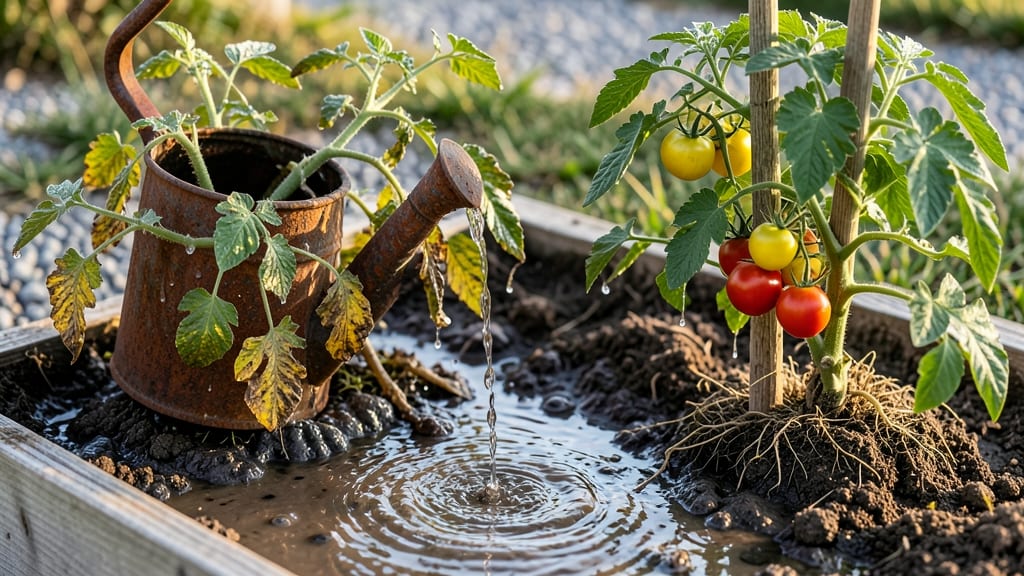
Overwatering tomato plants turns crisp green leaves into sad, yellow puddles overnight—something I learned the hard way after drowning my first batch last summer. 🌱 The signs are unmistakable: droopy foliage, mushy stems, and a soil smell that’s more swamp than garden.
But here’s the good news: tomatoes are tougher than they look, and with the right moves, you can nurse them back to health.
First, stop watering like you’re filling a fishbowl. Tomato roots need air almost as much as water, and soggy soil suffocates them. Check the top inch of soil—if it’s damp, wait.
If it’s dry, give a deep drink, but only when the top few inches are bone-dry. Raised beds or containers drain faster, so they’re easier to manage than in-ground plots.
Once you’ve cut back on water, it’s time to boost drainage. Mix coarse sand or perlite into heavy clay soil, or add a 2-3 inch layer of gravel at the bottom of containers. Yellow leaves?
Trim them back to redirect energy to healthy growth. Within a week, you’ll see new green shoots pushing through, and by midseason, your plants will be back to producing those juicy tomatoes you love.
Prevention is simpler than rescue: water in the morning so foliage dries by night, mulch to keep moisture even, and avoid shallow sprinklers that soak the leaves. With these tweaks, your tomatoes will thrive instead of wilt. Trust me, your future plants will thank you.
Common Causes of Overwatering Tomatoes
Overwatering tomato plants is a classic gardening blunder—one that can turn your lush green vines into a sad, wilted mess. But why does it happen so often? The truth is, there are several sneaky factors at play, from well-meaning habits to environmental quirks.
Let’s break down the real culprits behind soggy soil and struggling tomatoes.
Tomatoes thrive in well-draining soil, but many gardeners assume "more water = better growth." Unfortunately, this leads to waterlogged roots, which suffocate plants by cutting off oxygen. Here’s why it’s a problem:
- Compacted soil: Heavy clay or tightly packed dirt doesn’t allow excess water to drain. A simple soil test (or the "squeeze test"—if it stays clumped, it’s too wet) can reveal the issue.
- Lack of organic matter: Soil with too little compost or mulch holds moisture like a sponge. Aim for 30-40% organic content (like aged manure or coconut coir) to improve aeration.
- Overly frequent watering: Tomatoes need 1-1.5 inches of water per week, but many gardeners water daily. Check moisture 2 inches below the surface—if it’s damp, wait.
Pro Tip: 💡 Use a moisture meter or stick your finger in the soil. If it’s soggy, hold off on watering!
Weather plays a huge role in how often you should water. What works in hot, dry summers can drown your plants in cool, rainy springs. Here’s how climate tricks gardeners:
| Season | Risk of Overwatering | Solution |
|---|---|---|
| Spring/Rainy Season | Excess rain + automatic watering = root rot. | Use drip irrigation with timers or skip watering if soil is already moist. |
| Summer Heatwaves | Evaporation spikes—gardeners overcompensate. | Water early morning (6-8 AM) to reduce fungal risks. Use mulch to retain moisture. |
| Fall/Winter | Cooler temps slow evaporation, but roots still need airflow. | Reduce watering by 30-50% and ensure containers have drainage holes. |
Pro Tip: ⏰ Adjust your watering schedule weekly—don’t rely on memory. A simple rain gauge helps track natural hydration.
Even the most experienced gardeners fall into this trap: containers without drainage or raised beds with no slope. Here’s how it backfires:
- No drainage holes: Pots act like bathtubs, trapping water at the roots. Solution: Drill holes in the bottom and add a gravel layer (1-2 inches) to prevent clogging.
- Improper container size: Small pots dry out fast, but oversized ones retain too much moisture. Choose containers 12-18 inches deep for mature tomato plants.
- Raised beds without tilting: Flat beds pool water. Solution: Slope beds 1-2 degrees toward the center for natural drainage.
Pro Tip: 🔥 Test your setup—fill a container with water and see how long it takes to drain. If it’s slower than 30 minutes, improve airflow.
Fertilizer doesn’t just feed plants—it can alter soil chemistry, making roots more susceptible to waterlogging. Here’s the connection:
- High nitrogen fertilizers: Encourage leafy growth but weaken root systems, making them more prone to rot in wet soil.
- Over-salting the soil: Synthetic fertilizers (like those with high phosphorus) can disrupt water absorption, leading to poor drainage.
- Fertilizing before watering: Granular fertilizers dissolve into a salty slurry when watered in, burning roots.
Pro Tip: 🌡️ Flush soil with water after fertilizing to prevent salt buildup. Use balanced, organic fertilizers (like 5-5-5) for safer root health.
Now that you know the real reasons behind overwatered tomatoes, the next step is fixing the damage—but that’s a story for another section! 🍅
Revive and Prevent Overwatered Tomatoes
Overwatering can turn your lush tomato plants into sad, yellowing messes—but don’t panic! With the right steps, you can nurse them back to health and keep future watering disasters at bay. Below, we’ll match common overwatering symptoms to practical fixes, plus prevention tips to save your harvest.
Cause: Too much water suffocates roots, cutting off oxygen and nutrients. Solution:
- Stop Watering Immediately – Let the soil dry out completely before watering again. Stick your finger 1–2 inches deep; if it’s damp, wait.
- Improve Drainage – If your pots or garden bed retain water, add perlite, sand, or compost to loosen soil. For containers, drill drainage holes if missing.
- Prune Damaged Foliage – Snip yellow or mushy leaves with clean scissors to redirect energy to healthy growth.
💡 Pro Tip: Mulch around plants with straw or wood chips to regulate soil moisture and prevent future soggy roots.
Cause: Overwatering + calcium deficiency = weak cell walls in tomatoes. Solution:
- Adjust Watering Schedule – Water deeply 1–2 times per week (early morning) instead of daily shallow drinks.
- Boost Calcium – Sprinkle crushed eggshells or use a calcium-rich fertilizer (like gypsum) around the base.
- Check pH Levels – Test soil pH (ideal: 6.0–6.8). Too alkaline? Add vinegar or sulfur to balance it.
✨ Quick Fix: Spray tomato leaves with a 1 tbsp baking soda + 1 gallon water mix (add a drop of dish soap) to prevent fungal issues.
Cause: Waterlogged soil = fungal/bacterial rot eating roots. Solution:
- Repot or Transplant – If roots are black/mushy, trim affected areas, dust with cinnamon (natural antifungal), and repot in fresh, dry soil.
- Disinfect Tools – Sterilize pruners with rubbing alcohol to avoid spreading disease.
- Avoid Wet Foliar – Water at the base only; never overhead (especially at night).
🔥 Emergency Move: If roots are severely rotted, propagate healthy stem cuttings in water or perlite to regrow plants.
Cause: Overwatering + poor airflow = stress and pest magnet. Solution:
- Space Plants Properly – Give tomatoes 18–24 inches between plants for airflow.
- Water Less Frequently – Let the top 1–2 inches of soil dry out before watering again.
- Fertilize Lightly – Use a balanced 10-10-10 fertilizer (½ strength) to encourage root recovery.
🎯 Prevention: Install drip irrigation or soaker hoses to deliver water directly to roots—no waste!
✅ Test Soil Drainage – Fill a hole with water; if it drains in <1 hour, your soil is fine. ✅ Use Raised Beds – Elevate plants to prevent water pooling. ✅ Monitor Weather – Adjust watering during rainy seasons (skip watering if rain is forecasted). ✅ Choose Drought-Tolerant Varieties – Try ‘Solar Fire’ or ‘Mountain Merit’ tomatoes for resilience.
Remember: Tomatoes are thirsty but not drowning machines—when in doubt, underwater slightly! With these fixes, your plants will bounce back stronger, and your next harvest will be juicier than ever. 🍅💦
Frequently asked questions about overwatered tomatoes
How do I know if my tomato plant is overwatered vs. underwatered?
Check the soil first—overwatered plants have soggy, cold soil that smells musty, while underwatered plants have dry, cracked soil. Look for leaves: overwatered plants show yellowing lower leaves and mushy stems, while underwatered ones have crispy edges and drooping (but not mushy) foliage.
Can I save a tomato plant with root rot from overwatering?
Yes, but act fast! Trim all black/mushy roots, repot in dry, well-draining soil, and dust cut roots with cinnamon (natural antifungal). Reduce watering immediately and avoid overhead watering. If the plant is too far gone, take healthy stem cuttings to propagate new plants.
Why do my tomato leaves turn yellow when I water them?
Yellowing leaves are a classic overwatering sign—roots can't absorb oxygen in waterlogged soil. Check for soggy soil and stunted growth. Also, yellow leaves can signal calcium deficiency (common with overwatering). Fix it by adjusting watering to 1-2 times per week and adding crushed eggshells or gypsum for calcium.
What's the best way to water tomato plants to prevent overwatering?
Water deeply but infrequently—aim for 1-1.5 inches per week—using drip irrigation or soaker hoses at the base. Water in the morning so foliage dries by night. Mulch with straw to regulate moisture, and always check soil 2 inches deep before watering.
Will overwatering kill my tomato plant completely?
Not necessarily! If caught early, most tomato plants recover with proper drainage fixes. However, severe root rot or fungal infections can be fatal. The key is acting fast—stop watering, improve drainage, and prune damaged areas. With the right care, your plant can bounce back and produce fruit.