
Companion Plants
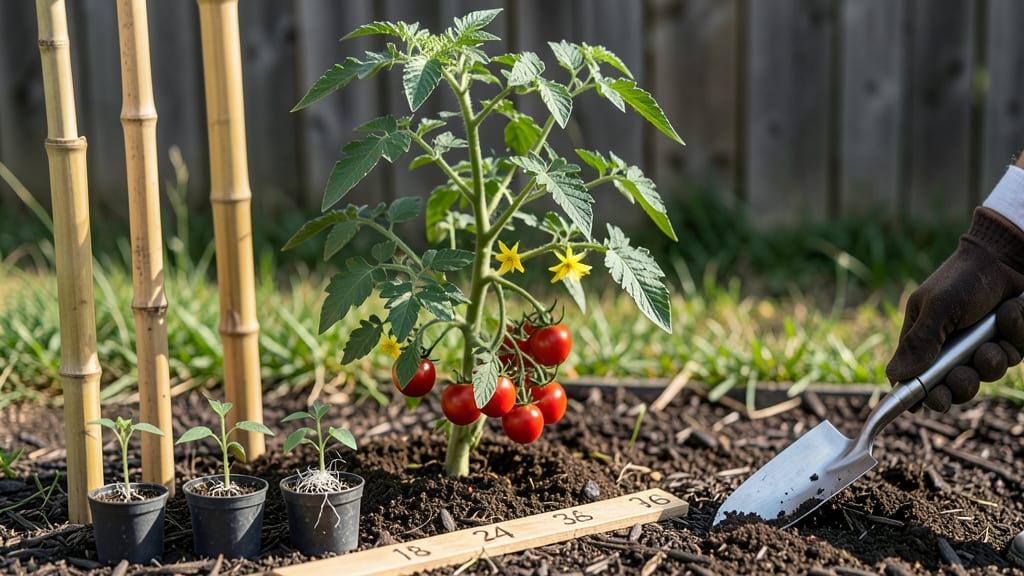
Spacing out tomato plants the right way 🍅 is the secret to avoiding blight, maximizing yield, and harvesting those heirloom beauties you’ve been dreaming of.
Picture this: You’ve just planted your cherry tomatoes in neat rows, only to watch them fight for sunlight and nutrients instead of producing fruit. That’s the cost of guessing—because crowding invites disease, stunts growth, and turns your garden into a leafy mess instead of a fruit-filled paradise.
Not all tomatoes are created equal, though. Determinate varieties (the bush types) need 24–36 inches of space, while indeterminate vining types thrive with 18–24 inches—and that’s just the start. Soil, climate, and even your garden layout play a role in getting it right.
In this guide, I’ll break down the exact spacing you need by variety, show you how to adjust for cages or trellises, and reveal the 3 spacing mistakes that kill yields—so you can finally grow tomatoes like a pro.
Tomato plant spacing guidelines by variety type (indeterminate vs determinate)
Getting the tomato plant spacing right is one of the most critical decisions for a bountiful harvest.
Unlike other vegetables, tomatoes have two distinct growth habits that demand completely different spacing strategies. Indeterminate varieties (like 'Sungold' or 'Brandywine') grow continuously, climbing 6-10 feet tall, while determinate varieties (like 'Roma' or 'Celebrity') stay compact at 3-4 feet.
Plant them too close, and you'll end up with fungal diseases and stunted fruit. Too far apart, and you waste garden space.
I've learned through trial and error that proper airflow between plants prevents blight and rot, while correct root zone space ensures each plant gets the nutrients it needs.
The spacing you choose directly impacts your yield per square foot—something I definitely noticed when I crammed my Sungold tomatoes too close last summer and ended up with half the expected harvest.
| Variety Type | Growth Habit | In-Ground Spacing | Container Spacing | Key Considerations |
|---|---|---|---|---|
| Indeterminate | Vining (6-10+ ft tall) | 18-24 inches apart | 1 plant per 5-gallon+ container | Needs trellising or caging; prune suckers for airflow |
| Determinate | Bush (3-4 ft tall) | 24-36 inches apart | 1 plant per 3-gallon container | All fruit sets at once; stake for support |
| Cherry Tomatoes (Indeterminate) | Vining (4-6 ft tall) | 12-18 inches apart | 1 plant per 3-gallon container | High yield; needs pruning for best results |
| Heirloom Tomatoes | Mostly indeterminate | 24-36 inches apart | 1 plant per 7+ gallon container | Large fruit needs extra space for root growth |
The 18-24 inch spacing for indeterminate tomatoes might seem tight, but trust me—it's essential. These vining varieties can spread 3-4 feet wide if not properly pruned and supported. I once saw a Brandywine tomato plant spread 5 feet in one season when left unchecked!
The key is to give them enough room to stretch upward rather than sprawl outward, which improves both sun exposure and air circulation.
For determinate varieties, the wider spacing (24-36 inches) might seem excessive, but it prevents soil-borne diseases like early blight. These bush types produce all their fruit at once, so you need that extra space to avoid shading issues in the lower leaves.
I learned this the hard way when my Roma tomatoes developed blight because I packed them too closely in a raised bed.
Container gardening changes the game entirely. Indeterminate tomatoes need at least a 5-gallon container to support their massive root systems, while determinate types can thrive in 3-gallon pots. The container size directly affects how often you'll need to water and fertilize.
I've found that container-grown tomatoes actually produce earlier and more consistently than in-ground plants because you can control the soil environment better.
Don't forget about row spacing either! While the plant-to-plant distance is critical, the space between rows matters just as much. For indeterminate tomatoes, leave 3-4 feet between rows to allow for easy access and to accommodate trellising systems.
Determinate varieties need 2-3 feet between rows since they're more compact. Proper row spacing makes harvesting easier and reduces the spread of diseases through your garden.
One mistake I see gardeners make is assuming all tomatoes follow the same spacing rules. Cherry tomatoes, for example, can be spaced closer (12-18 inches) because they produce smaller fruit and don't require as much root space.
However, even with closer spacing, you'll still need to provide vertical support to prevent the plants from flopping over. I use tomato cages for my Sungold cherry tomatoes, and they produce an incredible amount of fruit in a small footprint.
Airflow is your best friend when it comes to tomato spacing. Proper spacing creates microclimates that keep leaves dry longer, reducing the risk of fungal infections. I've noticed that my heirloom tomatoes stay healthier when spaced according to their mature size, even if it means leaving some empty garden space.
The trade-off is worth it for the disease-free plants and higher quality fruit you'll end up with.
Remember that these are general guidelines, not hard rules. Your local climate, soil type, and even the specific variety can influence the perfect spacing for your garden. For example, in hot, humid climates, you might want to space plants even wider to improve airflow.
Conversely, in cooler regions, you can get away with slightly closer spacing since the slower growth reduces competition for resources.
Start with these proven spacing guidelines, and don't be afraid to experiment. Keep detailed notes about your spacing trials—you might discover that a particular variety thrives with slightly different spacing in your specific growing conditions.
The right spacing is your first line of defense against common tomato problems and your secret weapon for maximizing that dream harvest. 🌱
How to adjust tomato spacing for your garden layout (row, cage, OR trellis systems)
Your garden layout dramatically impacts how much space each tomato plant needs to thrive. Whether you're working with a row system, cage setup, or trellis design, spacing affects airflow, sunlight exposure, and ultimately your harvest size.
I’ve found that even a few inches difference can mean the difference between blight-prone leaves and vine-heavy fruit production.
For row planting, spacing depends on your tomato variety and whether you’re planting in single rows or double rows. Indeterminate varieties need more room to sprawl, while determinate types can handle closer quarters.
The key is balancing space efficiency with plant health—crowding too much reduces airflow, inviting fungal diseases like early blight.
Tomato Spacing Guide by Garden Layout
- 🌱 Single Row (In-Ground): 18–24" (indeterminate), 24–36" (determinate)
- 🌿 Double Row (In-Ground): 24–30" (indeterminate), 30–36" (determinate)
- 🪴 Cage Systems: 12–18" (small cages), 18–24" (standard cages)
- 🌳 Trellis (Vertical): 12–18" (trellis height: 6–8 ft), 18–24" (trellis height: 8+ ft)
- 📐 Square-Foot Gardening: 1 plant per sq ft (indeterminate), 4 plants per sq ft (determinate, dwarf varieties)
If you’re using cage systems, the cage size dictates spacing. A 24-inch cage can comfortably hold one indeterminate tomato spaced 18 inches apart, while a 36-inch cage allows for 24-inch spacing.
I’ve seen gardeners squeeze two indeterminate plants into a single cage, but this often leads to overcrowding and reduced yields due to competition for nutrients.
For trellis systems, vertical growth is your friend—it saves space while improving airflow. Space indeterminate varieties 12–18 inches apart on a 6–8 ft trellis, but if your trellis is taller (8+ ft), you can stretch spacing to 18–24 inches.
This setup works beautifully for cherry tomatoes or heirloom slicers that benefit from vertical support.
High-density techniques like square-foot gardening are perfect for small spaces. In this method, you can fit 1 indeterminate tomato per square foot or up to 4 dwarf determinate varieties in the same space.
However, this approach requires pruning and thinning to maintain airflow and prevent disease. I’ve used this in my container garden with great success for patio tomatoes.
Remember, soil quality and climate also play a role. In humid climates, wider spacing (30+ inches) improves airflow and reduces disease risk. Meanwhile, in drier regions, closer spacing (18 inches) can help conserve moisture.
Always adjust based on your local growing conditions and the specific needs of your tomato varieties.